Men's Golf Shirts Guide
A men's golf shirt is the collared shirt of the game: a cloth garment for the upper body, built around the collar that golf's dress codes require, in traditional cotton, microfiber, polyester or blended knits. Some course managers also allow golf shirts with a turtleneck-style mock collar, but the collared polo is the standard the codes were written around, and it is important to consult the establishment to determine its exact rules. Within that one requirement lives a whole shirt family: piqué cotton polos, smooth performance jerseys, and the layering weights a long outdoor day demands.
Shop Men's Golf Shirts Now
Shop Men's Golf Shirts on Amazon Shop Men's Golf Shirts on eBayThe Amazon and eBay links on this page are affiliate links. If you make a purchase through them, Apparel Search may earn a commission.
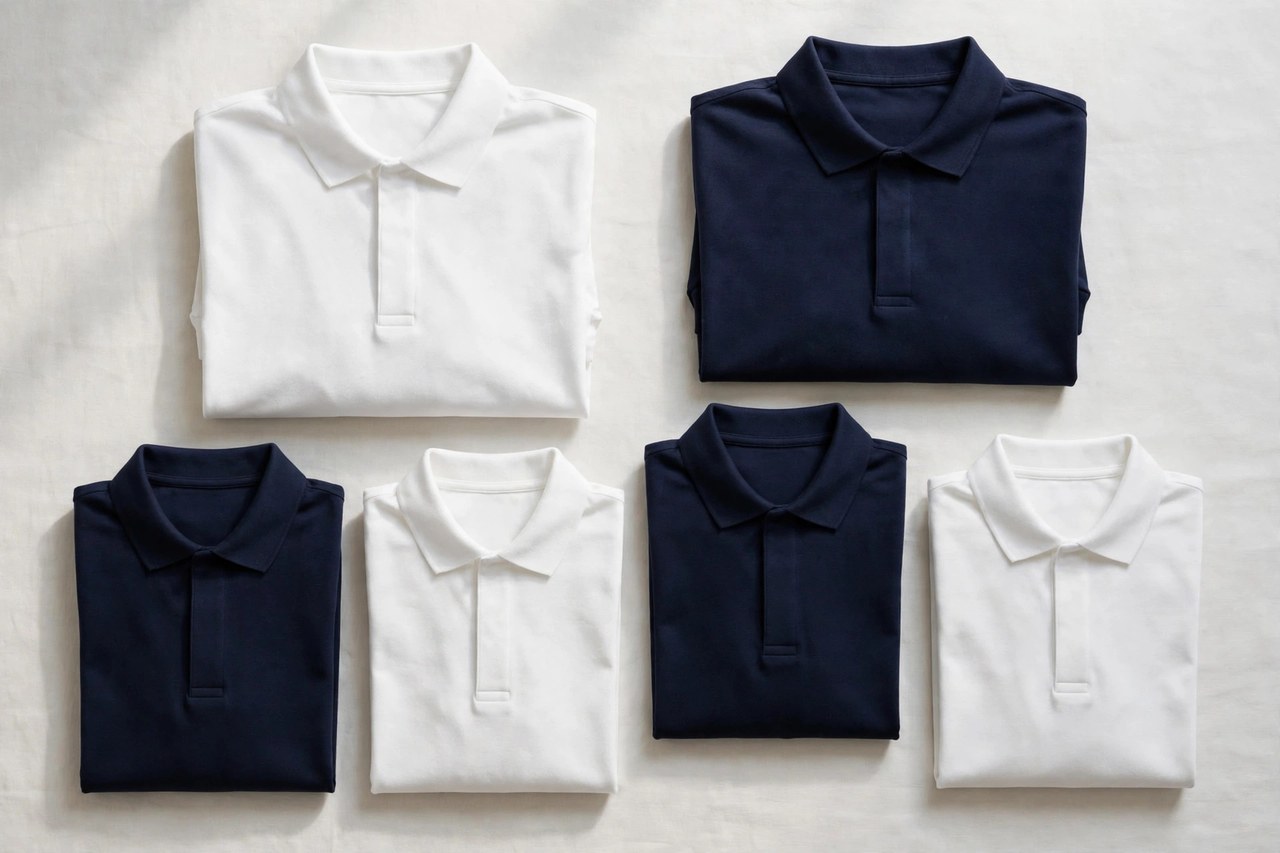
A men's golf shirt is the collared shirt of the game: a cloth garment for the upper body, built around the collar that golf's dress codes require, in traditional cotton, microfiber, polyester or blended knits. Some course managers also allow golf shirts with a turtleneck-style mock collar, but the collared polo is the standard the codes were written around, and it is important to consult the establishment to determine its exact rules. Within that one requirement lives a whole shirt family: piqué cotton polos, smooth performance jerseys, and the layering weights a long outdoor day demands. This guide covers the styles worth knowing, the fit points that decide comfort, the fabrics and construction that separate a good buy from a regret, and the simple care that makes the garment last.
Styles and Construction
Construction starts at the collar, because the collar is the compliance and the look: a proper golf collar is substantial enough to hold its shape through a round and a season, whether knitted self-fabric or a ribbed polo collar, and it must lie flat at the back of the neck under a sweater. The body divides by fabric philosophy. Cotton piqué breathes and feels traditional, absorbs moisture and holds it, and wrinkles honestly. Performance polyester and microfiber knits wick sweat away, dry fast, resist wrinkles and often add stretch and sun protection, at the cost of a more technical hand feel. Blends split the difference. Plackets run two to four buttons; sleeves end mid-bicep so the swing's rotation never binds at the arm; and the better shirts add the small tailoring that separates course wear from a generic polo: a slightly longer back hem to stay tucked, side vents, and seams that sit clear of the shoulder's turn.
A top earns its keep in finishing: seams that hang straight and stay even at eight to twelve stitches per inch, collars and plackets that lie flat after washing, buttons sewn with thread shanks so they sit in their holes without pulling. Hold the cloth to the light - a tight, even weave or knit outwears a loose one at the same labeled weight, and pattern pieces cut on grain keep the garment from twisting around your body by the third wash.
Fit and Sizing
Fit a golf shirt by the swing it must survive. The shoulder seam belongs on the shoulder bone, the chest should close without pulling across the buttons when both arms reach forward as if addressing the ball, and the body should skim rather than cling - a performance knit worn a size small advertises every fault it was bought to hide. Tucked is the course standard and the safer reading of most codes, so length must stay tucked through a full swing and a round of bending to tee and mark; an untucked cut should end mid-fly and be worn where the course allows it. Sleeves that end mid-bicep and move with the arm, neither flapping nor binding, are the finishing measurement.
Fit tops shoulders and chest first, because tailors cannot cheaply move either: the shoulder seam ends at the shoulder bone, the chest closes without pulling, and both arms raise without the hem escaping the waistband. Tucked lengths must stay tucked sitting; untucked lengths should end mid-fly. Sleeves are the cheap alteration, shoulders the permanent one - reject a wrong shoulder for any reason, forgive a long sleeve for many.
Wearing and Care
Golf shirts live harder than dress shirts - sun, sweat, grass and a long day outdoors - and care decides how many seasons the collar survives. Wash cool or warm inside out to protect color against sun-faded shoulders, fasten the placket buttons so the collar keeps its set, and dry low or on the line: performance knits forgive the dryer but not its high heat, which is what kills stretch and wicking finishes. Hang or fold promptly, because a polo left balled in a gym bag creases at exactly the collar the code inspects. Treat grass and sunscreen stains before washing, rotate three shirts across a playing week, and retire the shirt whose collar has curled beyond pressing - it is the first thing the starter sees.
Launder tops by the label with three defaults: cool or warm water to protect color and trims, dark and printed pieces inside out, and low or line drying, which is the largest single lever on a shirt's lifespan. Fasten buttons and zips before washing to protect the whole load, treat stains before the dryer can set them, and store knits folded so their shoulders keep the shape they were knitted with.
Common Questions
Do you have to wear a collared shirt to play golf?
At most courses, yes: collared shirts are the common requirement, traditionally cotton or microfiber and polyester golf shirts. Some course managers also allow golf shirts with a turtleneck-style mock collar. It is not universal and it is not set in stone - courses set their own rules - so the reliable practice is to check the dress code of the establishment you intend to play, especially when traveling to an unfamiliar course.
Cotton or polyester - which is the better golf shirt fabric?
Cotton piqué is the traditional shirt: breathable, soft, classic, and it absorbs moisture and holds it, growing heavy and staying damp on hot or wet days. Polyester and microfiber performance knits wick moisture away from the skin, dry quickly, resist wrinkles and often add stretch and UV protection, with a more synthetic feel. Most regular players own both and choose by forecast - cotton for mild, dry days and tradition, performance knits for heat, humidity and travel.
Should a golf shirt be tucked in?
Tucked is the standard expectation at most courses and the safer reading of their dress codes, which is why golf shirts are cut with enough length - often a longer back hem - to stay tucked through the swing. Some casual courses allow untucked shirts designed for it, ending mid-fly. When in doubt, tuck: no starter has ever turned away a tucked shirt, and the tucked fit test in the shop is the one that predicts the fourth hour of the round.
More in Men's Clothes Guide G
The Collar Requirement
When playing golf it is important to wear apparel that meets the requirement of the course as well as the sport’s code of fashion etiquette, and courses often require that men wear collared shirts — not always, but often — usually meaning traditional cotton, microfiber, polyester or blended golf shirts, with some course managers allowing a turtleneck-style collar. It is important to consult with the establishment to determine their rules. In addition to looking fabulous while playing, the shirt must be comfortable, because players face a long day of outdoor activity on a course of nine or eighteen holes.
More to Explore on Apparel Search
Looking for Men's Clothing Stores?
This guide explains men's golf shirts. To browse where to buy, visit our men's clothing store directory, where you can find retailers that carry them.