Men's Golf Shoes Guide
Men's golf shoes are shoes - footwear intended to protect and comfort the foot - engineered for one sport's particular demands: traction through the violence of the swing, stability on slopes and wet grass, and comfort across a round that keeps a player on his feet for several hours and several miles. Many golfers wear these special shoes for exactly those three reasons. Their defining technology is underfoot: soles that can be spikeless, or carry spikes made of metal or plastic - plastic spikes are known as soft spikes - designed to increase traction and help the player keep his balance during the swing, on greens, and in wet conditions.
Shop Men's Golf Shoes Now
Shop Men's Golf Shoes on Amazon Shop Men's Golf Shoes on eBayThe Amazon and eBay links on this page are affiliate links. If you make a purchase through them, Apparel Search may earn a commission.
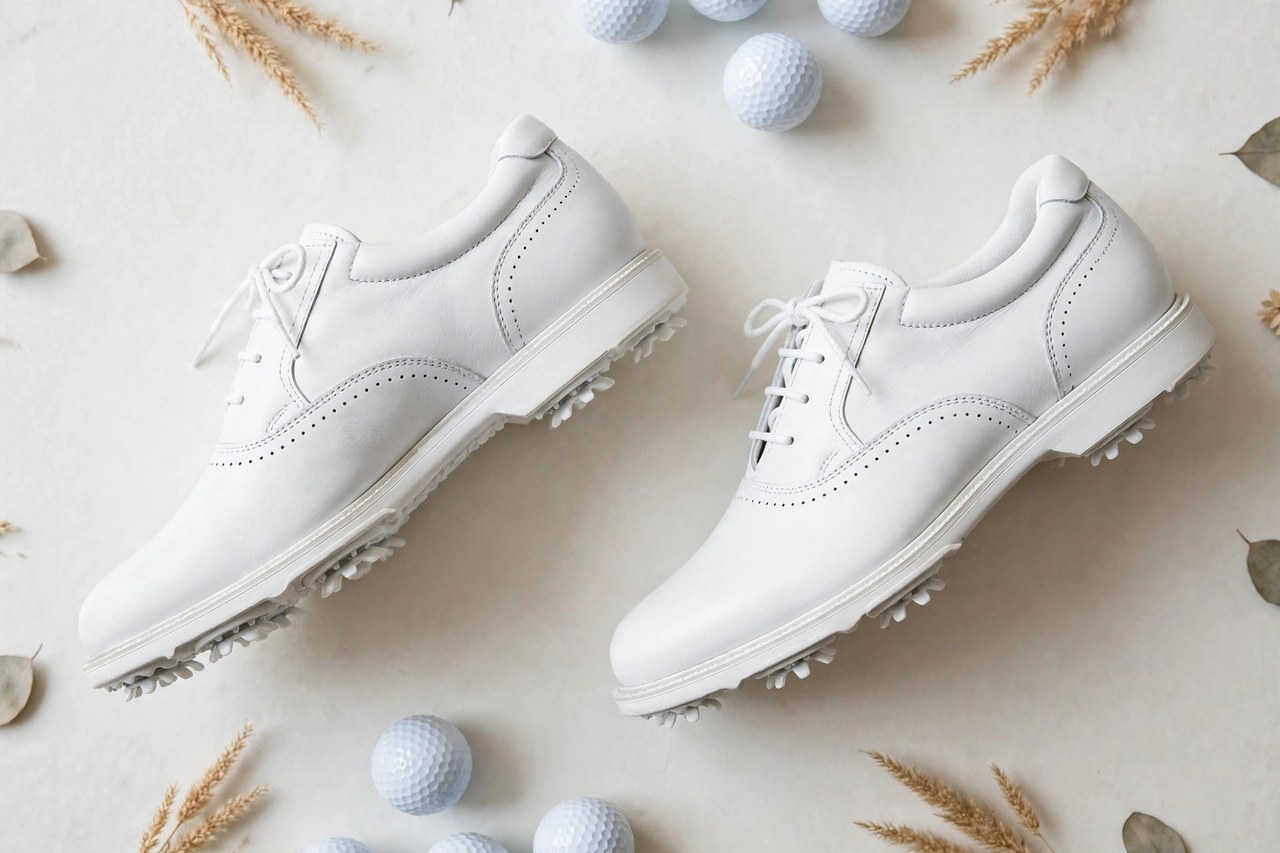
Men's golf shoes are shoes - footwear intended to protect and comfort the foot - engineered for one sport's particular demands: traction through the violence of the swing, stability on slopes and wet grass, and comfort across a round that keeps a player on his feet for several hours and several miles. Many golfers wear these special shoes for exactly those three reasons. Their defining technology is underfoot: soles that can be spikeless, or carry spikes made of metal or plastic - plastic spikes are known as soft spikes - designed to increase traction and help the player keep his balance during the swing, on greens, and in wet conditions. This guide is built around the questions buyers actually ask: which style, which size, which fabric, and what will it look like after a year of real use - answered in order, with the trade-offs stated plainly.
Styles and Construction
The spike question is the family's great divide, and the courses have largely settled it: in an attempt to minimize the severity of spike marks on greens, many courses have banned metal spikes, allowing only plastic soft spikes during play. Soft spikes are replaceable, attached by one of two common methods - a thread or a twist lock - with two thread sizes in common use, large thread and small thread, so replacement begins with identifying your shoe's system. Spikeless shoes answer with a nubbed, traction-patterned outsole molded as one piece: no parts to replace, comfortable off the course, slightly less bite on wet slopes. Above the sole, uppers divide into leather (supportive, waterproofed at the better tiers, the classic saddle and wingtip silhouettes) and athletic mesh synthetics (lighter, breathable, built like the running shoes they descend from). Waterproofing is a specification to verify, not a color: a guaranteed waterproof leather or membrane is what a dewy 7 a.m. tee time demands.
Judge footwear by attachment and compound: cemented soles are light and affordable, stitched or welted constructions cost more and can be repaired, and the outsole rubber decides grip against longevity - soft compounds bite, hard compounds endure. Linings decide comfort over hours, removable insoles decide whether your own supports can come along, and honest weight decides whether the pair disappears on the foot or taxes every mile of the day.
Fit and Sizing
Fit golf shoes for the walk inside the game. Sizes vary between makers as all shoe sizes do, so fit late in the day, in golf socks, with a thumb's width beyond the longest toe and the heel held - but weight the midfoot more than in a street shoe, because the swing's torque tests lateral hold: a foot that slides sideways inside the shoe on a practice swing will slide on the ninth fairway, with consequences for balance and blisters both. Spiked shoes feel firmer underfoot than their spikeless cousins; waterproof models feel warmer and slightly stiffer in the shop and give a little with wear. Walk the shop's carpet, take two practice swings, and reject any pair whose comfort argument begins with the words 'break in'.
Fit footwear late in the day in the socks you will actually wear, with roughly a thumb's width beyond the longest toe, the heel held without lift, and the foot's widest point meeting the shoe's widest point. Sizes are unstandardized between makers - trust your measured length and width over the printed number, and require no break-in argument: a shoe that needs excuses in the shop delivers them on the road.
Wearing and Care
Golf shoe care is the care of a tool that works in weather. Knock and brush the spikes and soles clean after every round - the grass and grit packed around soft spikes is what wears their threads and twist locks - dry the shoes slowly at room temperature with trees or paper inside, and never store them in the trunk's heat. Replace soft spikes when their traction edges round off, a full set at a time, matched to the shoe's thread or twist-lock system. Rotate two pairs across a playing week if you can: leather uppers need the rest day to dry and recover, and the rotation outlasts either pair worn daily. A waterproof guarantee is maintained by cleaning and conditioning leather as directed, not by hope.
Rotation is the first care rule: a day of rest between wears lets linings dry and cushioning rebound, and it doubles a rotation's life compared with daily wear of one pair. Clean after use, dry at room temperature away from radiators, hold shape with trees or paper, and condition leather on a schedule rather than when it looks thirsty. Reproof weather finishes when water stops beading, and resole stitched footwear before the wear reaches the welt.
Common Questions
What is the difference between soft spikes and metal spikes?
Both exist to increase traction and help the player keep balance during the swing, on greens and in wet conditions. Metal spikes are the traditional steel cleat; soft spikes are plastic, gentler on greens - so much so that many courses have banned metal spikes entirely in an attempt to minimize spike marks, allowing only plastic during play. Soft spikes wear faster and are replaceable, attached by thread (in large-thread and small-thread sizes) or by twist lock; check your shoe's system before buying replacements.
Are spikeless golf shoes as good as spiked ones?
For most golfers on most days, yes: a well-designed spikeless outsole grips dry and moderately damp fairways, walks more comfortably, and goes straight from course to clubhouse. The spiked shoe keeps its edge - literally - on wet slopes, lush rough and for high-torque swings, where replaceable soft spikes bite deeper than molded nubs can. Many players end up with both: spikeless for summer and travel, spiked for the wet season and the hilly course.
How often should golf shoe spikes be replaced?
When the traction is visibly going - soft spike edges rounded, nubs worn smooth, or the first slip in a swing - rather than by the calendar. For a regular player that is typically once or twice a season. Replace the full set together, matched to the attachment system your shoes use (thread in its correct large or small size, or twist lock), because a mixed set of worn and new spikes stands unevenly and grips unevenly. The check takes ten seconds in the parking lot and belongs in the pre-round routine.
More in Men's Clothes Guide G
Spikes, Soft and Otherwise
Many golfers wear special shoes, spikeless or with spikes attached to the soles, the spikes made of metal or plastic — plastic spikes also known as “soft spikes” — designed to increase traction, thus helping the player keep balance during the swing, on greens, or in wet conditions. In an attempt to minimize the severity of spike marks made on greens, many golf courses have banned metal spikes, allowing only plastic spikes during play. Spikes on most golf shoes are replaceable, attached using one of two common methods, a thread or a twist lock, with two sizes of thread in common use, called a “large thread” and a “small thread.”
More to Explore on Apparel Search
Looking for Men's Clothing Stores?
This guide explains men's golf shoes. To browse where to buy, visit our men's clothing store directory, where you can find retailers that carry them.