Men's Golf Apparel Guide
Men's golf apparel is the complete wardrobe of the game: the collared shirts, trousers and shorts, shoes, gloves, hats and layers a man wears to play golf, governed more strictly than almost any other sport's clothing. Golf is a club and ball sport played over nine or eighteen holes in as few strokes as possible, and uniquely among sports it polices its dress: most courses enforce a dress code, and an unspoken etiquette backs the written one. This guide is the umbrella - how the pieces fit together as a system, what the codes actually require, and where each component's own full guide in this section takes over.
Shop Men's Golf Apparel Now
Shop Men's Golf Apparel on Amazon Shop Men's Golf Apparel on eBayThe Amazon and eBay links on this page are affiliate links. If you make a purchase through them, Apparel Search may earn a commission.
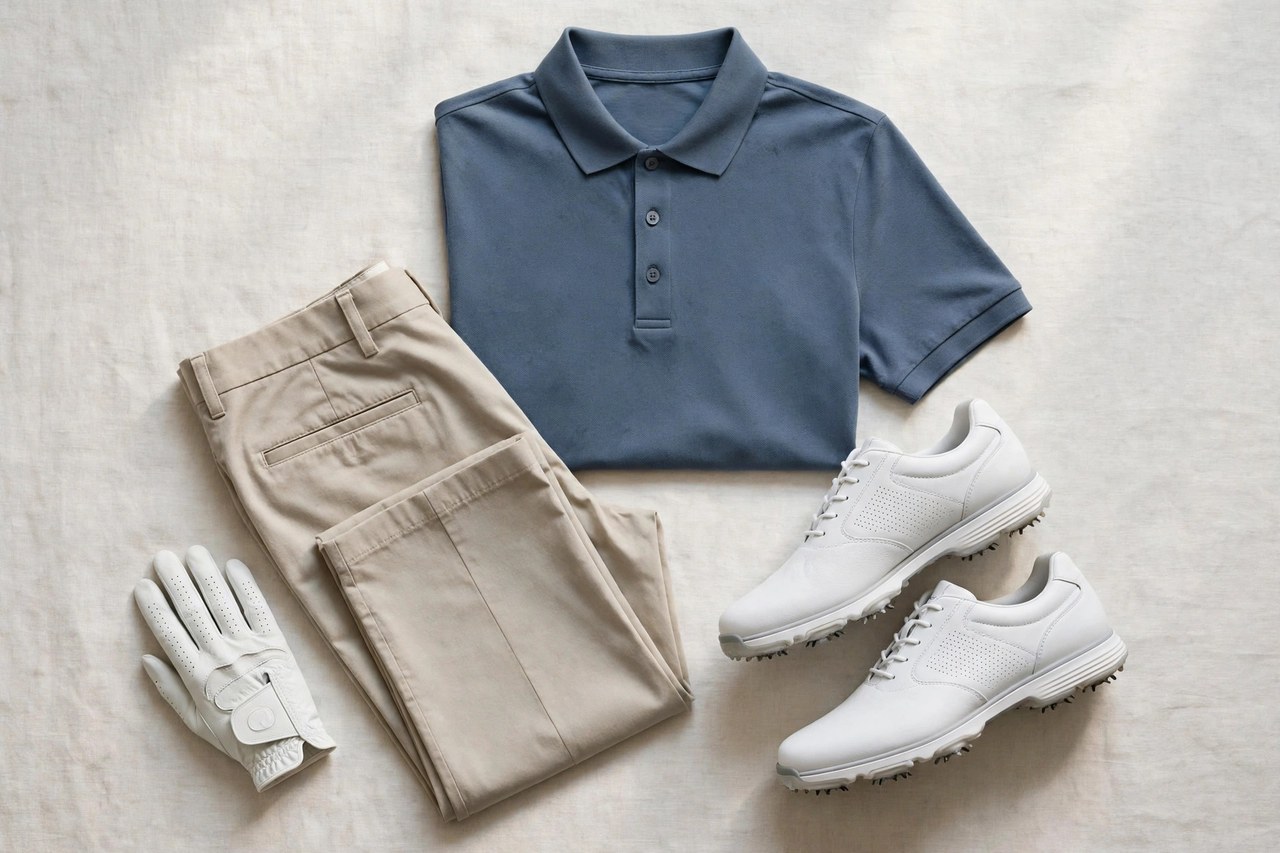
Men's golf apparel is the complete wardrobe of the game: the collared shirts, trousers and shorts, shoes, gloves, hats and layers a man wears to play golf, governed more strictly than almost any other sport's clothing. Golf is a club and ball sport played over nine or eighteen holes in as few strokes as possible, and uniquely among sports it polices its dress: most courses enforce a dress code, and an unspoken etiquette backs the written one. This guide is the umbrella - how the pieces fit together as a system, what the codes actually require, and where each component's own full guide in this section takes over. This guide covers the styles worth knowing, the fit points that decide comfort, the fabrics and construction that separate a good buy from a regret, and the simple care that makes the garment last.
Styles and Construction
Build the outfit from the code outward. The near-universal rule is the collared shirt: traditional cotton, microfiber or polyester golf shirts, with some courses also allowing a turtleneck-style mock collar - the golf shirts guide covers the fabrics and fits. Below, trousers or shorts: shorts extending to the knee, pleated or flat front, are acceptable at most courses in warm months, khaki cotton the common choice; long pants are usually uncuffed so they cannot collect dirt and grass, and many are water-resistant for light-rain rounds - never play through lightning, whatever the trousers are made of. Footwear is treated as equipment: shoes that stabilize the swing, give traction walking and stay comfortable for rounds lasting several hours, most now with soft spikes. The golf glove, hats and weather layers complete the system, and loud, obnoxious prints are the one aesthetic the etiquette names and rejects.
The durable buying order is job, specification, budget - in that sequence. Decide what the garment must do, translate that into fiber, weight, construction and size numbers, and only then shop price. Read labels as specifications, inspect the garment inside out where finishing is unposed, and prefer the maker who publishes measurements to the one who publishes adjectives. A garment that matches your measurements, climate and laundry will be worn; one that misses any of the three becomes expensive storage.
Fit and Sizing
Golf fit is athletic fit inside a formal frame: every garment must survive the swing, which is the fitting-room test that matters. A shirt needs enough room across the back and shoulders to rotate without the hem leaving the waistband, and a collar that stays where the code wants it through eighteen holes. Trousers need a waistband that holds without a belt's rescue and a seat that allows the address position and the follow-through; shorts must reach the knee as the code measures it, standing, not as the wearer hopes. Shoes are fitted for the walk as much as the swing - several miles over grass, in the socks of the day. When a garment passes both the mirror and the practice swing, it is golf apparel; when it passes only the mirror, it is a costume.
Measure yourself once a year and keep the numbers - chest, waist, inseam, foot, head - because bodies drift gradually while size habits never do. Shop from measurements, try garments under real conditions (over layers, in your own shoes, late in the day for footwear), and be honest about alterations: lengths and small waist changes tailor beautifully; shoulders, rises and patterns are the garment you bought forever.
Wearing and Care
Care keeps the system course-legal and ready. Performance shirts wash cool and dry low so their wicking and stretch survive; cotton polos wash inside out to hold color through a season of sun. Trousers are hung by the waistband, cuffs - where they exist - shaken free of the grass and grit they collect, and water-resistant finishes refreshed when rain stops beading. Shoes are dried slowly, rotated between rounds and re-spiked before the worn spike, not the round, decides it. The glove dries flat, away from heat, and is replaced when the palm polishes smooth. Golf clothes live outdoors for hours at a time; an hour of care per round is what keeps the whole kit looking like it belongs on the first tee.
Five minutes when a garment comes off - shake it out, hang or fold it correctly, note the stain and the loose button - prevents most of the damage later blamed on quality. Keep a small kit where the clothes live: brush, lint roller, conditioner suited to your leathers, black, navy and grey thread. Clothing rarely dies at once; it fades by small neglects, and small attentions reverse the process at the same pace.
Common Questions
What is the standard men's golf dress code?
Most courses converge on the same code: a collared shirt (cotton, microfiber or polyester golf shirts; some courses allow a mock turtleneck-style collar), trousers or knee-length shorts with a pleated or flat front, and golf shoes, increasingly with soft spikes rather than metal. Cut-off jeans and workout, running or basketball shorts are usually not permitted. The rules are not set in stone across courses - consult the course you intend to play for its exact requirements before you travel.
Why does golf have a dress code when other sports do not?
Because clothing is part of the decorum of this game, perhaps more than in any other sport: golf grew up as a club game, played on members' courses where dress was a condition of membership, and the etiquette outlived the clubs that wrote it. The practical core survives the tradition - collars and tailored trousers protect greens-side formality, soft spikes protect the greens themselves - and most courses now publish their code, so it functions as information rather than mystery.
Can the right golf clothing actually improve your game?
It cannot fix a swing, and this guide will not pretend otherwise. What correct apparel does is remove clothing from the list of things going wrong: a shirt that does not bind the shoulder turn, trousers that allow a full stance, shoes that hold the feet through the swing and across several miles, a glove that keeps the grip constant. The type of clothing can turn an average golfer into a super stylish one; the strokes remain the player's own work.
More in Men's Clothes Guide G
The Course Code, As Written
We can’t really help with your swing, but maybe we can help you look better on the course. The dress code, plainly: in nearly all cases, courses require men to wear collared shirts, usually traditional cotton, microfiber or polyester golf shirts, with some managers allowing a turtleneck-style collar; shorts extending to the knee, pleated or flat front, are usually acceptable, cotton and khaki the common choice; pants are often water-resistant for light-rain days (with this warning too: never play in a lightning and thunder storm), and normally have no cuffs, which collect dirt and grass. Footwear is equipment — shoes that stabilize the swing, give traction walking, and stay comfortable through a round lasting several hours, most with spikes, many courses now requiring soft spikes of hard rubber or plastic rather than metal. Golf clothing etiquette matters: the clothing is part of the decorum of the game, and loud, obnoxious prints are to be avoided — in short, “don’t dress like a jerk.” These tips are not set in stone for all courses; consult the course you intend to play.
Looking for Men's Clothing Stores?
This guide explains men's golf apparel. To browse where to buy, visit our men's clothing store directory, where you can find retailers that carry them.