Men's Golf Pants Guide
Men's golf pants are trousers - garments worn from the waist to the ankles, covering both legs separately - specified for the golf course. That specification has two authors: the game, which demands a trouser that allows a full swing, a deep stance and several miles of walking, and the course, which typically requires trousers or their sanctioned alternative and may rule on color and style. Cut-off jeans and workout, running or basketball shorts are usually not permitted anywhere; beyond that floor, the golf trouser is a tailored pant rebuilt in fabrics and details chosen for weather, movement and grass.
Shop Men's Golf Pants Now
Shop Men's Golf Pants on Amazon Shop Men's Golf Pants on eBayThe Amazon and eBay links on this page are affiliate links. If you make a purchase through them, Apparel Search may earn a commission.
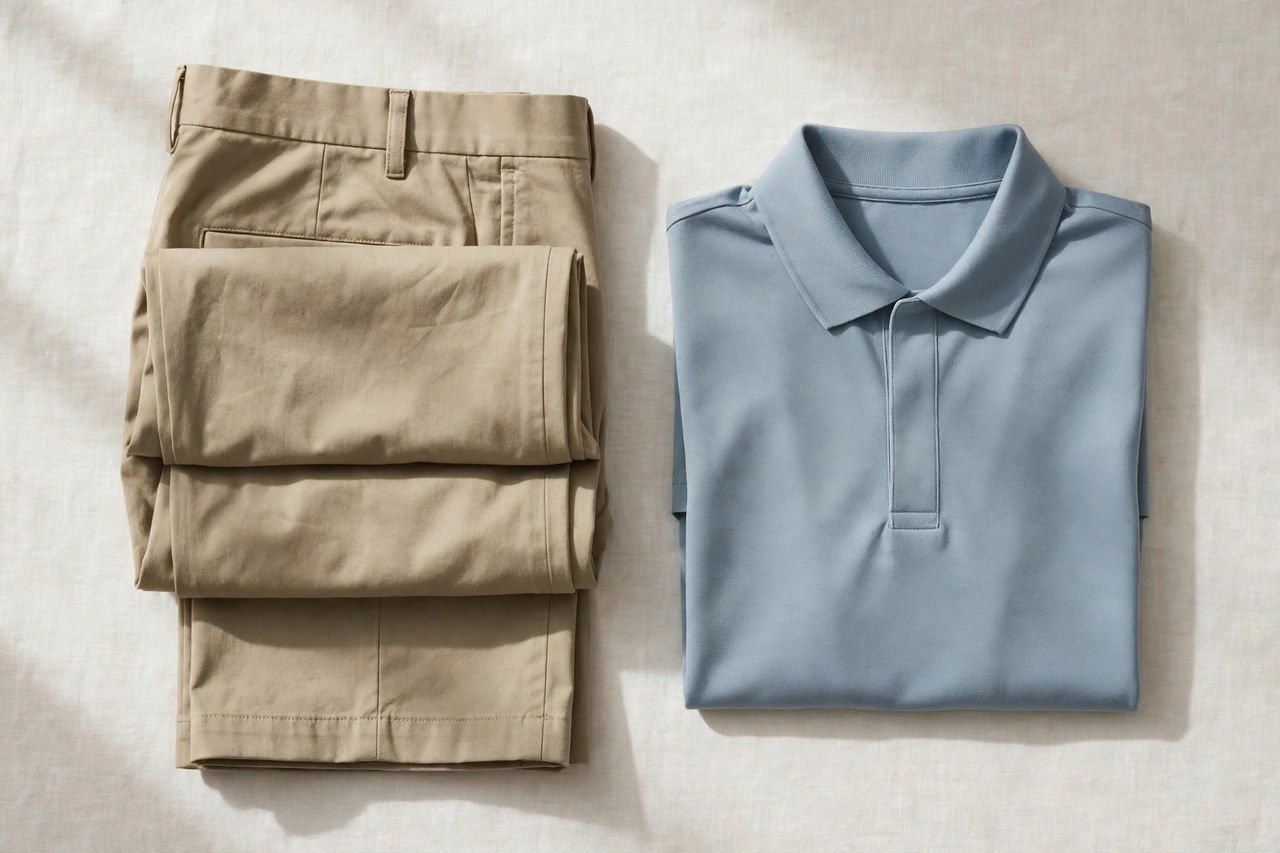
Men's golf pants are trousers - garments worn from the waist to the ankles, covering both legs separately - specified for the golf course. That specification has two authors: the game, which demands a trouser that allows a full swing, a deep stance and several miles of walking, and the course, which typically requires trousers or their sanctioned alternative and may rule on color and style. Cut-off jeans and workout, running or basketball shorts are usually not permitted anywhere; beyond that floor, the golf trouser is a tailored pant rebuilt in fabrics and details chosen for weather, movement and grass. This guide is built around the questions buyers actually ask: which style, which size, which fabric, and what will it look like after a year of real use - answered in order, with the trade-offs stated plainly.
Styles and Construction
The traditional golf trouser is a flat front or single-pleat pant in cotton or a cotton blend, khaki the common color, finished without cuffs - cuffs collect dirt and grass, and while no-cuffs is seldom a written requirement it is the near-universal practice. The modern tier rebuilds the same silhouette in technical fabrics: polyester and elastane blends that stretch through the swing, shed light rain, dry between holes and weigh half what cotton does, with water-resistant finishes for the days played in drizzle. Shorts are the same garment at the sanctioned length - extending to the knee area, pleated or flat front - chosen by location and weather. Details that earn their place: a waistband with gripper tape that holds the shirt tucked through the swing, pockets deep enough for tees and a scorecard, and a hem that clears the shoe without pooling on wet grass.
For any leg garment the rise is the first specification, because it decides sitting comfort before fabric gets a vote: measure from front waistband through to back and compare it with a pair that already works. Then audit the stress points - bar-tacked belt loops and pocket corners, double-stitched inseams, hems finished evenly - and the pocketing, which should be deep, smooth and strong enough to carry what the garment's pockets invite you to carry.
Fit and Sizing
Fit golf pants for the stance, not the mirror. The waistband should close at your natural waist and hold through a full practice swing without the shirt escaping or the seat binding; the rise must allow the address position - knees flexed, hips hinged - and a deep squat to read a putt, without the waistband diving at the back. Length finishes clean: a slight break over the golf shoe standing, never a puddle, because a dragging hem wicks water and collects the course. Technical fabrics relax less than cotton, so the shop fit is close to the season fit; cotton pairs shrink their inch early and then hold. When the choice is between a size that fits standing and one that fits swinging, the game has already voted.
Measure where the waistband will actually sit, plus inseam to your preferred break, and thigh and seat for closer cuts. Then sit, squat and climb a step in the fitting room - a leg garment that only works standing still does not work. Waistbands relax roughly half an inch in wear and inseams shrink most in early washes, so buy the fit you want after those changes rather than the fit in the mirror.
Wearing and Care
Care is outdoor care. Brush off grass and mud before washing - dried course dirt ground into a wash damages the whole load - wash cool inside out, and dry low to protect elastane and water-resistant finishes, which heat and fabric softener both degrade. Refresh the water resistance when rain stops beading on the thigh. Hang by the waistband, shake cuffs and hems free of their collected grit each time, and walk the inner thigh and hem each season: golf trousers walk more miles than any pant in the wardrobe except workwear, and they fail at the same honest places. A pair kept clean and mended stays course-presentable for years.
Wash leg garments inside out and cool; heat is the agent that fades dye, tires elastic and shortens inseams. Dry low or on the line, hang or fold promptly, and crease deliberately or not at all. Walk the stress points each season - hem edges, pocket corners, seat and inner thigh - and mend the small fray while it is still small: leg garments fail gradually, then suddenly, and the two-minute October repair prevents the November replacement.
Common Questions
Are cuffs allowed on golf pants?
Long golf pants normally do not have cuffs, and the reason is practical rather than ceremonial: cuffs collect dirt and grass over eighteen holes. It is not often a specific written requirement - most course codes regulate the type of trouser, its length and what is forbidden (cut-offs, athletic shorts) rather than the hem finish - but the uncuffed hem is the standard practice, and a cuffed pair will look and perform slightly against the grain of the game.
What shorts are acceptable for golf?
At most courses, shorts that extend to the knee area, with a pleated or flat front, in the same tailored spirit as golf trousers - cotton, with khaki a common choice, or the technical blends of modern golf pants. What is usually not permitted is the athletic family: cut-off jeans, workout, running and basketball shorts. Course rules vary on color and style, so the reliable habit is to consult the course you intend to play before you travel.
Cotton or technical fabric - which makes the better golf pant?
Cotton is the traditional choice: breathable, quiet, classic in khaki, and heavier - it holds water, wrinkles, and stays damp in rain. Technical polyester-elastane blends stretch through the swing, weigh less, dry fast and often carry water-resistant finishes, at some cost in traditional feel. Most golfers settle by climate: cotton for dry, mild home courses, technical fabrics for travel, heat, and any forecast that mentions rain - and many own both, as this guide's own rotation advice would predict.
More in Men's Clothes Guide G
Trousers Under Course Rules
Trousers are an item of clothing worn from the waist to the ankles, covering both legs separately. Typically, golf courses require men to wear some sort of trouser, and each course may have different rules regarding the color and style of pant, so consult the course for the specific rules and etiquette expected. Because the sport is played outdoors, weather drives the shorts-versus-pants decision by location and conditions; cut-off jeans and workout, running or basketball shorts are usually not permitted; shorts extending to the knee with a pleated or flat front are usually acceptable; and long pants normally don’t have cuffs, though that is not often a specific requirement. And one honest limit: whatever pant you wear is not going to help your swing. Related guides cover golf apparel, shoes, gloves and the golf hat stores.
Looking for Men's Clothing Stores?
This guide explains men's golf pants. To browse where to buy, visit our men's clothing store directory, where you can find retailers that carry them.