Men's Gingham Shirts Guide
A men's gingham shirt is a shirt made from gingham: a medium-weight, balanced plain-woven fabric woven from dyed cotton or cotton-blend yarn, in which the color runs on the warp yarns and always along the grain. Because warp and weft cross in even checks, gingham has no right or wrong side with respect to color - the pattern is the fabric itself, not a print laid on it. The classic result is the clean two-tone check, white crossed with blue, red, green or black, that has moved between workwear, Ivy style and the mod scene for well over a century without ever quite leaving.
Shop Men's Gingham Shirts Now
Shop Men's Gingham Shirts on Amazon Shop Men's Gingham Shirts on eBayThe Amazon and eBay links on this page are affiliate links. If you make a purchase through them, Apparel Search may earn a commission.
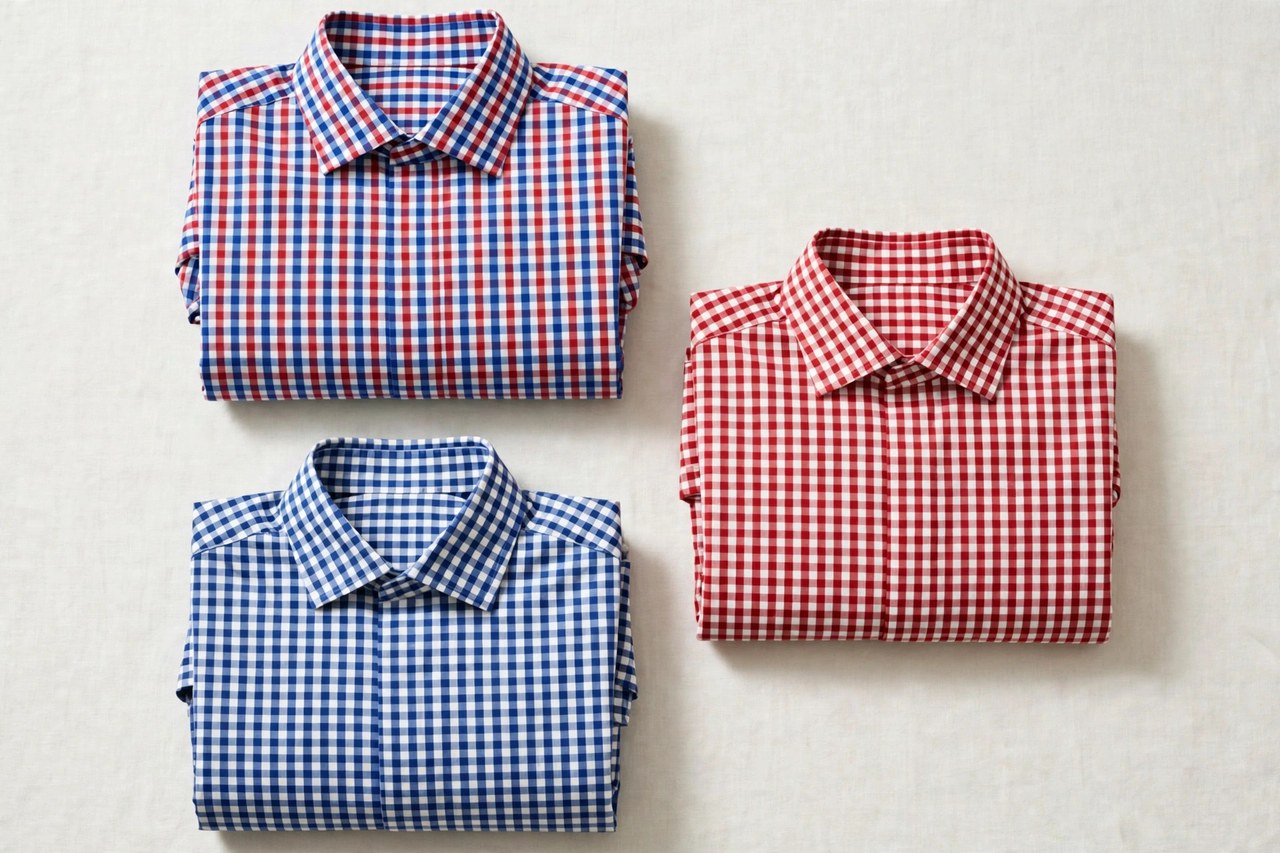
A men's gingham shirt is a shirt made from gingham: a medium-weight, balanced plain-woven fabric woven from dyed cotton or cotton-blend yarn, in which the color runs on the warp yarns and always along the grain. Because warp and weft cross in even checks, gingham has no right or wrong side with respect to color - the pattern is the fabric itself, not a print laid on it. The classic result is the clean two-tone check, white crossed with blue, red, green or black, that has moved between workwear, Ivy style and the mod scene for well over a century without ever quite leaving. This guide is built around the questions buyers actually ask: which style, which size, which fabric, and what will it look like after a year of real use - answered in order, with the trade-offs stated plainly.
Styles and Construction
The check is a specification before it is a style. Gingham is yarn-dyed and woven, so the pattern survives washing exactly as long as the cloth does, and the balanced plain weave - the simplest over-one, under-one structure - makes it smooth, breathable and hard-wearing for its weight. Scale is the first choice: small checks read almost as texture from a distance and pair with tailoring; medium checks are the classic shirt; large checks turn countrified and casual. Yarn quality divides the family quietly - carded medium yarns make the honest everyday shirt, while finer combed yarns make dressier, smoother versions, and gingham's second career as the fitting fabric (the inexpensive shell sewn to test a pattern, alongside muslin) should not fool anyone: in fine yarns it makes genuinely expensive garments. Button-down collars are the traditional partner, with spread collars on the dressier small checks.
A top earns its keep in finishing: seams that hang straight and stay even at eight to twelve stitches per inch, collars and plackets that lie flat after washing, buttons sewn with thread shanks so they sit in their holes without pulling. Hold the cloth to the light - a tight, even weave or knit outwears a loose one at the same labeled weight, and pattern pieces cut on grain keep the garment from twisting around your body by the third wash.
Fit and Sizing
Fit a gingham shirt by its plainest rules, because a check is a measuring grid that betrays a bad fit instantly: vertical checks should hang vertical, horizontal checks should stay level at the hem, and any pulling at the buttons will bow the grid where everyone can see it. Shoulders and chest first, as with every shirt - the seam on the shoulder bone, the chest closing without strain - then length by intention: tucked lengths stay tucked sitting down, untucked summer lengths end mid-fly. The pattern also does fit work for you: a check breaks up the torso's outline, which is why gingham flatters more builds than the equivalent plain shirt, and why a slightly generous cut reads as ease rather than sloppiness in a check.
Fit tops shoulders and chest first, because tailors cannot cheaply move either: the shoulder seam ends at the shoulder bone, the chest closes without pulling, and both arms raise without the hem escaping the waistband. Tucked lengths must stay tucked sitting; untucked lengths should end mid-fly. Sleeves are the cheap alteration, shoulders the permanent one - reject a wrong shoulder for any reason, forgive a long sleeve for many.
Wearing and Care
Gingham care is cotton care with one pattern caution. Wash cool or warm, dark checks inside out to hold the contrast that is the whole point of the fabric, and dry low or on the line; the balanced weave irons easily and crisply, one of gingham's quiet virtues. Because there is no printed surface, there is nothing to crack or fade unevenly - an old gingham shirt softens rather than dates. Store on hangers so the checks hang true, mend a fraying cuff edge early, and expect the shirt to outlast most of the patterned competition in the drawer: a woven check cannot peel, and this one has been in fashion, in one scene or another, since the 1960s mods adopted it and long before.
Launder tops by the label with three defaults: cool or warm water to protect color and trims, dark and printed pieces inside out, and low or line drying, which is the largest single lever on a shirt's lifespan. Fasten buttons and zips before washing to protect the whole load, treat stains before the dryer can set them, and store knits folded so their shoulders keep the shape they were knitted with.
Common Questions
What is gingham fabric, exactly?
Gingham is a medium-weight balanced plain-woven fabric, traditionally cotton, woven from yarn-dyed yarns with the color carried on the warp and always along the grain, producing its even two-tone check. Because the pattern is woven rather than printed, gingham has no right or wrong side with respect to color - both faces show the same check - and the pattern lasts exactly as long as the cloth itself.
Is a gingham shirt smart enough to wear with a suit or tie?
The small-check versions are. A fine, small-scale gingham in blue or burgundy on white behaves like a textured solid at conversational distance and sits comfortably under a blazer or a soft-shouldered suit with a knitted or plain tie. The scale is the dress code: as the check grows, the shirt moves toward sportswear, and a large-check gingham under a formal suit jacket reads as a deliberate clash rather than polish.
Why is gingham used as a test fabric in fashion design?
Because it is inexpensive, stable and honest: designers and pattern-makers sew a fitting shell - a toile - from gingham or muslin to test a pattern before cutting the fashion fabric. The woven check grid makes fitting errors visible at a glance, since any distortion of the pattern shows exactly where the cloth is pulling. That test-fabric career is about price and clarity, not quality - fine gingham makes excellent finished garments too.
More in Men's Clothes Guide G
Gingham, Defined
Gingham is a medium-weight balanced plain-woven fabric made from dyed cotton or cotton-blend yarn, made of carded, medium or fine yarns, where the coloring is on the warp yarns and always along the grain (weft) — and gingham has no right or wrong side with respect to color. Gingham also has a double life: along with muslin, it has been used as a test fabric while designing fashion, an inexpensive fitting shell before cutting the fashion fabric — yet the fabric is not always inexpensive, and gingham can be used to make very nice and expensive garments. Gingham shirts have been worn by mods since the 1960s and continue to be identified with fans of indie and mod music, with brands like Lambretta Clothing, Ben Sherman, Fred Perry, Penguin and Merc producing gingham shirts. Related guides cover shirts and dress shirts, and the shirt styles terminology.
Looking for Men's Clothing Stores?
This guide explains men's gingham shirts. To browse where to buy, visit our men's clothing store directory, where you can find retailers that carry them.