Men's Dress Shirts Guide
Men's dress shirts are the tailored shirts of the formal and business wardrobe: collar-and-cuff shirts in fine cotton weaves, cut to be worn tucked, usually with a tie or an open collar under a jacket. The dress shirt is menswear's most specification-dense garment relative to its size - collar geometry, cuff style, weave, fit block and a dozen construction details inside a few square feet of cotton - and its companion topics (French cuff shirts, dress shirt fabrics, made-to-measure versus bespoke) are exactly the decisions this page exists to teach.
Shop Men's Dress Shirts Now
Shop Men's Dress Shirts on Amazon Shop Men's Dress Shirts on eBayThe Amazon and eBay links on this page are affiliate links. If you make a purchase through them, Apparel Search may earn a commission.
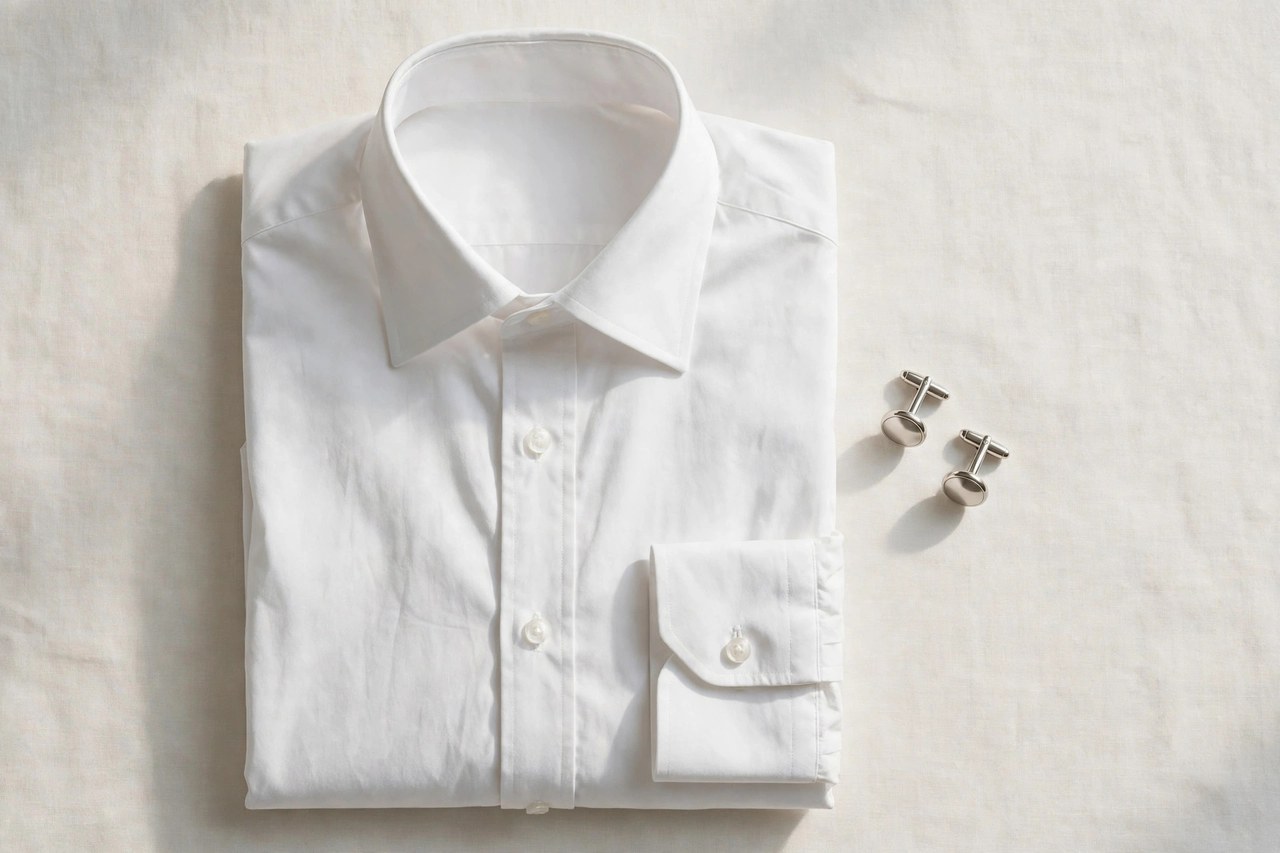
Men's dress shirts are the tailored shirts of the formal and business wardrobe: collar-and-cuff shirts in fine cotton weaves, cut to be worn tucked, usually with a tie or an open collar under a jacket. The dress shirt is menswear's most specification-dense garment relative to its size - collar geometry, cuff style, weave, fit block and a dozen construction details inside a few square feet of cotton - and its companion topics (French cuff shirts, dress shirt fabrics, made-to-measure versus bespoke) are exactly the decisions this page exists to teach. This guide is built around the questions buyers actually ask: which style, which size, which fabric, and what will it look like after a year of real use - answered in order, with the trade-offs stated plainly.
Styles and Construction
Weave is the cloth decision: poplin (smooth, crisp, the formal default), pinpoint and royal oxford (finer texture, a step more relaxed), twill (a soft sheen and drape, forgiving of wrinkles), and herringbone or dobby for quiet pattern in the cloth itself. Collars state the intent: spread and cutaway for tie knots and modern formality, point for tradition, button-down for the American sport-shirt lineage that business-casual adopted. Cuffs complete it: barrel cuffs for every day, French (double) cuffs for cufflinks and ceremony. Fit blocks - classic, tailored, slim, extra-slim - differ more between brands than the labels suggest; the neck and sleeve numbers are the only universal language.
A top earns its keep in finishing: seams that hang straight and stay even at eight to twelve stitches per inch, collars and plackets that lie flat after washing, buttons sewn with thread shanks so they sit in their holes without pulling. Hold the cloth to the light - a tight, even weave or knit outwears a loose one at the same labeled weight, and pattern pieces cut on grain keep the garment from twisting around your body by the third wash.
Fit and Sizing
Fit begins with the numbers you cannot alter: collar size (two fingers between collar and neck, closed) and sleeve length (the cuff showing a centimeter beyond the jacket sleeve, ending at the wrist bone with arms down). The body should button without the placket's buttons straining when you sit, the shoulder seam should sit on the bone, and the tail must stay tucked through a day of reaching - shirt tails and side gussets exist for exactly this. If your neck and your body disagree about sizes (athletic builds, above all), made-to-measure stops being a luxury and becomes the economical answer.
Fit tops shoulders and chest first, because tailors cannot cheaply move either: the shoulder seam ends at the shoulder bone, the chest closes without pulling, and both arms raise without the hem escaping the waistband. Tucked lengths must stay tucked sitting; untucked lengths should end mid-fly. Sleeves are the cheap alteration, shoulders the permanent one - reject a wrong shoulder for any reason, forgive a long sleeve for many.
Wearing and Care
Dress shirts reward process: wash cool or warm by soil, collars and cuffs pre-treated (they carry the body's oils and fail first), and iron while faintly damp - collar from the points inward, cuffs inside then out, yoke, then body - or send them to a laundry whose pressing you trust. Rotate at least five for a working week so each rests and airs between wears. A shirt's retirement signs are collar-edge fray and a grey that no wash lifts; until then, a well-kept dress shirt is the cheapest formality a man owns.
Launder tops by the label with three defaults: cool or warm water to protect color and trims, dark and printed pieces inside out, and low or line drying, which is the largest single lever on a shirt's lifespan. Fasten buttons and zips before washing to protect the whole load, treat stains before the dryer can set them, and store knits folded so their shoulders keep the shape they were knitted with.
Common Questions
What collar style is most versatile for a dress shirt?
A moderate spread (sometimes called semi-spread or English spread) is the diplomatic answer: it frames a medium tie knot, sits cleanly open without a tie under a blazer, and flatters most face shapes. Extreme cutaways demand wide knots and read fashion-forward; long points read traditional and can disappear under a jacket. If a wardrobe owns three dress shirts, make the first a white moderate spread in poplin or twill, the second a pale blue, and argue about the third at leisure.
When should you choose French cuffs?
When the occasion or the jacket rises to meet them: formal business, weddings, and any setting where cufflinks are a pleasure rather than a puzzle. French cuffs require cufflinks (their whole point), add a fold of cloth that wears the wrist elegantly, and sit slightly longer - show a touch more cuff. For daily office wear, barrel cuffs are the workhorse. A reasonable wardrobe runs mostly barrel with one or two French-cuff shirts in white for the days the calendar turns formal.
Is made-to-measure worth it for dress shirts?
When your measurements fight the rack: a neck two sizes from your chest, sleeves longer or shorter than the block offers, or a torso that billows in every standard fit. Made-to-measure takes your numbers into a house pattern and returns a shirt whose collar closes, whose sleeves land, and whose body tucks without excess - at prices that now overlap better rack shirts. For standard builds, a good rack shirt plus a tailor's darting achieves most of it for less.
More in Men's Clothes Guide D
Fabrics, French Cuffs and Made-to-Measure
Beside the shirt sits its own library: a guide to dress shirt fabrics, the French cuff dress shirt guide, and the essay on made-to-measure and bespoke clothing. Their logic organizes the subject — weave first, cuff second, and the fit route (rack, tailored or measured) decided by your own numbers.
Looking for Men's Clothing Stores?
This guide explains men's dress shirts. To browse where to buy, visit our men's clothing store directory, where you can find retailers that carry them.