Men's Dress Slacks Guide
Men's dress slacks are tailored trousers under their American name - the wool (and wool-blend) trousers a man wears with a shirt, a blazer or a sports coat when the occasion is dressed but not suited. Slacks point onward to dress pants and the pleated and plain-front guides, but they also stand on the angle the name itself suggests: slacks as the independent trouser, the separate, judged by drape and crease rather than by the suit it matches. Where the dress pants page specifies the trouser as tailoring, this page covers slacks as a working wardrobe system.
Shop Men's Dress Slacks Now
Shop Men's Dress Slacks on Amazon Shop Men's Dress Slacks on eBayThe Amazon and eBay links on this page are affiliate links. If you make a purchase through them, Apparel Search may earn a commission.
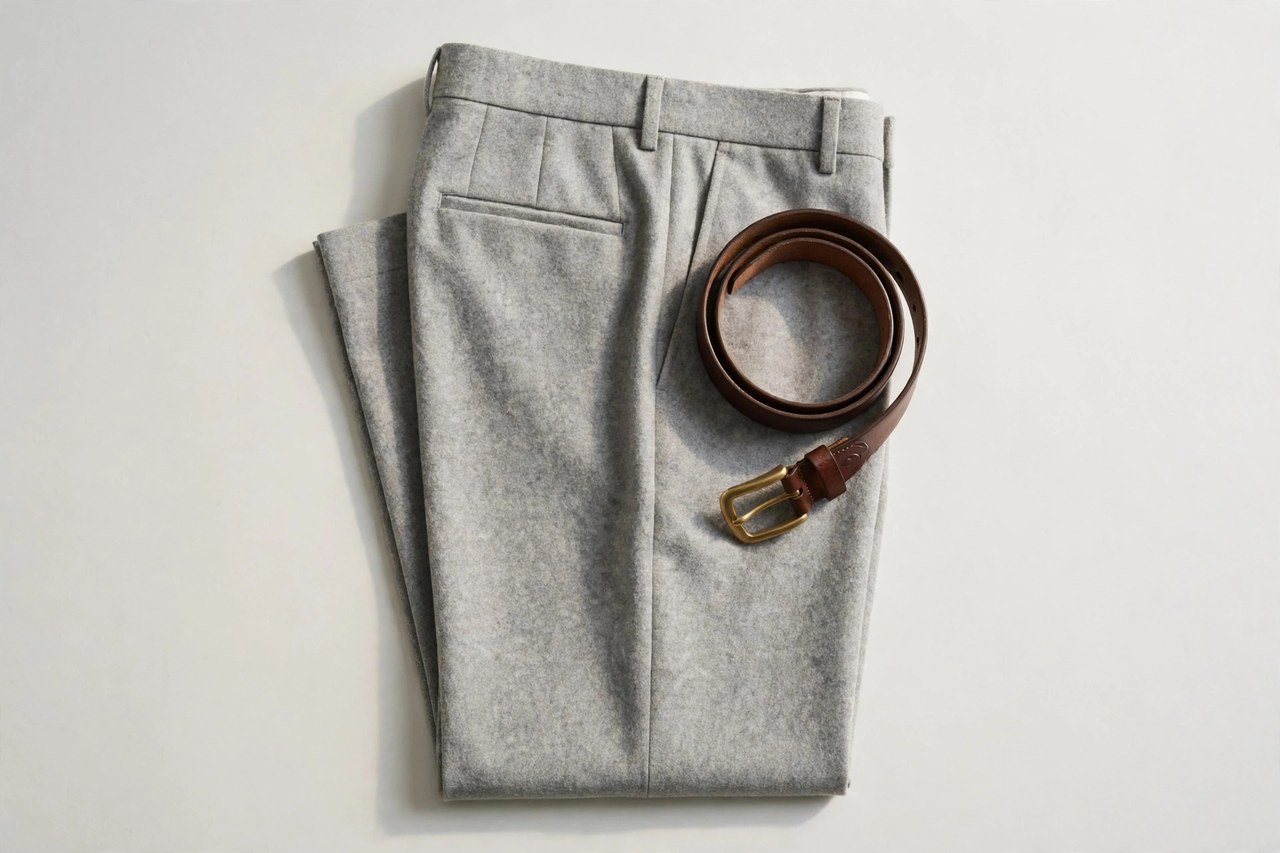
Men's dress slacks are tailored trousers under their American name - the wool (and wool-blend) trousers a man wears with a shirt, a blazer or a sports coat when the occasion is dressed but not suited. Slacks point onward to dress pants and the pleated and plain-front guides, but they also stand on the angle the name itself suggests: slacks as the independent trouser, the separate, judged by drape and crease rather than by the suit it matches. Where the dress pants page specifies the trouser as tailoring, this page covers slacks as a working wardrobe system. This guide walks through the choices that matter - style, fit, fabric and finish - with the practical detail a product listing rarely gives you, and closes with the care habits that keep the garment in service.
Styles and Construction
The slack's virtue is combination. A core of grey - light, mid and charcoal flannel or worsted - plus navy and a warm tan covers nearly every blazer and sports coat ever made, which is why the family hangs together: each pair must work with several jackets, so cloth texture becomes the pairing language. Smooth worsteds pair with smooth jackets; flannels take tweeds and knits; the crease is the slack's formality dial, pressed sharp for the office and softening as the trouser's role relaxes. Pleats and flat fronts divide as they do in dress pants, with the separates' twist: pleats forgive the desk day, flat fronts keep the line under untucked knitwear.
For any leg garment the rise is the first specification, because it decides sitting comfort before fabric gets a vote: measure from front waistband through to back and compare it with a pair that already works. Then audit the stress points - bar-tacked belt loops and pocket corners, double-stitched inseams, hems finished evenly - and the pocketing, which should be deep, smooth and strong enough to carry what the garment's pockets invite you to carry.
Fit and Sizing
Fit slacks by the chair and the mirror together: the waistband sits at the natural waist with a tucked shirt staying tucked through sitting and reaching, the seat without diagonal strain lines, and the crease hanging plumb from waistband to shoe. Rise is the separates' secret - a slack worn with knitwear and open shirts wants a rise that keeps the waistband where the top ends, or the pairing shows a gap at every bend. Break follows the shoe wardrobe: loafers and slacks are the classic American pairing, and a slight break over a loafer's low line is the proportion to ask the tailor for.
Measure where the waistband will actually sit, plus inseam to your preferred break, and thigh and seat for closer cuts. Then sit, squat and climb a step in the fitting room - a leg garment that only works standing still does not work. Waistbands relax roughly half an inch in wear and inseams shrink most in early washes, so buy the fit you want after those changes rather than the fit in the mirror.
Wearing and Care
Slacks work harder per pair than suit trousers because the same three pairs rotate under five jackets - so the care discipline matters double: rest each pair a day (two after a long sitting day), hang by the waistband on clamp hangers so the crease sets, brush the seat and cuffs where office chairs polish wool to a shine, and press before you clean. Dry-cleaning is the last resort, not the routine: most slacks need it twice a season, and the press is what the eye actually reads as cleanliness. Track the rotation honestly; the pair you love most is the pair wearing out fastest.
Wash leg garments inside out and cool; heat is the agent that fades dye, tires elastic and shortens inseams. Dry low or on the line, hang or fold promptly, and crease deliberately or not at all. Walk the stress points each season - hem edges, pocket corners, seat and inner thigh - and mend the small fray while it is still small: leg garments fail gradually, then suddenly, and the two-minute October repair prevents the November replacement.
Common Questions
Are slacks and dress pants the same thing?
Substantially, yes: slacks began as the term for looser, uncreased leisure trousers in the last century and settled into the standard American name for tailored dress trousers worn as separates. Retailers now use the words interchangeably. The useful distinction is one of role rather than garment: dress pants are often bought as a suit's lower half or in its language, slacks as independent trousers that must combine with many jackets. The cloth, construction and fit checks are the same on both pages of this guide.
What colors of slacks go with everything?
Grey in its depths is the champion: mid-grey worsted or flannel pairs with navy, charcoal, black, brown and patterned jackets without a failure mode, and light grey extends the same trick into summer. Charcoal slacks formalize; navy slacks are the second purchase (mind the navy-blazer pairing - the slack must read clearly as a different cloth from the jacket, or it reads as a failed suit). A tan or stone pair completes the classic four and carries the warm half of the wardrobe.
Why do wool slacks go shiny at the seat?
Friction and pressure polish the wool's fiber scales flat, and flat fibers reflect light evenly - the shine is literal polish, accelerated by hard chair surfaces and by dry-cleaning chemistry. Slow it by rotating pairs (rest lets fibers recover loft), brushing the seat after wear, and pressing with a damp cloth barrier rather than direct iron heat. A tailor's trick - sponging with a cloth dampened with water and a little white vinegar, then pressing through a cloth - can mute mild shine; deep shine is the fabric's retirement notice.
More in Men's Clothes Guide D
Looking for Men's Clothing Stores?
This guide explains men's dress slacks. To browse where to buy, visit our men's clothing store directory, where you can find retailers that carry them.