Men's Dress Shoes Guide
Men's dress shoes are the leather shoes of formal and business dress: Oxfords, Derbys, loafers, monk straps and brogues in their dress forms, built on elegant lasts and finished to take a shine. They are the foundation in the literal sense - the first thing a formal outfit stands on and the detail by which shoes-people judge the whole. A dress shoe is always one member of a family - Oxford shoes, penny and tassel loafers, business attire, shoe types - and should be bought with the family in view.
Shop Men's Dress Shoes Now
Shop Men's Dress Shoes on Amazon Shop Men's Dress Shoes on eBayThe Amazon and eBay links on this page are affiliate links. If you make a purchase through them, Apparel Search may earn a commission.
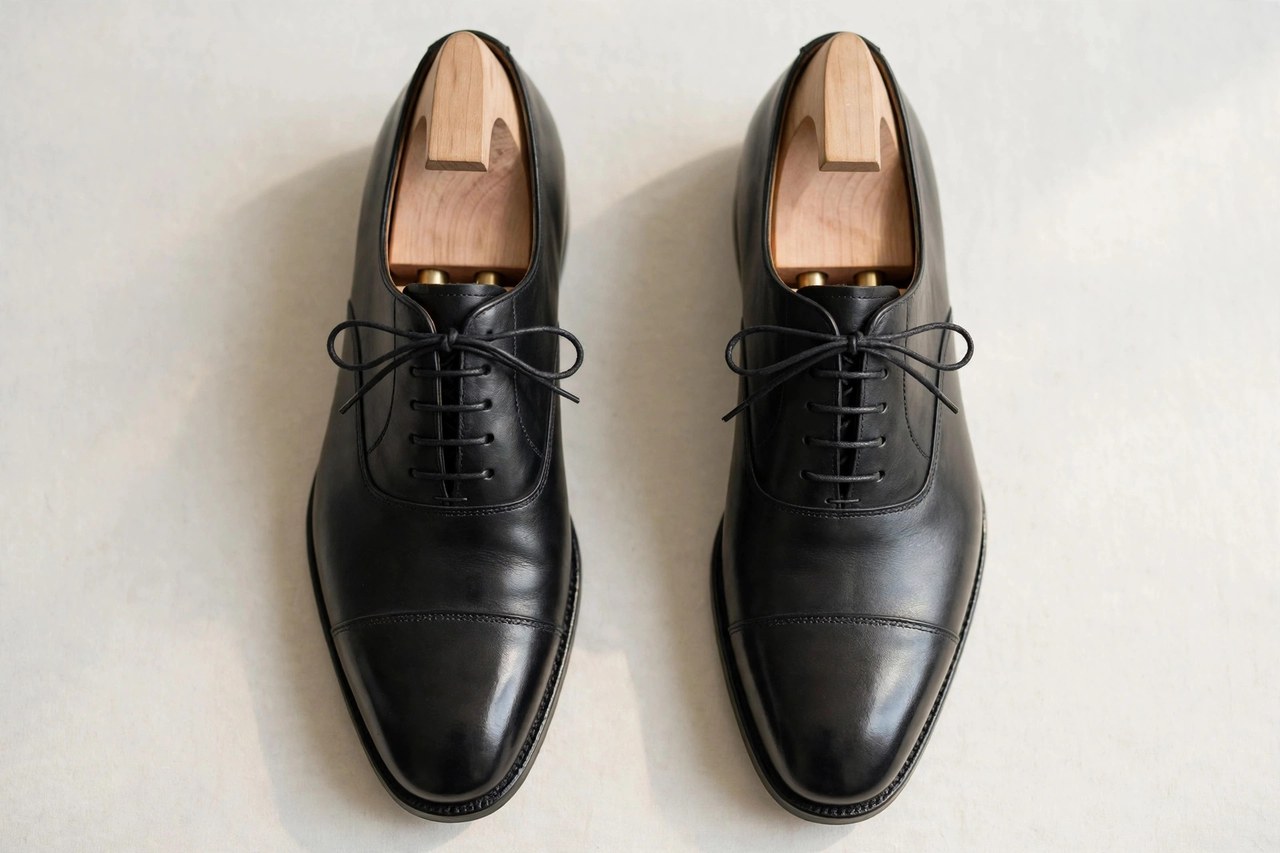
Men's dress shoes are the leather shoes of formal and business dress: Oxfords, Derbys, loafers, monk straps and brogues in their dress forms, built on elegant lasts and finished to take a shine. They are the foundation in the literal sense - the first thing a formal outfit stands on and the detail by which shoes-people judge the whole. A dress shoe is always one member of a family - Oxford shoes, penny and tassel loafers, business attire, shoe types - and should be bought with the family in view. This guide covers the styles worth knowing, the fit points that decide comfort, the fabrics and construction that separate a good buy from a regret, and the simple care that makes the garment last.
Styles and Construction
The formality ladder is the organizing knowledge. The black cap-toe Oxford is the top rung - the interview, wedding and boardroom shoe. Derbys (open lacing) sit a step down and forgive higher insteps. Broguing lowers formality as it increases - a full brogue is country clothing by birth, whatever its color. Loafers trade laces for ease: penny for American versatility, tassel for a dressed loafer's flourish. Soles divide the tiers too: leather for formality and dance floors, thin rubber (Dainite-style) for the same silhouette with weather sense. Suede, at any pattern, is the casual dialect of the same language.
Judge footwear by attachment and compound: cemented soles are light and affordable, stitched or welted constructions cost more and can be repaired, and the outsole rubber decides grip against longevity - soft compounds bite, hard compounds endure. Linings decide comfort over hours, removable insoles decide whether your own supports can come along, and honest weight decides whether the pair disappears on the foot or taxes every mile of the day.
Fit and Sizing
Fit dress shoes with the day's-end foot and the correct thin sock, judging the ball's position (the shoe's widest at your widest), heel hold, and the lacing's V - nearly closed on an Oxford when new, since the facings draw together as the leather eases. Fashion-forward lasts run long; do not buy toe room you do not need, because excess length creases in the wrong place and trips on stairs. A dress shoe should be snug-but-not-painful at purchase everywhere except the toes, and it should need no promise that agony is break-in - stiff adjustment, yes; suffering, no.
Fit footwear late in the day in the socks you will actually wear, with roughly a thumb's width beyond the longest toe, the heel held without lift, and the foot's widest point meeting the shoe's widest point. Sizes are unstandardized between makers - trust your measured length and width over the printed number, and require no break-in argument: a shoe that needs excuses in the shop delivers them on the road.
Wearing and Care
Dress shoes live by the rotation-and-trees discipline more than any footwear you own: a rest day between wears, cedar trees in from the moment they come off, and cleaning before the leather dries around the day's grime. Polish in thin layers (cream for color and feeding, wax for the toe's mirror where wanted), edge-dress the soles' rims, and resole leather soles before wear reaches the welt. Kept this way, a quality dress shoe is a decade's service with two resoles; worn daily and treeless, the same shoe is two years of decline at the same price.
Rotation is the first care rule: a day of rest between wears lets linings dry and cushioning rebound, and it doubles a rotation's life compared with daily wear of one pair. Clean after use, dry at room temperature away from radiators, hold shape with trees or paper, and condition leather on a schedule rather than when it looks thirsty. Reproof weather finishes when water stops beading, and resole stitched footwear before the wear reaches the welt.
Common Questions
What is the difference between an Oxford and a Derby?
Lacing construction. An Oxford's eyelet facings are sewn under the vamp (closed lacing), giving the sleek, formal front. A Derby's facings are sewn on top (open lacing), adjusting more generously and reading a step less formal. Fit follows construction: high insteps that strain an Oxford's closed V often find the Derby immediately comfortable. Formality follows it too - for the most formal occasions the plain or cap-toe Oxford in black remains the standard the Derby politely approaches.
What color dress shoes should a man buy first?
Black first if your suits are navy and charcoal and your calendar holds interviews, weddings and formal evenings - the black cap-toe Oxford is the single most employable shoe in menswear. Brown first if your wardrobe lives in separates, lighter suits and business-casual, where brown's range (from tan to dark espresso) pairs wider. The common error is the in-between buy - a mid-brown shoe asked to do black's formal jobs. Buy the rung of the ladder your life actually stands on, then the other color next.
How should dress shoes fit when new?
Snug at the heel and waist, with the ball seated at the shoe's widest point, toes able to lie flat with a thumb's clearance beyond the longest - and the laces closing to a narrow V on Oxfords. The leather will ease across the width (never in length), so width snugness relaxes within a week while length never improves. Walk on carpet, test stairs if the shop allows, and buy in the afternoon: a shoe fitted to a morning foot is a size argument waiting for evening.
More in Men's Clothes Guide D
Looking for Men's Clothing Stores?
This guide explains men's dress shoes. To browse where to buy, visit our men's clothing store directory, where you can find retailers that carry them.