Men's Oxford Shoes Guide
An Oxford shoe is characterized by shoelace eyelet tabs that are attached under the vamp - a feature termed closed lacing. Originally Oxfords were plain, formal shoes made of leather, but they have evolved into a range of styles suitable for formal, uniform and casual wear, now made from calf leather, faux and genuine patent leather, suede and canvas, normally in black or brown, plain or patterned with broguing. Oxfords are also referred to on occasion as Balmorals. This guide explains the closed-lacing construction that defines the shoe, how it differs from its open-laced rival the Derby, and how to buy and keep the most formal shoe in a man's regular wardrobe.
Shop Men's Oxford Shoes Now
Shop Men's Oxford Shoes on Amazon Shop Men's Oxford Shoes on eBayThe Amazon and eBay links on this page are affiliate links. If you make a purchase through them, Apparel Search may earn a commission.
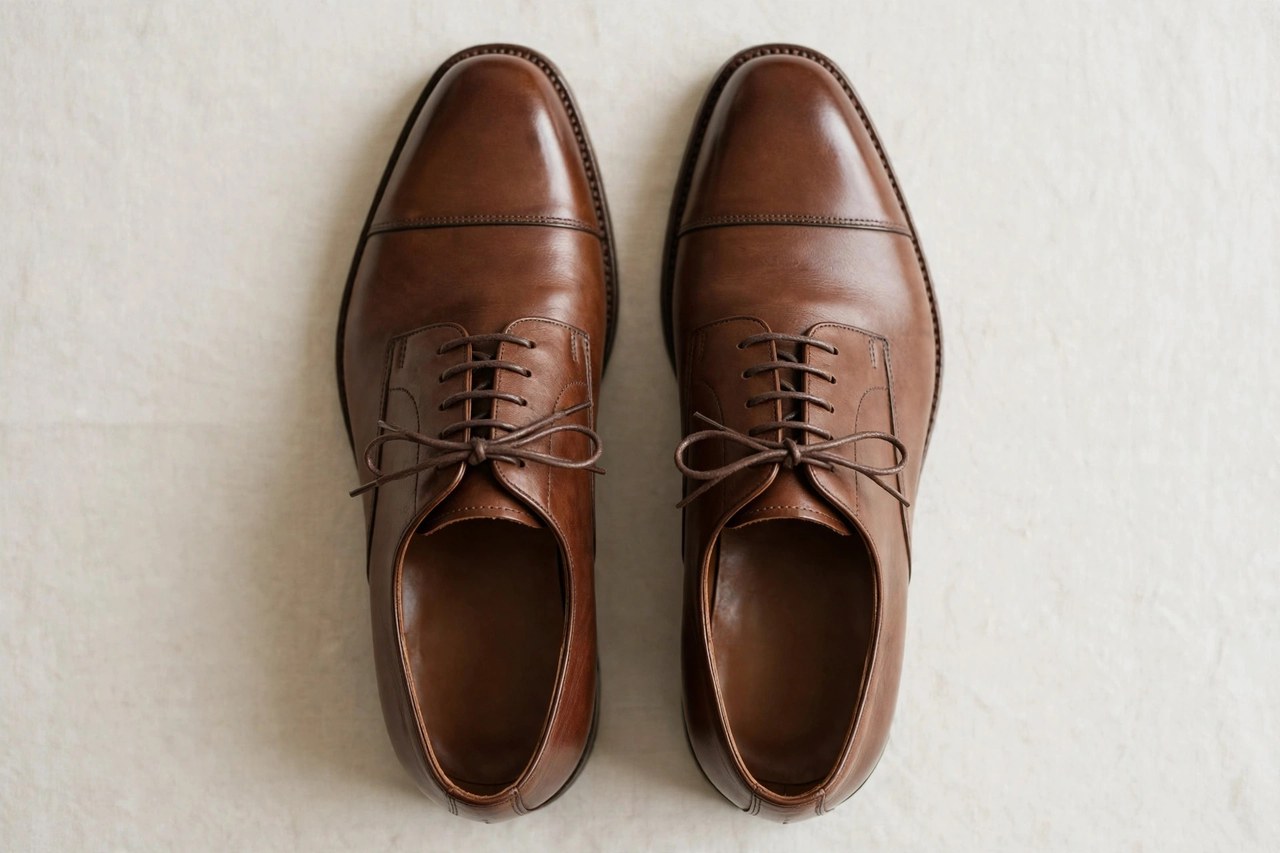
An Oxford shoe is characterized by shoelace eyelet tabs that are attached under the vamp - a feature termed closed lacing. Originally Oxfords were plain, formal shoes made of leather, but they have evolved into a range of styles suitable for formal, uniform and casual wear, now made from calf leather, faux and genuine patent leather, suede and canvas, normally in black or brown, plain or patterned with broguing. Oxfords are also referred to on occasion as Balmorals. This guide explains the closed-lacing construction that defines the shoe, how it differs from its open-laced rival the Derby, and how to buy and keep the most formal shoe in a man's regular wardrobe. This guide is built around the questions buyers actually ask: which style, which size, which fabric, and what will it look like after a year of real use - answered in order, with the trade-offs stated plainly.
Closed Lacing Is the Silhouette
Closed lacing is not a detail; it is the whole silhouette. Because the eyelet tabs are stitched under the vamp, the laces pull the shoe's quarters together over a clean, unbroken front, giving the Oxford its sleek, formal line - and its less forgiving fit, since closed quarters adjust less over a high instep than open ones. Derby shoes, called Blüchers in American naming, attach their eyelet tabs on top of the vamp instead: open lacing, a roomier and more casual shoe. Within Oxfords, the families run by decoration: the plain toe and the cap toe (the business default, in black calf), wholecuts cut from a single piece of leather (the most formal and least forgiving), and brogues, whose perforations began as country drainage holes and now grade a shoe's formality downward as their coverage grows - from quarter and half brogues to the full wingtip. Patent leather Oxfords are the black-tie form; suede and canvas versions step the same construction down to smart casual.
Judge footwear by attachment and compound: cemented soles are light and affordable, stitched or welted constructions cost more and can be repaired, and the outsole rubber decides grip against longevity - soft compounds bite, hard compounds endure. Linings decide comfort over hours, removable insoles decide whether your own supports can come along, and honest weight decides whether the pair disappears on the foot or taxes every mile of the day.
The Least Forgiving Fit
Fit an Oxford with more care than any other shoe you own, because closed lacing forgives the least. The quarters should meet or nearly meet over the instep when laced - a wide V gap says the instep volume is wrong, and no amount of breaking in closes it honestly. Length and width follow the standard rules in our shoes guides: a thumb's width beyond the longest toe, the foot's widest point at the shoe's widest point, the heel held without lift. Men with high insteps who cannot close an Oxford's lacing should take the honest alternative - a Derby in the same leather gives up a degree of formality and gains a shoe that fits - rather than sizing up into length they do not need. Buy late in the day, in dress socks, and walk a carpeted length: a formal shoe that needs excuses in the shop delivers them at the wedding, the interview and the funeral, the three places Oxfords earn their keep.
Fit footwear late in the day in the socks you will actually wear, with roughly a thumb's width beyond the longest toe, the heel held without lift, and the foot's widest point meeting the shoe's widest point. Sizes are unstandardized between makers - trust your measured length and width over the printed number, and require no break-in argument: a shoe that needs excuses in the shop delivers them on the road.
Rotation, Trees and Resoling
Leather Oxfords live by rotation and trees. Rest each pair at least a day between wears, hold their shape with cedar shoe trees while they rest, and clean and condition on a schedule - polish is surface, conditioner is food, and the leather that gets both cracks last. Patent leather wants only a wipe and a soft cloth; suede wants a brush, an eraser for marks, and to be kept out of rain the calf pair would shrug off. A stitched sole can be resoled before wear reaches the welt, which is the economic argument for buying the better construction once. Store them treed, in bags or boxes away from radiators, and the black cap-toe pair bought carefully in one decade will still be the correct shoe in the next.
Rotation is the first care rule: a day of rest between wears lets linings dry and cushioning rebound, and it doubles a rotation's life compared with daily wear of one pair. Clean after use, dry at room temperature away from radiators, hold shape with trees or paper, and condition leather on a schedule rather than when it looks thirsty. Reproof weather finishes when water stops beading, and resole stitched footwear before the wear reaches the welt.
Many oxfords are brogues: our brogues guide explains the perforation levels, and the bicycle toe shoes guide covers the other classic dress-shoe toe style.
How a dress shoe is built matters as much as how it looks: compare Goodyear welt and Blake stitch construction, and the fully perforated wingtip brogue.
Common Questions
What makes a shoe an Oxford shoe?
Its lacing construction. An Oxford is characterized by shoelace eyelet tabs attached under the vamp - closed lacing - so the quarters pull together over a clean, unbroken front. Originally plain formal shoes in leather, Oxfords now range across calf, patent leather, suede and canvas, in black or brown, plain or brogued, for formal, uniform and casual wear. They are also referred to on occasion as Balmorals.
What is the difference between Oxford and Derby shoes?
Where the eyelet tabs attach. On an Oxford they are stitched under the vamp - closed lacing - giving a sleeker, more formal shoe that adjusts less over the instep. On a Derby (called a Blücher) the tabs sit on top of the vamp - open lacing - making a roomier, more casual shoe. A man whose instep will not let an Oxford's laces close neatly is usually better served by a Derby in the same leather than by a larger Oxford.
How should Oxford shoes fit?
Snugly and honestly, because closed lacing forgives the least of any construction. Laced up, the quarters should meet or nearly meet over the instep; a wide V gap means the volume is wrong for your foot. Keep a thumb's width beyond the longest toe, match the foot's widest point to the shoe's, and require the heel to hold without lift. Try them late in the day in dress socks, and expect no break-in argument to fix a wrong instep.
More in Men's Clothes Guide O
Closed Lacing, and the Balmoral Name
An Oxford shoe is characterized by shoelace eyelets tabs that are attached under the vamp, a feature termed “closed lacing”. Originally, Oxfords were plain, formal shoes, made of leather but they have evolved into a range of styles suitable for both formal, uniform, and casual wear; based on function and the dictates of fashion, Oxfords are now made from a variety of materials, including calf leather, faux and genuine patent leather, suede, and canvas, are normally black or brown, and may be plain or patterned (Brogue). Oxfords differ from Derbys, or Blüchers because those shoe styles have shoelace eyelets attached to the top of the vamp. Oxfords are also referred on occasion as “Balmorals”.
Looking for Men's Clothing Stores?
This guide explains men's oxford shoes. To browse where to buy, visit our men's clothing store directory, where you can find retailers that carry them.