Men's Dress Socks Guide
Men's dress socks are the fine, thin socks worn with dress shoes and tailored trousers - over-the-calf or mid-calf, in merino wool, fine cotton or their blends, engineered to do an unglamorous job perfectly: stay up for twelve hours, mediate between foot and leather shoe, and present an unbroken line of color from trouser hem to shoe. They are the smallest garment in the formal wardrobe and the one whose failure - the flash of bare shin when a man crosses his legs - is the most quoted. This guide treats them with the seriousness their position deserves.
Shop Men's Dress Socks Now
Shop Men's Dress Socks on Amazon Shop Men's Dress Socks on eBayThe Amazon and eBay links on this page are affiliate links. If you make a purchase through them, Apparel Search may earn a commission.
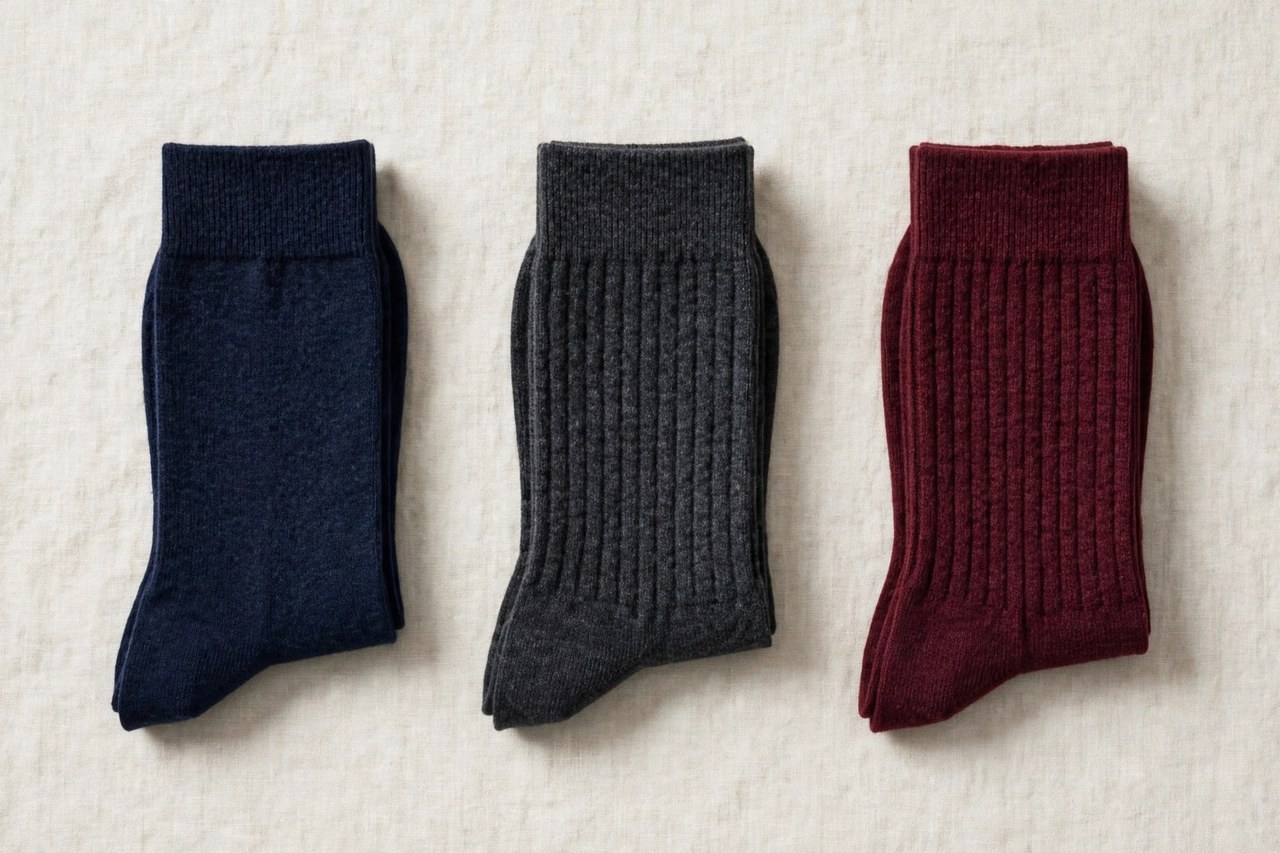
Men's dress socks are the fine, thin socks worn with dress shoes and tailored trousers - over-the-calf or mid-calf, in merino wool, fine cotton or their blends, engineered to do an unglamorous job perfectly: stay up for twelve hours, mediate between foot and leather shoe, and present an unbroken line of color from trouser hem to shoe. They are the smallest garment in the formal wardrobe and the one whose failure - the flash of bare shin when a man crosses his legs - is the most quoted. This guide treats them with the seriousness their position deserves. This guide is built around the questions buyers actually ask: which style, which size, which fabric, and what will it look like after a year of real use - answered in order, with the trade-offs stated plainly.
Styles and Construction
Length is the founding decision: over-the-calf socks end below the knee and stay up by geometry, which is why traditional dress insists on them; mid-calf socks rely on elastic and will, on a long day, eventually surrender. Fiber divides the drawer: merino wool regulates temperature in both directions, breathes, and resists odor longest - the connoisseur's default; lisle and quality mercerized cottons give summer's cool, smooth face; blends add nylon at heel and toe where wear concentrates, and a few percent of elastane for hold. Ribbing is functional - it grips the calf and ventilates - and the toe seam should be hand-linked or flat, because a ridge inside a dress shoe announces itself by the hour.
Accessories reward material honesty: solid metal over plated base metal, full-grain leather over bonded scraps, stitching over glue wherever fabric or hide is joined. Work every moving part through its full travel before paying - clasps, hinges, springs, adjusters - because small hardware fails before large materials do. And budget the care with the purchase: conditioner, the right cloth, a dry drawer; an accessory you can maintain will outlast a finer one you cannot.
Fit and Sizing
Fit socks as sized garments, not as one-size hopes: the heel pocket should sit on your heel, the toe should reach without tension, and the calf should hold the sock's top without a tourniquet band - deep elastic marks at day's end mean the band, not your leg, is wrong. Color discipline is the style rule: the sock continues the trouser, not the shoe - navy socks with navy trousers into black shoes is the classic correct line - with the deliberate exception of the considered flourish (a burgundy or patterned sock chosen, not defaulted into). Patterns scale with formality: solid for formal, small dots and fine stripes for business, the loud sock for the man whose tailoring is quiet enough to afford it.
Accessories have exact fits and exact measures: belt length to the middle hole of a belt you own, hat size as head circumference, a watch case within the wrist's width. Makers' accessory charts vary more than apparel charts, so measure and use the chart rather than ordering a habitual letter - ninety seconds with a tape prevents the most avoidable returns in menswear.
Wearing and Care
Dress socks are the wardrobe's highest-turnover quality item: wash them inside out, cool, and keep them out of the tumble dryer, which murders elastic and pills fine merino faster than any wear. Pair them in the drawer rather than balling them (the band stretches as the ball's knot), and rotate enough pairs that none is washed weekly to death. Retire them at the first thinning heel - inside a leather shoe, a worn sock is not economy but discomfort, and the shine-through at the heel is visible long before the hole arrives.
Store accessories deliberately: leather away from sun and plastic, metal dry, belts rolled or hung by the buckle rather than folded at the same crease forever. Condition leather a few times a year, polish metal with the cloth meant for its finish, and repair hardware early - a loose screw today is a lost cufflink or a failed clasp next month. Rotate daily pieces in pairs and both will outlast a single workhorse.
Common Questions
Should dress socks be over-the-calf or mid-calf?
Over-the-calf, for any trouser you sit in. Sitting raises the hem; a mid-calf sock's margin disappears and the leg shows - the exact failure dress socks exist to prevent. Over-the-calf length stays up by its position above the calf's widest point, without tighter elastic. Mid-calf serves standing, casual and warm-weather roles where the risk is lower. If you buy one length for the tailored wardrobe, buy the longer; trim your summer casual socks separately.
Wool or cotton dress socks - which is better?
Merino wool, for most men, most of the year: it insulates when cold, breathes when warm, manages moisture away from the skin, and resists odor through a long day in a way cotton does not. Cotton's case is summer heat and a preference for its smooth, cool hand - quality lisle cotton is a legitimate warm-weather dress sock. What to avoid is the unnamed blend with a high synthetic share throughout: it wears hot, holds odor, and pills. Nylon belongs at the heel and toe as reinforcement, not as the body.
How many pairs of dress socks does a man need?
Enough to rotate with the laundry cycle without re-wearing: for a five-day tailored week, ten to twelve pairs in the core colors (navy, charcoal, black, and your trouser colors) is the working answer, replaced a few pairs at a time as heels thin. Bought in merino at that rotation, a set serves two to three years. Fewer pairs washed more often die younger - the rotation is the economy, not the extravagance.
More in Men's Clothes Guide D
Looking for Men's Clothing Stores?
This guide explains men's dress socks. To browse where to buy, visit our men's clothing store directory, where you can find retailers that carry them.