Men's Socks Guide
Men's socks are the knitted interface between foot and shoe, and the most underestimated garment in the wardrobe: they manage moisture, friction, temperature and - in their dress form - the visual line between trouser and shoe. The whole sock drawer is surveyed here, from athletic cushions to silk formality: fibers, heights, and the rules that keep a man's socks from being the loudest mistake in his outfit.
Shop Men's Socks Now
Shop Men's Socks on Amazon Shop Men's Socks on eBayThe Amazon and eBay links on this page are affiliate links. If you make a purchase through them, Apparel Search may earn a commission.
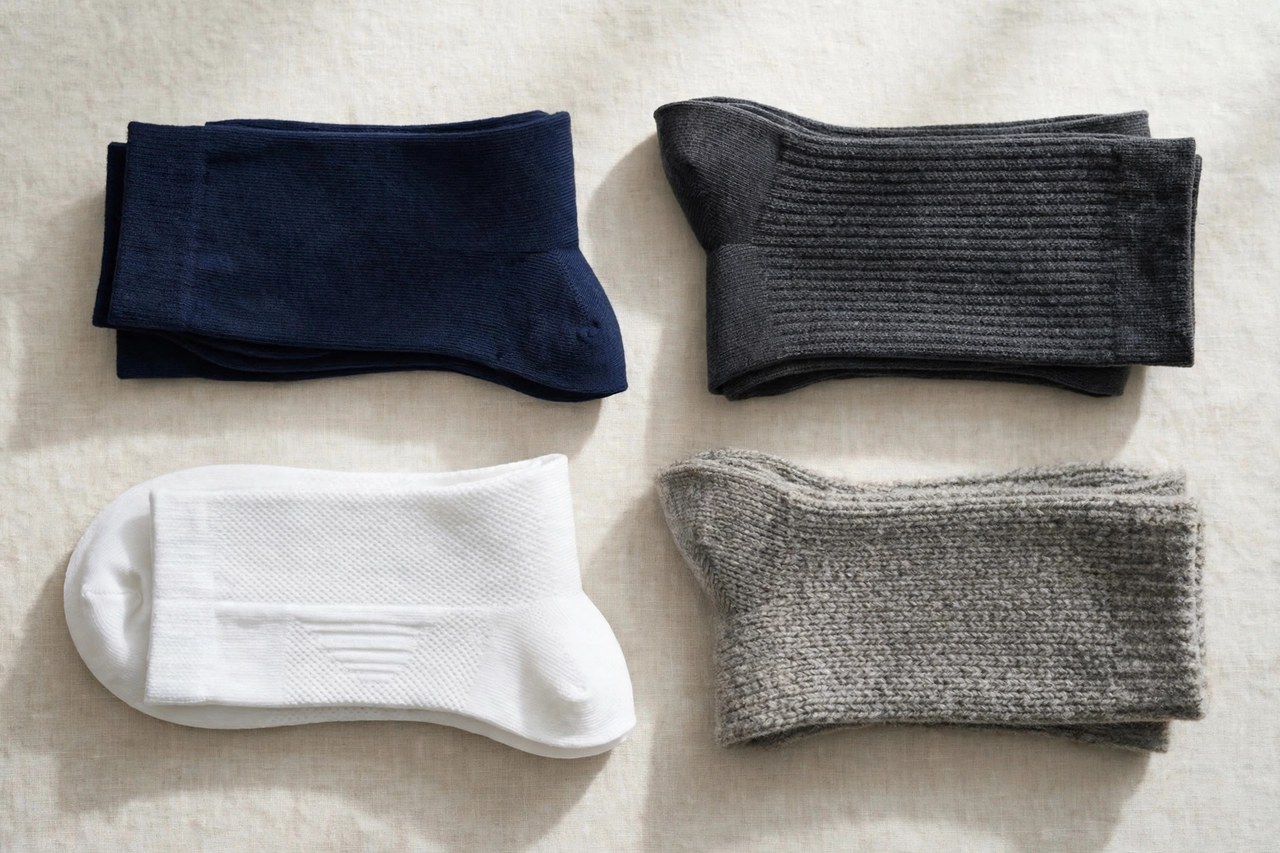
Men's socks are the knitted interface between foot and shoe, and the most underestimated garment in the wardrobe: they manage moisture, friction, temperature and - in their dress form - the visual line between trouser and shoe. The whole sock drawer is surveyed here, from athletic cushions to silk formality: fibers, heights, and the rules that keep a man's socks from being the loudest mistake in his outfit. This guide is built around the questions buyers actually ask: which style, which size, which fabric, and what will it look like after a year of real use - answered in order, with the trade-offs stated plainly.
Fibers, Heights and the Sock System
Fibers are the sock's character. Merino wool is the all-season champion - temperature-regulating, moisture-moving, odor-resistant, cushioned by nature. Cotton feels right and performs worst when wet, which is why athletic socks are synthetic: nylon, polyester and acrylic blends wick, dry and endure, with targeted cushioning and arch compression knitted in. Dress socks run fine-gauge in wool, cotton lisle or silk blends - our silk socks guide covers the luxury tier. Heights form the wardrobe system: no-show for loafers and summer sneakers, quarter and crew for athletics and boots, over-the-calf for tailoring, where they alone guarantee no skin shows when the trouser rides up in a chair.
The durable buying order is job, specification, budget - in that sequence. Decide what the garment must do, translate that into fiber, weight, construction and size numbers, and only then shop price. Read labels as specifications, inspect the garment inside out where finishing is unposed, and prefer the maker who publishes measurements to the one who publishes adjectives. A garment that matches your measurements, climate and laundry will be worn; one that misses any of the three becomes expensive storage.
Fit and Sizing
Sock fit is shoe-size fit: the heel pocket belongs on the heel, the toe seam flat and smooth, and the cuff firm without a tourniquet's mark. Over-the-calf socks earn their keep by geometry - they stay up without strangling - while crew socks that slide are usually a size or a tired elastic confessing. Dress socks should be thin enough not to change the shoe's fit; athletic socks thick enough to be part of it, which is why serious shoes are tried on in the socks of their sport. Novelty socks are a personality decision, made under the dress rule that the sock's first job is the trouser-to-shoe transition.
Measure yourself once a year and keep the numbers - chest, waist, inseam, foot, head - because bodies drift gradually while size habits never do. Shop from measurements, try garments under real conditions (over layers, in your own shoes, late in the day for footwear), and be honest about alterations: lengths and small waist changes tailor beautifully; shoulders, rises and patterns are the garment you bought forever.
Wearing and Care
Socks are laundered like the knits they are: inside out, cool to warm, dried low or on the line - heat murders elastic first and shrinkage second. Pair them out of the wash and retire them when the heel thins or the cuff gives up; a sock's failure is gradual and then total. Buy dress socks in multiples of the same color lot so a single loss never orphans a wardrobe, and keep the drawer honest: the right sock for each shoe should be findable in the dark, which is the whole point of a system.
Five minutes when a garment comes off - shake it out, hang or fold it correctly, note the stain and the loose button - prevents most of the damage later blamed on quality. Keep a small kit where the clothes live: brush, lint roller, conditioner suited to your leathers, black, navy and grey thread. Clothing rarely dies at once; it fades by small neglects, and small attentions reverse the process at the same pace.
Common Questions
What color socks should a man wear with a suit?
Match the trouser, not the shoe - the sock extends the trouser's line so the leg reads unbroken when you sit. Navy suit, navy socks; charcoal suit, charcoal socks; black is reserved for black trousers, not used as a universal. Pattern, when it appears, should whisper at handshake distance. The famous exception - the deliberate bright sock - is a signature move, and signatures are earned, not defaulted.
Wool or cotton socks?
Wool, for almost everything except the budget line. Merino regulates temperature in both seasons, moves moisture instead of storing it, resists odor across a long day and cushions naturally. Cotton is soft, cheap and pleasant until it is damp, after which it is a cold, friction-raising liability - the blister's best friend on a long walk. Athletic synthetics beat both at sport; silk and lisle beat both at formality.
Why do my socks keep falling down?
Length, size or age. Mid-calf socks slide by design against a flexing calf; over-the-calf socks stay up by architecture, which is why dress tradition insists on them. A heel pocket riding under your heel means the size is wrong. And elastic dies - in the dryer first - so a sock that once stayed and now slumps has simply reached the end of its knit life.
More in Men's Clothes Guide S
What Socks Are For
Socks are part of hosiery - legwear, garments worn directly on the feet and legs. One of the primary roles of socks is absorbing perspiration, and they also provide comfort, warmth and a sense of style. The materials include cotton, wool, nylon, acrylic, polyester, olefins such as polypropylene, and spandex, with silk, bamboo, linen, cashmere or mohair added for softness, and the designer’s palette is endless, since it is simply a matter of dyeing yarns to the desired shade; socks themselves are typically worn under a pair of men’s shoes or boots.
Looking for Men's Clothing Stores?
This guide explains men's socks. To browse where to buy, visit our men's clothing store directory, where you can find retailers that carry them.