Men's Cashmere Socks Guide
Men's cashmere socks are hosiery knitted with a high cashmere content - the fiber's smallest and most indulgent garment, made for warmth and softness inside winter shoes and boots. A sock is the most hostile environment in clothing: friction, pressure, moisture and heat in the dark. Cashmere socks are therefore a considered luxury - bought knowingly, worn in rotation, and never mistaken for everyday hosiery.
Shop Men's Cashmere Socks Now
Shop Men's Cashmere Socks on Amazon Shop Men's Cashmere Socks on eBayThe Amazon and eBay links on this page are affiliate links. If you make a purchase through them, Apparel Search may earn a commission.
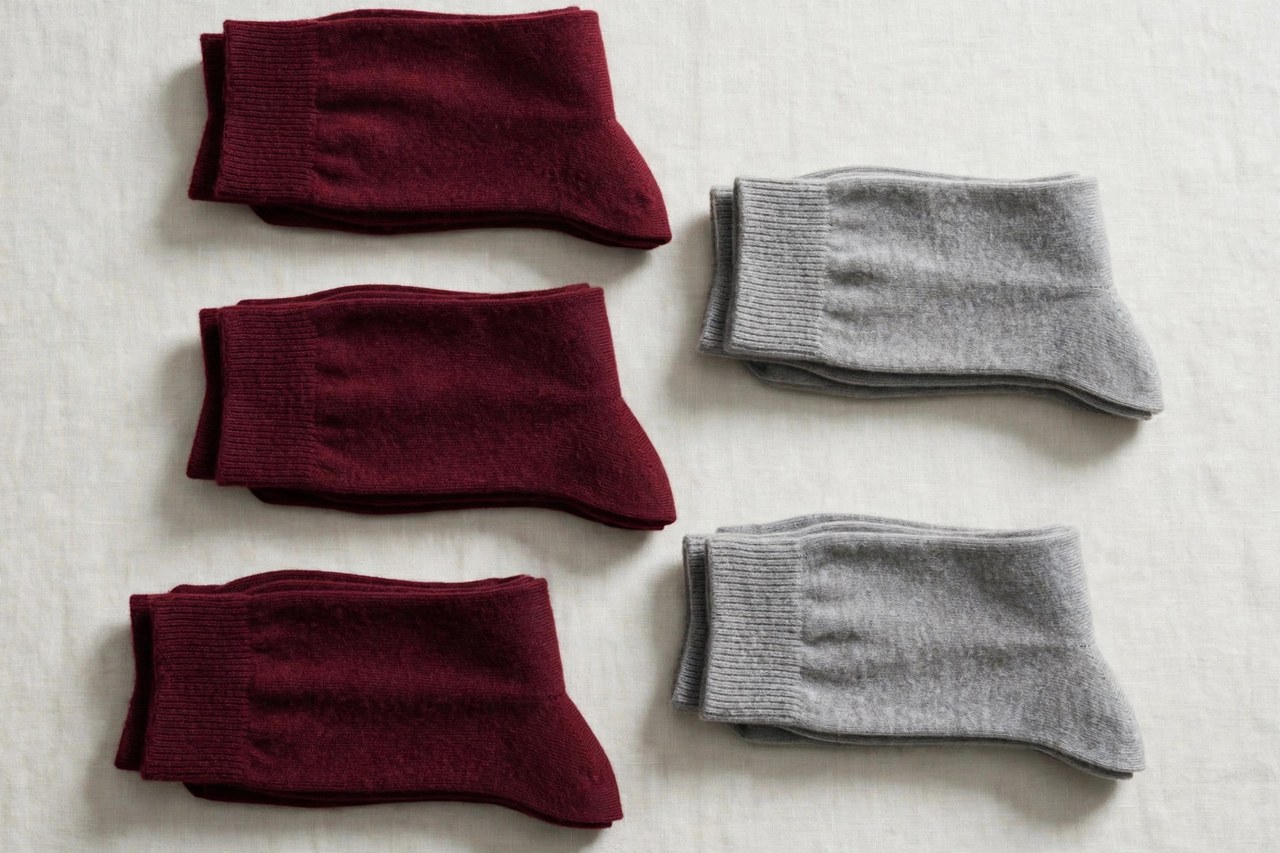
Men's cashmere socks are hosiery knitted with a high cashmere content - the fiber's smallest and most indulgent garment, made for warmth and softness inside winter shoes and boots. A sock is the most hostile environment in clothing: friction, pressure, moisture and heat in the dark. Cashmere socks are therefore a considered luxury - bought knowingly, worn in rotation, and never mistaken for everyday hosiery. This guide covers the styles worth knowing, the fit points that decide comfort, the fabrics and construction that separate a good buy from a regret, and the simple care that makes the garment last.
Styles and Construction
Construction is a survival negotiation: pure cashmere socks wear through at heel and toe quickly, so good makers reinforce those zones with nylon and blend the body with wool or silk for strength, keeping the cashmere proportion high enough to matter (half or better). Cushioning is light; the warmth comes from fiber, not bulk, which is why cashmere socks suit dress shoes in winter where a thick wool sock cannot fit. Ribbing and a touch of elastane hold them up - a cashmere sock around the ankle is a luxury in exile.
Judge knitwear by gauge, ply and finishing rather than by softness in the shop, because every knit feels kind on day one. Gauge counts stitches per inch - finer gauges drape and layer, coarser gauges insulate and read casual. Ply counts the strands twisted into the yarn: more plies mean more warmth, roundness and price. Fully-fashioned shaping, knitted in rather than cut and sewn, marks better garments, and linked seams at the shoulders and neck lie flatter and last longer than overlocked ones.
Fit and Sizing
Fit socks by shoe size honestly and without sizing up 'for comfort' - excess cloth bunches, and bunched cloth in a shoe is a blister machine. The heel pocket should sit on your heel: pull the sock fully on and smooth it before the shoe goes on. Inside boots they are unmatched for warmth per thickness; inside close-fitting dress shoes, choose the finest gauges and reserve the cushioned builds for roomier footwear.
Fit knitwear by the body, not the shoulders alone: a sweater should skim rather than cling, with ease for a shirt beneath at the chest, sleeves ending at the wrist bone, and body length covering the waistband without pooling. Knits relax with wear - a slightly firm new fit is often the right long-term fit - but ribbed cuffs and hems should recover when stretched, and a neckline should sit flat against the base of the neck, neither gaping nor strangling.
Wearing and Care
Wash cashmere socks by hand or in a mesh bag on the wool cycle, reshape and dry flat or over a rail without heat, and keep a real rotation - three or more pairs - because a cashmere sock worn daily dies young however it is washed. Darn or retire at the first thinning over the heel bone; a hole worn through in a boot announces itself as a blister before it announces itself as a hole.
Knitwear care is gentle by default: wash cool by hand or on a wool cycle with knitwear detergent, never wring, roll in a towel to lift water, and dry flat on a mesh or towel, reshaped to its measurements. Fold for storage - hangers stretch shoulders into points - with cedar or lavender against moths, and rest a sweater a day between wears so its fibers recover their loft. Depill with a comb or electric shaver; pilling is loose fiber migrating, not the garment failing.
Common Questions
How long do cashmere socks last?
With reinforcement at heel and toe, rotation across at least three pairs, and gentle washing, a good pair serves several winters of regular wear. Worn daily and machine-washed hot, the same pair can fail in a season. Their lifespan is the owner's decision more than the maker's - the fiber's terms are simply stricter than wool's.
Are cashmere socks warmer than wool socks?
Per thickness, yes - cashmere insulates more efficiently, which is why it excels in dress shoes where bulk cannot go. For heavy outdoor work, a thick loop-pile wool sock's total insulation and durability win. Choose cashmere where thinness matters and wool where punishment does.
Should cashmere socks be a gift or a self-purchase?
They are the classic luxury gift precisely because men rarely buy them for themselves - and the classic self-purchase once received, because the comfort converts. Either way, buy reinforced, reputable makes: a bargain cashmere sock with short fiber and no reinforcement is the family's one genuinely bad buy.
More in Men's Clothes Guide C
Looking for Men's Clothing Stores?
This guide explains men's cashmere socks. To browse where to buy, visit our men's clothing store directory, where you can find retailers that carry them.