Men's Cotton Socks Guide
Men's cotton socks are hosiery knitted mainly from cotton - the default sock of the world, soft, breathable in dry terms, cheap and endlessly available, in every form from the athletic crew to the dress over-the-calf. Cotton's one known vice is moisture: it absorbs sweat readily and releases it slowly, which is why the cotton sock is perfect for ordinary days and wrong for marathons. This page covers the family and its proper uses.
Shop Men's Cotton Socks Now
Shop Men's Cotton Socks on Amazon Shop Men's Cotton Socks on eBayThe Amazon and eBay links on this page are affiliate links. If you make a purchase through them, Apparel Search may earn a commission.
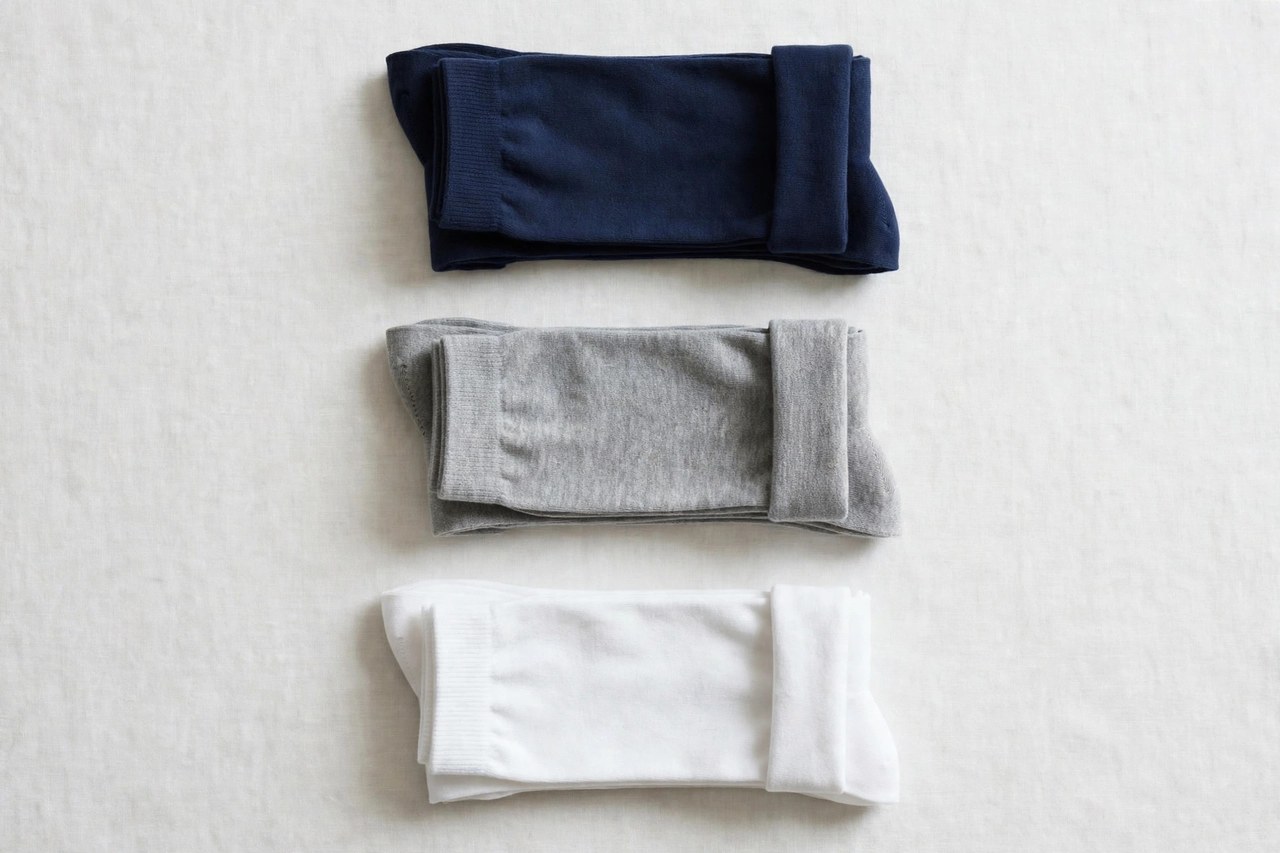
Men's cotton socks are hosiery knitted mainly from cotton - the default sock of the world, soft, breathable in dry terms, cheap and endlessly available, in every form from the athletic crew to the dress over-the-calf. Cotton's one known vice is moisture: it absorbs sweat readily and releases it slowly, which is why the cotton sock is perfect for ordinary days and wrong for marathons. This page covers the family and its proper uses. This guide is built around the questions buyers actually ask: which style, which size, which fabric, and what will it look like after a year of real use - answered in order, with the trade-offs stated plainly.
Styles and Construction
Constructions divide by duty. Dress cotton socks are fine-gauge, often mercerized for sheen and strength, ribbed, and long - over-the-calf is the professional standard because it stays up and never shows skin at the crossed leg. Casual crews are cushioned and ribbed for sneakers and boots. Athletic cotton socks add terry loops and arch bands, though serious sport belongs to synthetics and wool. Nearly all 'cotton' socks blend in nylon for durability and elastane for stay-up power; read the proportion - a sock that is 50 percent cotton is a different animal from one that is 85.
Judge footwear by attachment and compound: cemented soles are light and affordable, stitched or welted constructions cost more and can be repaired, and the outsole rubber decides grip against longevity - soft compounds bite, hard compounds endure. Linings decide comfort over hours, removable insoles decide whether your own supports can come along, and honest weight decides whether the pair disappears on the foot or taxes every mile of the day.
Fit and Sizing
Fit socks by your shoe size with the heel pocket seated exactly on the heel; a cotton sock too large wrinkles inside the shoe, and cotton wrinkles stay wet and rub. Over-the-calf dress socks should end below the knee's bend and hold without a garter's help - if they will not, the elastic is underspecified and no wash day will improve them. Cotton socks shrink slightly; makers size for it, so buy your size plain.
Fit footwear late in the day in the socks you will actually wear, with roughly a thumb's width beyond the longest toe, the heel held without lift, and the foot's widest point meeting the shoe's widest point. Sizes are unstandardized between makers - trust your measured length and width over the printed number, and require no break-in argument: a shoe that needs excuses in the shop delivers them on the road.
Wearing and Care
Wash cotton socks with the regular cool load - they ask nothing special - but retire them on evidence: when the heel thins, the elastic ripples, or the cushion has packed to paper, the sock's service is done. Keep a minimum week of pairs so rotation, not desperation, sets the laundry schedule, and pair the thickest cotton socks with the shoes that have room for them rather than crushing feet into dress shoes.
Rotation is the first care rule: a day of rest between wears lets linings dry and cushioning rebound, and it doubles a rotation's life compared with daily wear of one pair. Clean after use, dry at room temperature away from radiators, hold shape with trees or paper, and condition leather on a schedule rather than when it looks thirsty. Reproof weather finishes when water stops beading, and resole stitched footwear before the wear reaches the welt.
Common Questions
Are cotton socks good for sports?
For light activity, fine; for distance and intensity, they are the classic blister recipe - cotton holds sweat against the skin, softening it while friction does its work. Wool and synthetic sport socks move moisture away and are the correct tool. The cotton sock's home ground is the ordinary day: office, street and home, where its softness and price rule.
Over-the-calf or mid-calf dress socks?
Over-the-calf, for any man who crosses his legs in public or in meetings: they stay up all day by their own length and never flash bare leg above the shoe. Mid-calf socks are cheaper and cooler but creep down as their elastic tires. The over-the-calf is one of menswear's quiet unanimities among men who have tried both.
Why do cotton socks wear out at the heel?
The heel takes the shoe's highest friction and pressure, and cotton fiber abrades faster than nylon or wool under that regime. Reinforced heels (a nylon-wrapped zone) extend life substantially - look for them, rotate pairs, keep toenails trimmed (the toe's enemy is domestic, not textile), and wash grit out promptly since grit is sandpaper in the wash.
More in Men's Clothes Guide C
More to Explore on Apparel Search
Looking for Men's Clothing Stores?
This guide explains men's cotton socks. To browse where to buy, visit our men's clothing store directory, where you can find retailers that carry them.