Men's Wool Socks Guide
Men's wool socks are where the fiber quietly outperforms everything else in the drawer: merino and lambswool socks regulate temperature in both directions, manage moisture without smelling, cushion in knit loops and stay up on their own ribbing. From fine over-the-calf dress socks to heavy hiking weights, wool is the sock fiber against which all others are measured.
Shop Men's Wool Socks Now
Shop Men's Wool Socks on Amazon Shop Men's Wool Socks on eBayThe Amazon and eBay links on this page are affiliate links. If you make a purchase through them, Apparel Search may earn a commission.
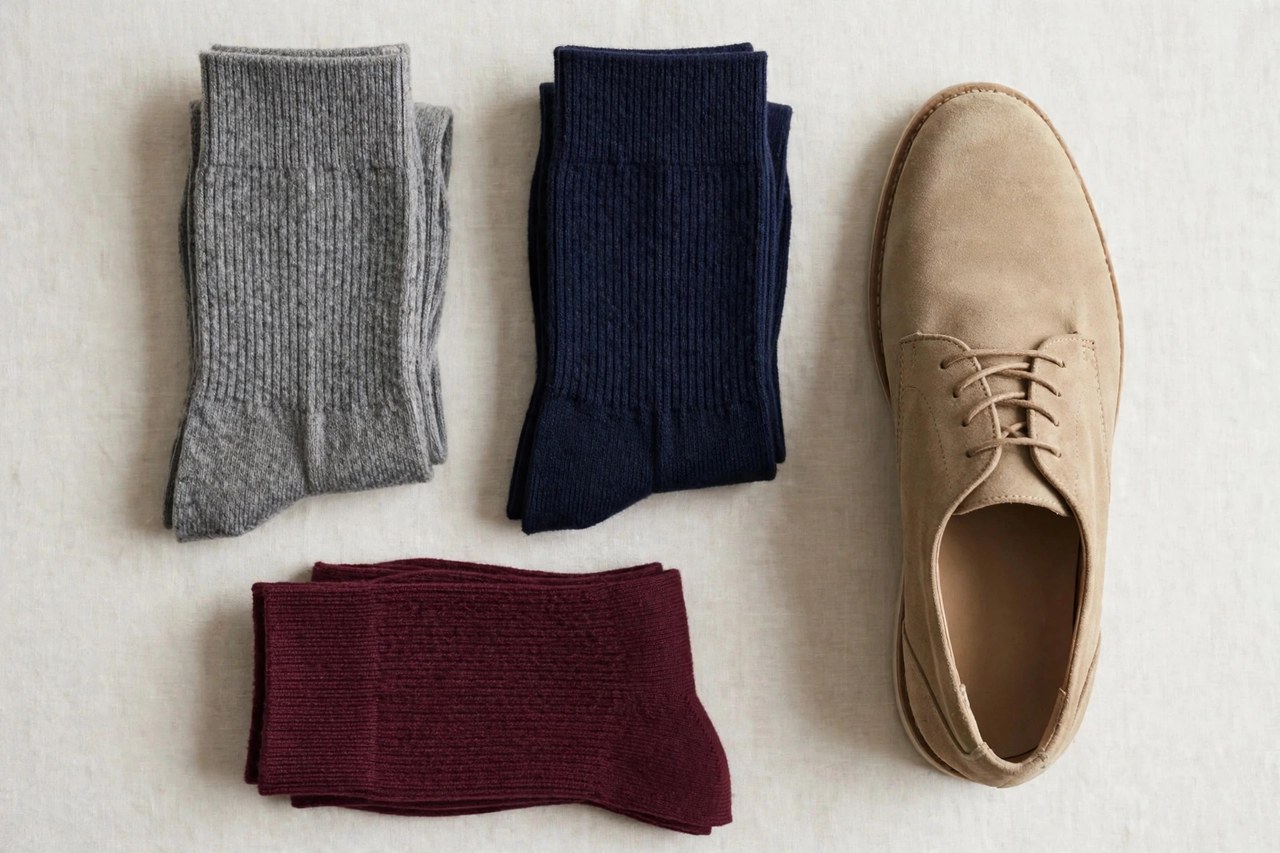
Men's wool socks are where the fiber quietly outperforms everything else in the drawer: merino and lambswool socks regulate temperature in both directions, manage moisture without smelling, cushion in knit loops and stay up on their own ribbing. From fine over-the-calf dress socks to heavy hiking weights, wool is the sock fiber against which all others are measured. This guide is built around the questions buyers actually ask: which style, which size, which fabric, and what will it look like after a year of real use - answered in order, with the trade-offs stated plainly.
Styles and Construction
Dress socks are fine-gauge merino, usually blended with a little nylon for wear, knitted thin enough for dress shoes and long enough to stay over the calf - a sock that stays up by length and ribbing, not by a strangling elastic band. Casual and boot socks add cushion loops, reinforced heels and toes, and higher wool content; hiking socks grade cushioning by zone. Quality markers across all of them: a hand-linked or smooth toe seam that will not ridge against the toes, shaped heels that keep the sock from rotating, wool percentage honestly stated (pure wool wears fast - a nylon skeleton is a feature, not a cheat), and ribbing that recovers after a stretch test.
Wool accessories live or die on fiber and finishing: a scarf, hat or pair of gloves in fine merino feels soft at the throat and skin, while lambswool and Shetland yarns trade a little softness for loft and durability. Look for fully-fashioned shaping on knitted pieces, linked or neatly seamed joins, ribbing that recovers after stretching, and - on felt hats - even, dense felting with a clean brim edge and a sweatband that is stitched, not glued. Woven scarves should have straight, tight fringes and even selvedges; woven labels should state fiber content honestly, because acrylic blends wear warmer-looking than they feel.
Fit and Sizing
Fit socks by shoe size ranges but judge them on the foot: the heel pocket should sit on your heel, the toe should reach without pressure, and over-the-calf lengths should end below the knee's bend and stay there all day. A sock that slides down is too big, too short or too tired in its ribbing - all unfixable. For boots, match sock weight to the boot's volume: a heavy sock in a close-fitting boot cuts circulation and makes feet colder, the classic beginner's error in winter dressing.
Wash wool accessories gently and rarely: cool water, wool detergent, no wringing - press the water out, roll in a towel, and dry scarves and knits flat, reshaped to size. Gloves dry flat away from heat so the leather or knit palms do not stiffen; felt hats are brushed, never washed, steamed back to shape if they droop, and stored crown-down on a stand or in a box. Keep all wool accessories clean before seasonal storage and use cedar or lavender against moths - a scarf or hat put away with skin oils on it is the piece the moths will find.
Wearing and Care
Wool socks wash kindly: cool or warm machine wash with ordinary detergent is fine for most modern merino socks, inside out, and line or low-heat drying preserves their fit best. Rotate pairs so each rests and dries fully - wool's odor resistance actually improves with airing between wears. Darn a thinning heel early or retire the pair; a hole in a wool sock is a blister scheduled, and good socks earn their repair.
Size wool accessories by measurement, not habit: hat size is head circumference measured above the ears, glove size is the circumference of the dominant hand around the knuckles, and a scarf's useful size is its length against your coat - long enough to cross and tuck, or to loop once with ends at the chest. Knitted wool relaxes with wear, so gloves and hats should start snug but never tight enough to leave marks; felt hats do not stretch meaningfully and must start right. Socks should reach mid-calf or over it so they stay up by their own ribbing rather than by elastic alone.
Common Questions
Why do wool socks cost more than cotton socks?
The fiber costs more, and the knitting - fine gauges, shaped heels, reinforced zones - takes longer. The return is measurable: wool socks regulate temperature, resist odor for days of wear, cushion better and typically outlast cotton pairs several times over, which closes most of the price gap per wear.
Are wool socks too hot for summer?
Fine merino socks are not: wool absorbs moisture vapor before it condenses on the skin and releases heat as it does, which is why thin merino socks feel dry in warm weather where cotton feels clammy. Choose summer weights - thin, fine-gauge - and the fiber that insulates in winter ventilates in summer.
Over-the-calf or crew length for dress socks?
Over-the-calf, always, with tailoring: they stay up all day by design and never show a bare shin when you cross your legs. Crew socks slide, bunch and expose skin with a suit. Save crews for casual trousers, boots and sport, where their length is proportioned to the outfit.
More in Men's Clothes Guide W
Background
A sock is an item of clothing worn on the feet and often covering the ankle or some part of the calf. In cold environments, socks made from wool insulate the foot and decrease the risk of getting too cold. Wool is a naturally wicking, naturally insulating fiber that is harvested from sheep. Wool is a very durable fabric so you can count on a pair of wool socks lasting a long time. When you try socks on, look for a snug, but not overly tight fit. A sock fits properly when the heel cup lines up with the heel of your foot. Wool is the textile fiber obtained from sheep and other animals, including cashmere and mohair from goats, qiviut from muskoxen, angora from rabbits, and other types of wool from camelids. Wool socks are fabulous for hiking and other adventures. Most hiking socks feature merino wool as the primary ingredient, but some are made mostly from polyester or nylon.
Looking for Men's Clothing Stores?
This guide explains men's wool socks. To browse where to buy, visit our men's clothing store directory, where you can find retailers that carry them.