Men's Wool Accessories Guide
Men's wool accessories are the cold-weather supporting cast - scarves, hats, gloves, socks and the small knitted pieces that decide whether a winter outfit actually works. Because they sit against skin and take hard wear at small sizes, they are where wool's fiber grades show up fastest: fine merino feels kind at the throat, hardier wools shrug off seasons of pockets, frost and washing.
Shop Men's Wool Accessories Now
Shop Men's Wool Accessories on Amazon Shop Men's Wool Accessories on eBayThe Amazon and eBay links on this page are affiliate links. If you make a purchase through them, Apparel Search may earn a commission.
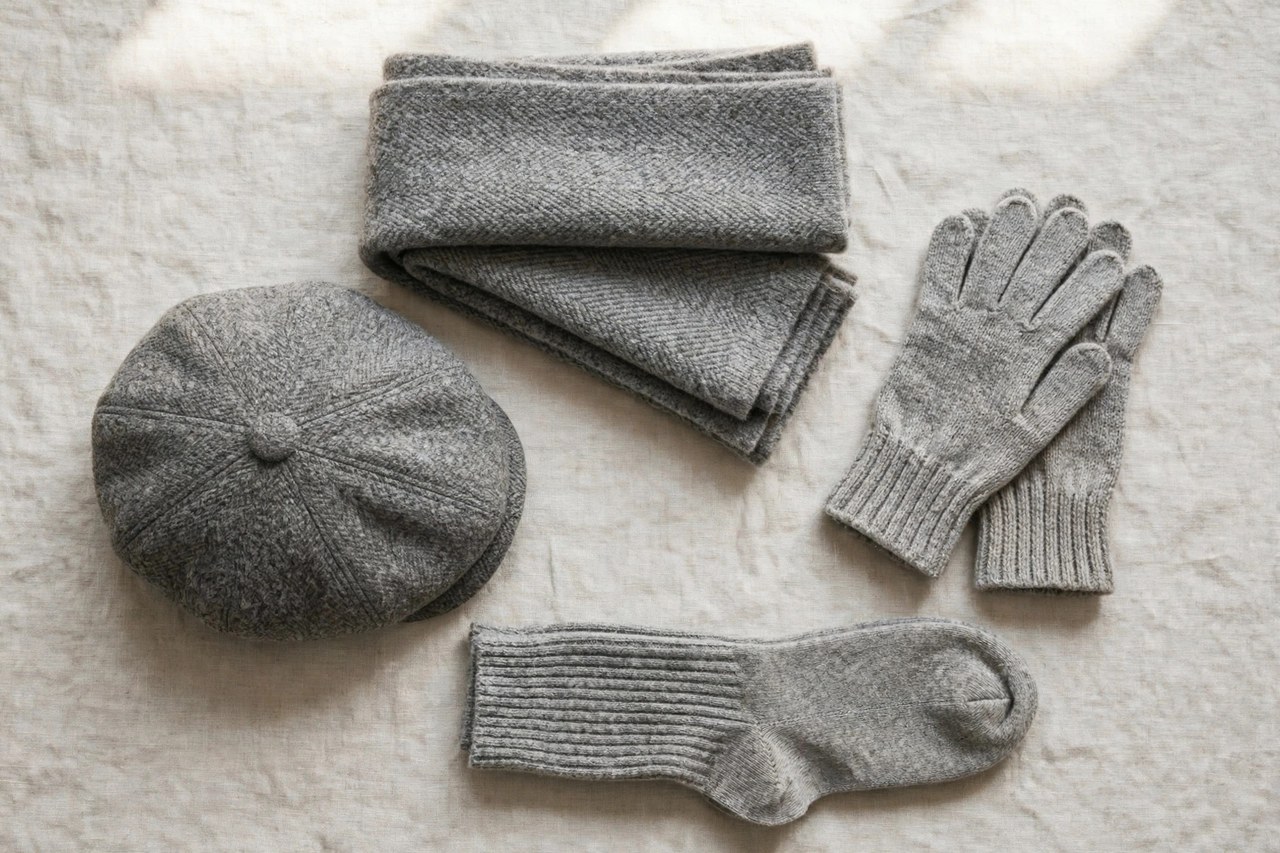
Men's wool accessories are the cold-weather supporting cast - scarves, hats, gloves, socks and the small knitted pieces that decide whether a winter outfit actually works. Because they sit against skin and take hard wear at small sizes, they are where wool's fiber grades show up fastest: fine merino feels kind at the throat, hardier wools shrug off seasons of pockets, frost and washing. This guide covers the styles worth knowing, the fit points that decide comfort, the fabrics and construction that separate a good buy from a regret, and the simple care that makes the garment last.
Styles and Construction
Shop the family by fiber first. Merino and lambswool give softness for scarves and next-to-skin pieces; Shetland and rustic wools give loft and durability for hats and gloves; blends with a little nylon earn their place in socks and glove palms where abrasion concentrates. Construction separates the good from the disposable: fully-fashioned knits shaped on the machine, linked seams that lie flat, ribbing with genuine recovery, woven scarves with tight selvedges and even fringes, and felt pieces felted dense and even. Read the label for actual wool percentage - accessory blends quietly padded with acrylic feel warm in the shop and cold by February.
Wool accessories live or die on fiber and finishing: a scarf, hat or pair of gloves in fine merino feels soft at the throat and skin, while lambswool and Shetland yarns trade a little softness for loft and durability. Look for fully-fashioned shaping on knitted pieces, linked or neatly seamed joins, ribbing that recovers after stretching, and - on felt hats - even, dense felting with a clean brim edge and a sweatband that is stitched, not glued. Woven scarves should have straight, tight fringes and even selvedges; woven labels should state fiber content honestly, because acrylic blends wear warmer-looking than they feel.
Fit and Sizing
Fit small pieces by measurement: hats by head circumference, gloves by the hand's circumference at the knuckles, scarves by length against your coat - long enough to loop once and tuck, or cross under a coat front. Knitted wool relaxes with wear, so start snug rather than loose; a glove with fingertip room today is a sloppy glove by winter's end. Socks should reach mid-calf or above and stay up on ribbing, not on tight elastic that marks the leg.
Wash wool accessories gently and rarely: cool water, wool detergent, no wringing - press the water out, roll in a towel, and dry scarves and knits flat, reshaped to size. Gloves dry flat away from heat so the leather or knit palms do not stiffen; felt hats are brushed, never washed, steamed back to shape if they droop, and stored crown-down on a stand or in a box. Keep all wool accessories clean before seasonal storage and use cedar or lavender against moths - a scarf or hat put away with skin oils on it is the piece the moths will find.
Wearing and Care
Air wool accessories after wear and wash them gently and rarely - cool water, wool detergent, no wringing, dried flat and reshaped. Gloves dry flat away from heat; hats are brushed rather than washed; scarves benefit from a fold rather than a hook. Store the whole family clean at season's end with cedar or lavender, because a drawer of dirty wool accessories is precisely what moths are looking for.
Size wool accessories by measurement, not habit: hat size is head circumference measured above the ears, glove size is the circumference of the dominant hand around the knuckles, and a scarf's useful size is its length against your coat - long enough to cross and tuck, or to loop once with ends at the chest. Knitted wool relaxes with wear, so gloves and hats should start snug but never tight enough to leave marks; felt hats do not stretch meaningfully and must start right. Socks should reach mid-calf or over it so they stay up by their own ribbing rather than by elastic alone.
Common Questions
Which wool is softest for a scarf worn against the neck?
Fine merino is the reliable answer, with lambswool close behind; both bend softly against skin. Cashmere blends are softer still but cost more and wear faster at scarf weight. Avoid coarse Shetland at the throat unless a shirt collar always sits between wool and skin.
How long should a men's wool scarf be?
For most men and coats, 150 to 180 cm lets you loop once with the ends at mid-chest, or cross the ends under a buttoned coat. Shorter scarves only tuck; longer ones suit tall men and double wraps. Width around 25 to 30 cm covers the chest gap of an open coat.
Do wool accessories need moth protection if I wear them often?
Worn and aired pieces are low risk during the season - moths prefer stored, soiled wool. The danger moment is spring storage: wash or air everything thoroughly, then store clean with cedar or lavender and check the drawer once mid-summer.
More in Men's Clothes Guide W
Background
Wool is the textile fiber obtained from sheep and other animals, including cashmere and mohair from goats, qiviut (quviut or qiviuq is an Inuktitut word commonly used to indicate the wool of the muskox) from muskoxen, angora from rabbits, and other types of wool from camelids. Wool has several qualities that distinguish it from hair or fur. One benefit of wool is the warmth it can provide. This type of fiber is wonderful for socks, hats, gloves, and scarves. A fashion accessory is an item used to contribute, in a secondary manner, to the wearer's outfit, often used to complete an outfit and chosen to specifically complement the wearer's look. Wool fiber or fabric can be used on various accessories including belts and the other items already mentioned above.
Looking for Men's Clothing Stores?
This guide explains men's wool accessories. To browse where to buy, visit our men's clothing store directory, where you can find retailers that carry them.