Men's Fashion Accessories Guide
Men's fashion accessories are the secondary pieces that complete an outfit: by definition an accessory contributes in a secondary manner to the wearer's look, chosen to complement the clothes rather than to carry them. The family is wide - watches, ties and bow ties, belts, eyewear, hats and caps, wallets, cufflinks, bracelets, scarves and pocket squares - and it is where a man's individuality shows most cheaply, because one good piece can change the reading of a whole wardrobe without replacing a single garment in it.
Shop Men's Fashion Accessories Now
Shop Men's Fashion Accessories on Amazon Shop Men's Fashion Accessories on eBayThe Amazon and eBay links on this page are affiliate links. If you make a purchase through them, Apparel Search may earn a commission.
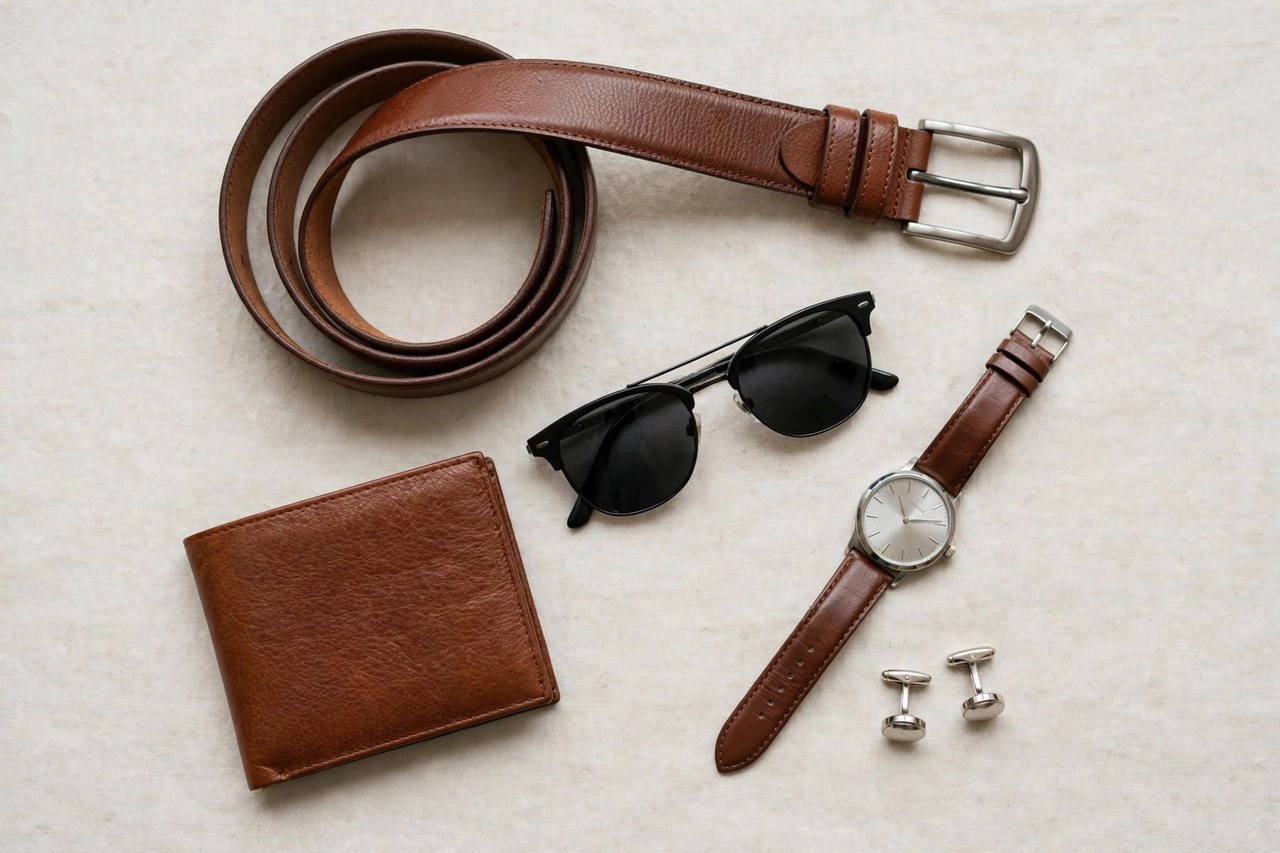
Men's fashion accessories are the secondary pieces that complete an outfit: by definition an accessory contributes in a secondary manner to the wearer's look, chosen to complement the clothes rather than to carry them. The family is wide - watches, ties and bow ties, belts, eyewear, hats and caps, wallets, cufflinks, bracelets, scarves and pocket squares - and it is where a man's individuality shows most cheaply, because one good piece can change the reading of a whole wardrobe without replacing a single garment in it. This guide is built around the questions buyers actually ask: which style, which size, which fabric, and what will it look like after a year of real use - answered in order, with the trade-offs stated plainly.
Styles and Construction
Shop the family by job. A watch is the one accessory worn daily and seen constantly, so its case size, strap material and water rating deserve the scrutiny given to a shoe. Belts divide into dress (smooth leather, modest buckle, matched to the shoes) and casual (wider, textured, braided or fabric). Wallets are a materials test: full-grain leather ages into character, bonded leather peels, and the honest middle is a slim bifold or card case sized to what you actually carry. Cufflinks belong to the French cuff page of this guide; scarves and pocket squares are the color instruments, bought to echo - never to match exactly - a tie or a shirt already in the drawer.
Accessories reward material honesty: solid metal over plated base metal, full-grain leather over bonded scraps, stitching over glue wherever fabric or hide is joined. Work every moving part through its full travel before paying - clasps, hinges, springs, adjusters - because small hardware fails before large materials do. And budget the care with the purchase: conditioner, the right cloth, a dry drawer; an accessory you can maintain will outlast a finer one you cannot.
Fit and Sizing
Accessory fit is proportion. A watch case should sit within the width of the wrist, not overhang it; a belt is sized to close on its middle hole with the tail ending just past the first loop; a tie's tip should reach the belt line and its width should echo the jacket's lapels. Hats size by head circumference, sunglasses by the millimeter numbers inside the temple. When two pieces compete - a loud watch and a loud pocket square, a statement belt and a statement shoe - the outfit loses; accessories finish a look one voice at a time.
Accessories have exact fits and exact measures: belt length to the middle hole of a belt you own, hat size as head circumference, a watch case within the wrist's width. Makers' accessory charts vary more than apparel charts, so measure and use the chart rather than ordering a habitual letter - ninety seconds with a tape prevents the most avoidable returns in menswear.
Wearing and Care
Care is storage more than cleaning. Leather goods live away from sunlight and plastic, conditioned a few times a year; metal lives dry and gets the cloth made for its finish; ties hang or roll rather than staying knotted; watches come off for sleep and go to a watchmaker for seals and service on the maker's schedule, not when they stop. The drawer matters as much as the purchase: pieces stored where they can be seen get worn, and pieces buried get replaced by duplicates.
Store accessories deliberately: leather away from sun and plastic, metal dry, belts rolled or hung by the buckle rather than folded at the same crease forever. Condition leather a few times a year, polish metal with the cloth meant for its finish, and repair hardware early - a loose screw today is a lost cufflink or a failed clasp next month. Rotate daily pieces in pairs and both will outlast a single workhorse.
Common Questions
What is the difference between an accessory and a garment?
A garment is worn as the outfit itself - the suit, shirt, trousers and shoes that cover the body. An accessory contributes secondarily: it completes, accents or equips the outfit without being its structure. The watch, belt, wallet, tie and pocket square are accessories; remove them and the outfit still works, but it says less. That secondary role is exactly why accessories are the cheapest place to change how a wardrobe reads.
How many accessories should a man wear at once?
Fewer than instinct suggests. A reliable ceiling is three deliberate accents beyond the clothes themselves - say a watch, a belt chosen to match the shoes, and one expressive piece such as a pocket square or a scarf. Match metals to metals and leathers to leathers, let one piece carry any pattern, and the result reads considered rather than decorated.
Which men's accessories are worth buying well?
The daily carriers: the watch, the belt and the wallet, because they are handled and seen every day and their materials decide whether they age into character or into shabbiness. Full-grain leather and solid metal reward the spend here. Occasional pieces - the novelty tie, the seasonal scarf - can be bought lightly, since their cost per wear is set by rarity of use, not by quality.
More in Men's Clothes Guide F
What an Accessory Is
A fashion accessory is an item used to contribute, in a secondary manner, to the wearer’s outfit, often used to complete an outfit and chosen to specifically complement the wearer’s look — a neck tie, handkerchief, scarf, watch, and so on. The family runs category by category — watches as functional style statements, ties and bow ties for formal and business dress, belts that accentuate the waist as they work, eyewear, hats and caps, wallets that reflect a man’s organization, cufflinks, bracelets, scarves and pocket squares. To buy them: department and specialty retail, online retailers, boutiques, luxury brand stores, and the local markets and artisanal shops where unique handcrafted pieces hide.
Looking for Men's Clothing Stores?
This guide explains men's fashion accessories. To browse where to buy, visit our men's clothing store directory, where you can find retailers that carry them.