Men's Belts Guide
Men's belts are the working line between shirt and trousers: a strap of leather, webbing or woven material, fastened by a buckle, that holds trousers at the waist and finishes the outfit's middle. A belt is bought on three decisions - the leather or material, the width, and the size measured to its middle hole - and a man needs fewer of them than he thinks, provided the few are the right construction. The buckle hardware has its own guide; this page is about the strap and the system.
Shop Men's Belts Now
Shop Men's Belts on Amazon Shop Men's Belts on eBayThe Amazon and eBay links on this page are affiliate links. If you make a purchase through them, Apparel Search may earn a commission.
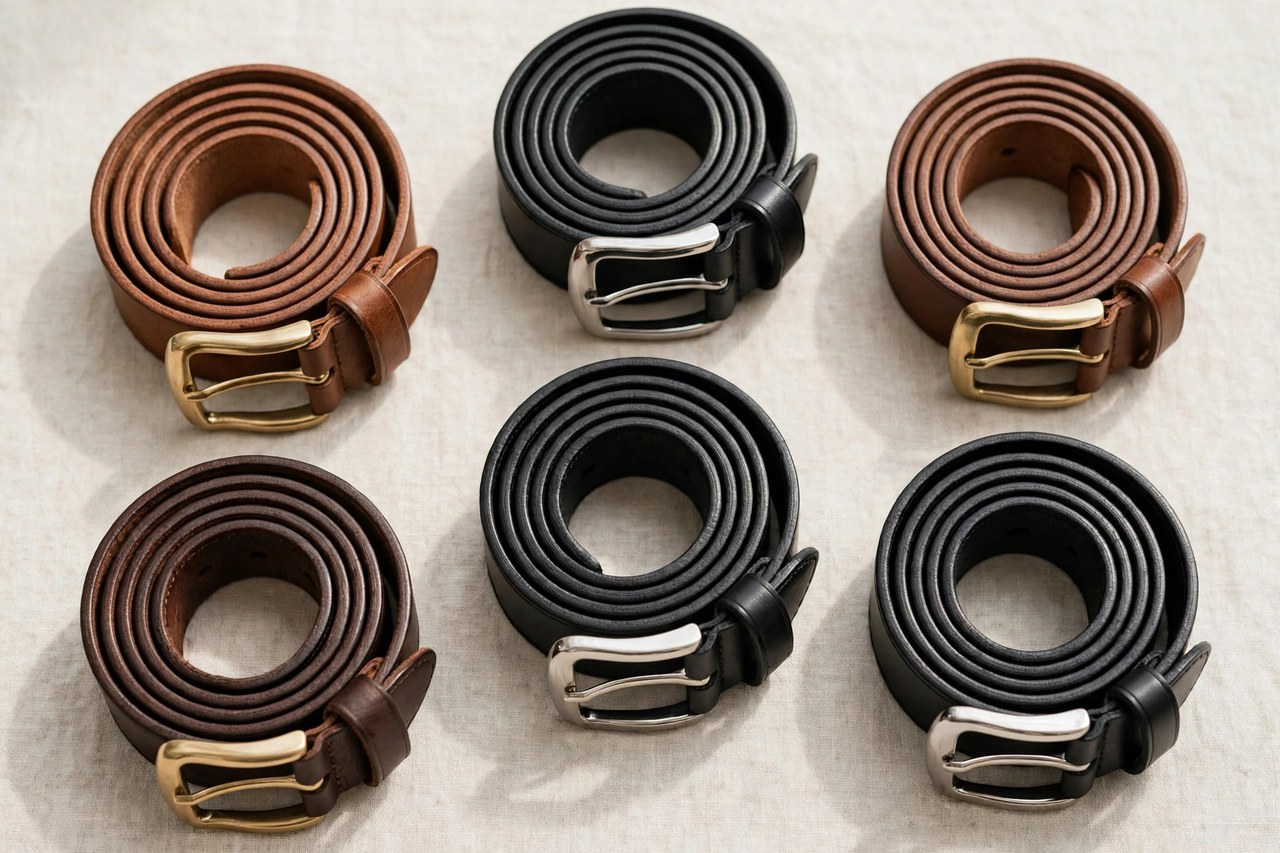
Men's belts are the working line between shirt and trousers: a strap of leather, webbing or woven material, fastened by a buckle, that holds trousers at the waist and finishes the outfit's middle. A belt is bought on three decisions - the leather or material, the width, and the size measured to its middle hole - and a man needs fewer of them than he thinks, provided the few are the right construction. The buckle hardware has its own guide; this page is about the strap and the system. This guide covers the styles worth knowing, the fit points that decide comfort, the fabrics and construction that separate a good buy from a regret, and the simple care that makes the garment last.
Styles and Construction
Dress belts are smooth, narrow and unadorned - calf leather, often with a subtle shine, in black and the brown family - built to slide through suit trouser loops and disappear into formality. Casual belts widen and texture: suede, braided leather, tooled and stitched straps, canvas and webbing with military buckles. Leather quality decides lifespan: full-grain straps flex for decades, genuine-leather (a technical grade, not a compliment) and bonded straps crack and peel at the fold within seasons. A reversible belt trades a little of everything for travel convenience.
With accessories, materials and hardware decide value far more than branding. Solid metal beats plated pot metal, full-grain material beats corrected or bonded substitutes, and stitching beats glue wherever the two compete. Check moving parts - clasps, hinges, buckles, zippers - through their full travel before buying, because an accessory is usually a mechanical object as much as a decorative one. Care is part of the purchase too: an accessory you can maintain with a cloth and conditioner will outlast a finer one that needs specialist attention you will never give it.
Fit and Sizing
Belt size is not trouser size: measure a belt you own from buckle base to the hole you use, or add roughly two inches to your trouser waist as a starting rule, and confirm the new belt fastens at its middle hole - that leaves adjustment both ways for weight's ordinary drift. Dress belts should match shoe leather in color and finish; casual belts pair by tone and texture, and a braided belt's mixed browns make it the most forgiving mixer in the drawer.
Accessories fit too, and their measurements are exact ones: belt size is measured to the middle hole of a belt you own, hat size is a head circumference, and a watch case should sit within the width of your wrist rather than beyond it. Where a maker publishes a size chart, measure yourself and use it rather than ordering your usual letter - accessory sizing varies more between brands than almost any other category, and returns on a two-inch error are entirely avoidable with ninety seconds and a tape measure.
Wearing and Care
Hang belts by the buckle or roll them loosely - never fold them - and rest a daily belt a day between wears so the leather recovers from the waist's curve. Condition smooth leather a few times a year, brush suede instead, and keep belts out of steamy bathrooms where hardware tarnishes. The first sign of a bonded strap's failure is edge cracking; a full-grain strap's first sign of age is a patina you will come to like.
Store accessories as deliberately as you bought them: belts rolled or hung by the buckle rather than folded, leather goods out of direct sun, metal kept dry and occasionally polished with the right cloth for its finish. Condition leather accessories a few times a year, keep them in breathable bags rather than plastic, and repair hardware early - a loose screw or tired spring bar is a small fix that becomes a lost item if ignored. Rotation helps here too: two everyday pieces worn alternately outlast one worn daily.
Common Questions
How do you size a belt correctly?
Measure a belt that fits: from the buckle's base to the hole you actually use gives your belt size directly. Buying new, the common rule is to order about two inches above your trouser waist size, and to check that you will fasten at the middle hole, leaving holes in reserve on both sides for ordinary changes.
What is the difference between full-grain and genuine leather belts?
Full-grain is the top layer of the hide with its natural surface intact - the strongest, longest-lived strap material, which ages into patina. 'Genuine leather' is a lower technical grade made from split layers, often coated; it looks fine new but cracks and peels sooner. For a belt worn weekly, full-grain is the cheaper purchase over its life.
Should a belt match your shoes exactly?
For dress wear, match color and finish family - black smooth calf with black dress shoes, brown with brown, suede with suede. Exact dye-lot matching is unnecessary and impossible across makers; tone and texture harmony is the goal. Casual dress relaxes the rule to coordination: a woven or braided belt can bridge two leathers deliberately.
More in Men's Clothes Guide B
Belts Since the Bronze Age
A belt is a flexible band or strap, typically made of leather or heavy cloth, worn around the waist to support trousers or other articles of clothing. Belts have been documented as male clothing since the Bronze Age, used by both genders off and on depending on fashion. Types include the utility belt or police duty belt, with pockets for items needed for prompt use and loops for larger items — wider and stiffer than dress belts, worn by police officers, soldiers and repair personnel, and in military practice a symbol of authority or of being on duty; the studded belt of punk, skater, Goth and metal fashion; and the obi, traditionally part of a Japanese kimono. One favorite deserves a mention: Batman’s utility belt.
Photos

Looking for Men's Clothing Stores?
This guide explains men's belts. To browse where to buy, visit our men's clothing store directory, where you can find retailers that carry them.