Men's Belt Buckles Guide
Men's belt buckles are the hardware half of the belt system: the frame, plaque or mechanism that fastens the strap and carries most of the belt's visual character. A buckle is a small machine with a dress code - its size, metal and mechanism decide whether a belt reads boardroom, western or workshop - and because buckles and straps interchange on many belts, the buckle is where a modest belt collection becomes a versatile one.
Shop Men's Belt Buckles Now
Shop Men's Belt Buckles on Amazon Shop Men's Belt Buckles on eBayThe Amazon and eBay links on this page are affiliate links. If you make a purchase through them, Apparel Search may earn a commission.
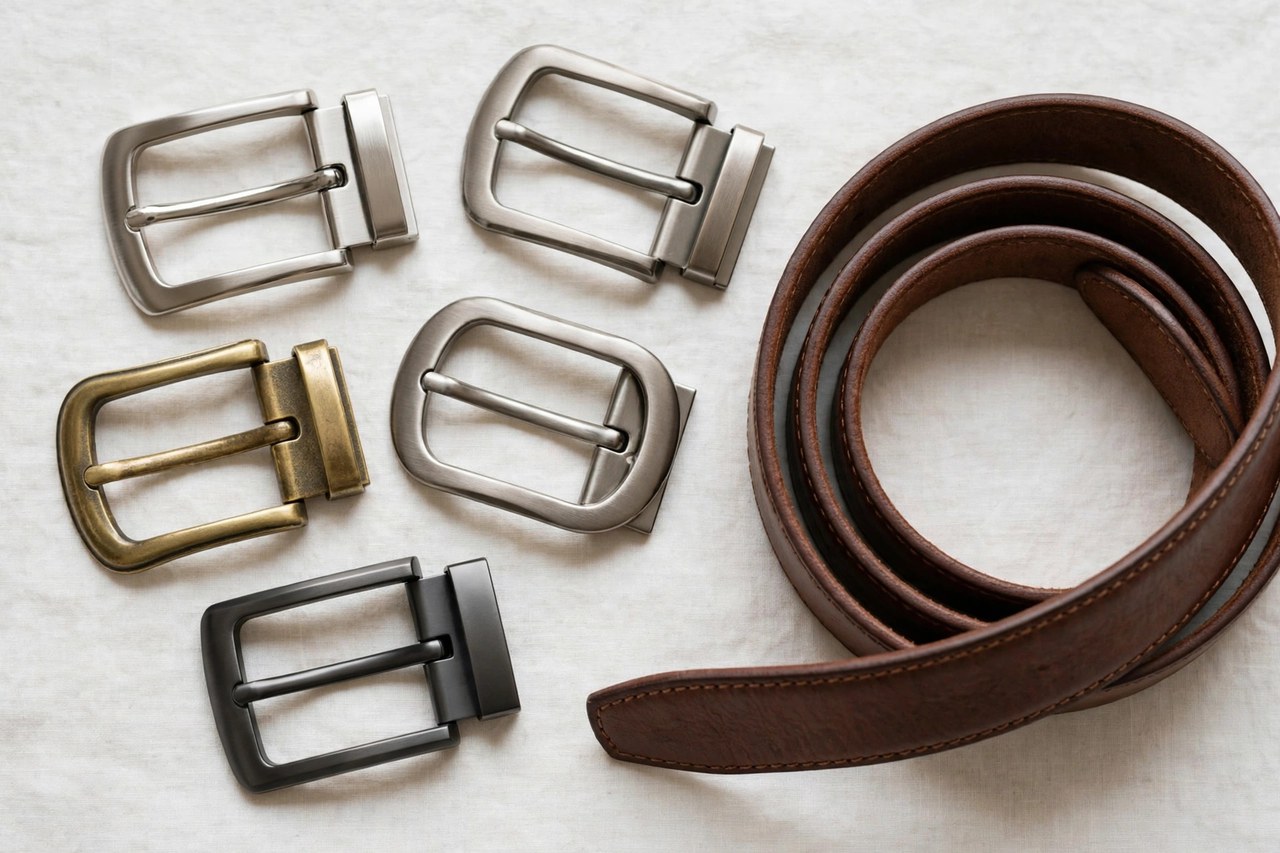
Men's belt buckles are the hardware half of the belt system: the frame, plaque or mechanism that fastens the strap and carries most of the belt's visual character. A buckle is a small machine with a dress code - its size, metal and mechanism decide whether a belt reads boardroom, western or workshop - and because buckles and straps interchange on many belts, the buckle is where a modest belt collection becomes a versatile one. This guide is built around the questions buyers actually ask: which style, which size, which fabric, and what will it look like after a year of real use - answered in order, with the trade-offs stated plainly.
Styles and Construction
Mechanisms divide the field. Frame buckles - the classic loop with a single prong - are the dress standard. Plaque and box-frame buckles cover the strap's end for a cleaner line. Western buckles are engraved trophy-style plaques on a swivel, sold as sets with matching loop and tip. Automatic or ratchet buckles grip a toothed track inside the strap for fine, hole-free adjustment, and military-style buckles clamp a webbing strap. Match mechanism to strap: a ratchet buckle needs its track strap, and a plaque's channel fits only certain strap widths and thicknesses.
With accessories, materials and hardware decide value far more than branding. Solid metal beats plated pot metal, full-grain material beats corrected or bonded substitutes, and stitching beats glue wherever the two compete. Check moving parts - clasps, hinges, buckles, zippers - through their full travel before buying, because an accessory is usually a mechanical object as much as a decorative one. Care is part of the purchase too: an accessory you can maintain with a cloth and conditioner will outlast a finer one that needs specialist attention you will never give it.
Fit and Sizing
Size the buckle to the belt and the man: strap width (most dress belts run 30-35mm, casual 38-40mm) must match the buckle's channel exactly, and the buckle's overall scale should suit the wearer's frame and the trouser loops it will live among. Dress formality is a size question too - the smaller and quieter the buckle, the dressier the belt. Metal color should join the outfit's other metals: watch, cufflinks, shoe buckles if any.
Accessories fit too, and their measurements are exact ones: belt size is measured to the middle hole of a belt you own, hat size is a head circumference, and a watch case should sit within the width of your wrist rather than beyond it. Where a maker publishes a size chart, measure yourself and use it rather than ordering your usual letter - accessory sizing varies more between brands than almost any other category, and returns on a two-inch error are entirely avoidable with ninety seconds and a tape measure.
Wearing and Care
Solid brass and stainless buckles age gracefully and can be polished for decades; plated alloys look right until the plating wears at the prong's contact points, which it eventually does. Wipe buckles after wear, polish with the cloth meant for the metal, and store belts hung by the buckle so straps neither crease nor scratch the finish. A loose prong screw is a thirty-second fix that becomes a lost buckle if ignored for a season.
Store accessories as deliberately as you bought them: belts rolled or hung by the buckle rather than folded, leather goods out of direct sun, metal kept dry and occasionally polished with the right cloth for its finish. Condition leather accessories a few times a year, keep them in breathable bags rather than plastic, and repair hardware early - a loose screw or tired spring bar is a small fix that becomes a lost item if ignored. Rotation helps here too: two everyday pieces worn alternately outlast one worn daily.
Common Questions
Can you put any buckle on any belt?
No - three fittings must match: the strap width must equal the buckle's channel, the strap's attachment must suit the mechanism (snaps or screws for interchangeable buckles, a sewn loop is permanent), and special systems like ratchet buckles need straps with the matching internal track. Within those limits, a snap-fastened strap happily hosts a wardrobe of buckles.
What buckle size is right for dress wear?
Dress belts run narrow - straps of about 30 to 35 millimeters - with small, plain frame buckles in polished silver or gold tones. Scale the buckle to your frame within that range: a very small man in a large plaque looks costumed, and a large man in a tiny frame looks under-equipped. Casual and western belts scale up deliberately.
Solid or plated buckles - does it matter?
Over years, yes. Solid brass, stainless and sterling wear by polishing brighter at the edges; plated zinc-alloy buckles wear by losing their finish at friction points, showing grey metal beneath. For a daily buckle, solid metal is the economy. Plated fashion buckles are fine for occasional wear where the finish sees little friction.
More in Men's Clothes Guide B
Buckle History
A buckle’s function is as critical as its fashion statement — a proper buckle adequately secures both ends of the belt. A buckle is a clasp for fastening two ends, in which a device attached to one end is fitted or coupled to the other. Frame-style buckles are the oldest design; in a frame-and-prong buckle the prong attaches to one end of the frame and extends away from the wearer through a hole in the belt, anchoring against the frame’s opposite side; the oldest styles have a simple loop or “D”-shaped frame, while double-loop or center-post buckles whose prongs attach to a fixed center section appear in the 8th century; and very small buckles with removable center pins and chapes were used on shoes from the 17th century, though not often for waist-belts — a chape being the fixed cover or plate that attaches the buckle to its strap.
Looking for Men's Clothing Stores?
This guide explains men's belt buckles. To browse where to buy, visit our men's clothing store directory, where you can find retailers that carry them.