Men's Black Tie Guide
Men's black tie is not a tie color - it is a dress code: the semi-formal evening system built on a black dinner jacket (tuxedo), a white dress shirt, a black bow tie, and their supporting cast of cummerbund or waistcoat, studs, and patent or polished shoes. The code survives because it flatters almost everyone and removes almost every decision; this guide explains the components, the few places variation is allowed, and the errors that quietly break the effect.
Shop Men's Black Tie Now
Shop Men's Black Tie on Amazon Shop Men's Black Tie on eBayThe Amazon and eBay links on this page are affiliate links. If you make a purchase through them, Apparel Search may earn a commission.
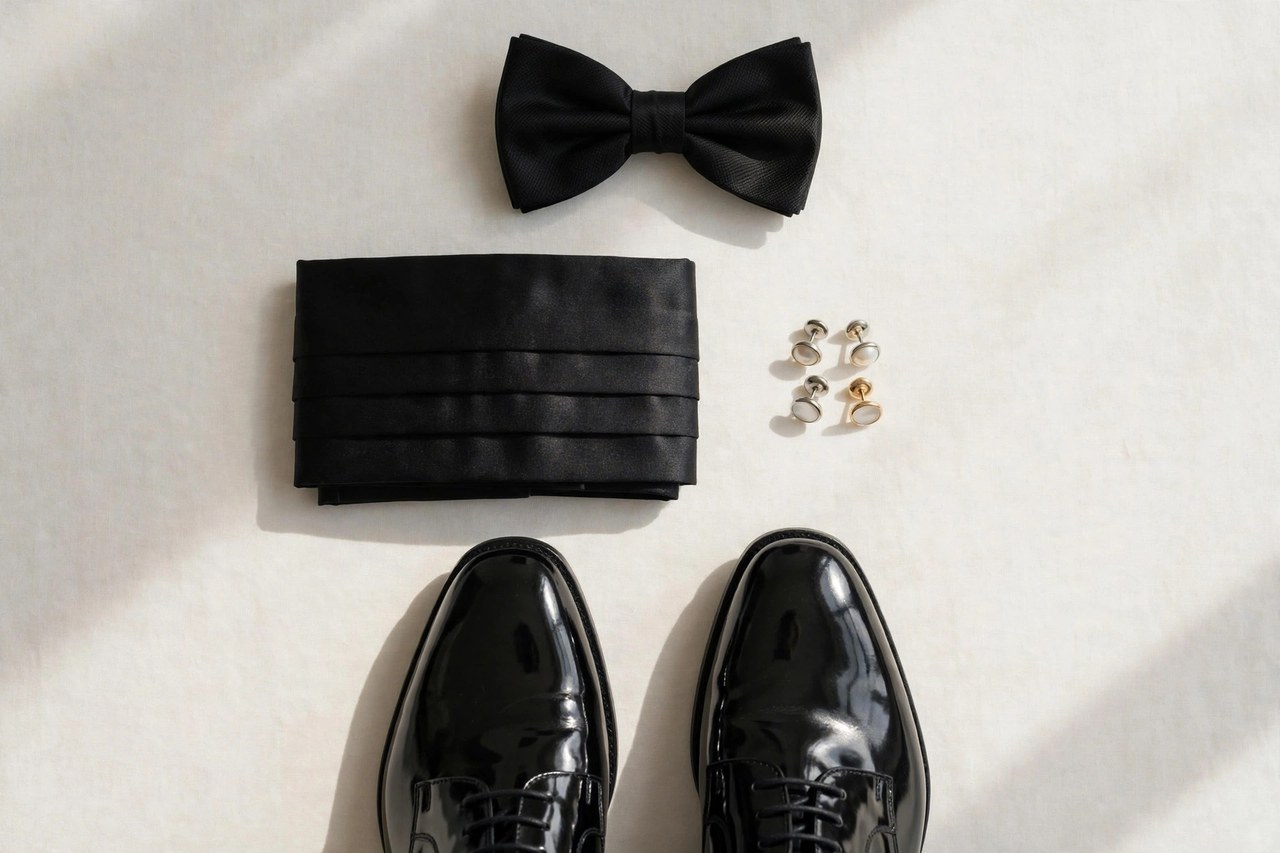
Men's black tie is not a tie color - it is a dress code: the semi-formal evening system built on a black dinner jacket (tuxedo), a white dress shirt, a black bow tie, and their supporting cast of cummerbund or waistcoat, studs, and patent or polished shoes. The code survives because it flatters almost everyone and removes almost every decision; this guide explains the components, the few places variation is allowed, and the errors that quietly break the effect. This guide explains what to look for, how the sizing actually works, which fabrics and constructions earn their price, and how to care for the garment so it keeps doing its job season after season.
Styles and Construction
The dinner jacket is single or double breasted with satin or grosgrain peaked or shawl lapels, one button, and no vents by tradition. Trousers carry a satin stripe and no belt loops - braces or side adjusters do the holding. The shirt has a pleated or marcella front, a turndown or wing collar, and takes studs and cufflinks rather than buttons. The bow tie should be black silk, self-tied, sized to the neck; a cummerbund's pleats face up, or a low evening waistcoat replaces it.
Whatever the garment, the same buying discipline applies: decide the job first, then the specification that does that job, then the budget - in that order. Read fiber and care labels as specifications, not fine print. Check the garment inside out, because finishing you cannot see from the front - seam allowances, lining attachments, spare buttons, clean thread ends - predicts how the piece will age better than any brand name. And keep the receipt habit: a garment that fits your measurements, your climate and your laundry routine will be worn; one that misses any of the three becomes storage.
Fit and Sizing
Fit is the whole game at this formality: the jacket should sit close with the shirt cuff showing a half inch, trousers break minimally over the shoe, and the bow tie's width should echo the face - tied, sized, and sitting straight. Rentals fit nobody exactly, which is why an owned, altered dinner suit pays for itself by the third event. Everything should be decided before the evening: black tie tolerates no improvisation at the mirror.
Whatever the category, measure yourself once a year and write the numbers down - chest, waist, inseam, foot length, head circumference as relevant - because bodies change gradually and old size habits change never. Shop from measurements rather than from the size you remember being, try garments in the conditions you will wear them (over layers, with your own shoes, late in the day for footwear), and be honest about alteration: a tailor fixes length and small waist changes beautifully, but shoulders, rises and patterns are the garment you bought forever.
Wearing and Care
After the event, air the suit before it goes away, brush it, and store it in a breathable garment bag; the shirt washes or launders immediately, since collar soil sets. Silk ties and cummerbunds spot-clean and rest. Patent shoes wipe clean and tree well. A dinner suit worn twice a year and stored properly outlasts a decade of rentals - but only if it goes away clean, because storage stains appear months later like delayed regrets.
A small maintenance habit outperforms any product: five minutes when a garment comes off - shake it out, hang or fold it properly, note the stain or the loose button - prevents most of the damage owners later blame on quality. Keep a basic kit where the clothes live: a brush, a lint roller, conditioner suited to your leathers, and a needle and thread in black, navy and grey. Garments rarely die all at once; they fade by neglect in small increments, and small increments of care reverse the process.
Common Questions
What does black tie actually require?
A black dinner jacket with satin or grosgrain lapels, matching trousers with a satin stripe, a white dress shirt with studs and cufflinks, a black silk bow tie (self-tied by preference), a cummerbund or evening waistcoat, black socks, and patent leather or highly polished black shoes. A long black necktie belongs to a different, lesser code - black tie means the bow tie.
Cummerbund or waistcoat - which is correct?
Both are correct; they cover the waistband and the shirt's unstudded lower front, which is their job. A cummerbund (pleats worn facing up) is the warmer-weather, simpler choice. A low-cut evening waistcoat in black or white is the more traditional and formal option. What is not correct is neither - an uncovered waistband breaks the line the code exists to create.
Can you wear a normal black suit as black tie?
You can attend, but you will be visibly underdressed to eyes that know: a lounge suit lacks the satin lapels and stripe, takes a belt, and pairs with a long tie and button shirt. If black tie events recur in your life, a proper dinner suit - bought once and altered - is the honest answer; for a single event, a good rental fitted carefully beats a black suit.
More in Men's Clothes Guide B
Two Meanings of Black Tie
The term black tie can represent two different things — it can simply mean black neckwear, or it can refer to a black tie event. Black tie, sometimes known by its French name cravate noir, is a semi-formal dress code for evening events and social functions derived from British and American costume conventions of the 19th century; traditionally worn only for events after 7 p.m., it is less formal than white tie but more formal than informal or business dress. In the United States the gentlemen’s form of black tie attire is often called a tuxedo, and in formal clothing the black tie typically references a black bow tie.
Looking for Men's Clothing Stores?
This guide explains men's black tie. To browse where to buy, visit our men's clothing store directory, where you can find retailers that carry them.