Men's Blazers Guide
A men's blazer is the odd jacket that anchors smart-casual dress: a tailored, single or double breasted jacket - classically navy with metal buttons - worn with contrasting trousers rather than as part of a suit. It descends from rowing club and naval dress, and its job in a modern wardrobe is range: the blazer dresses up chinos and a tee, dresses down a tie, and covers more dress codes with one garment than anything else a man owns.
Shop Men's Blazers Now
Shop Men's Blazers on Amazon Shop Men's Blazers on eBayThe Amazon and eBay links on this page are affiliate links. If you make a purchase through them, Apparel Search may earn a commission.
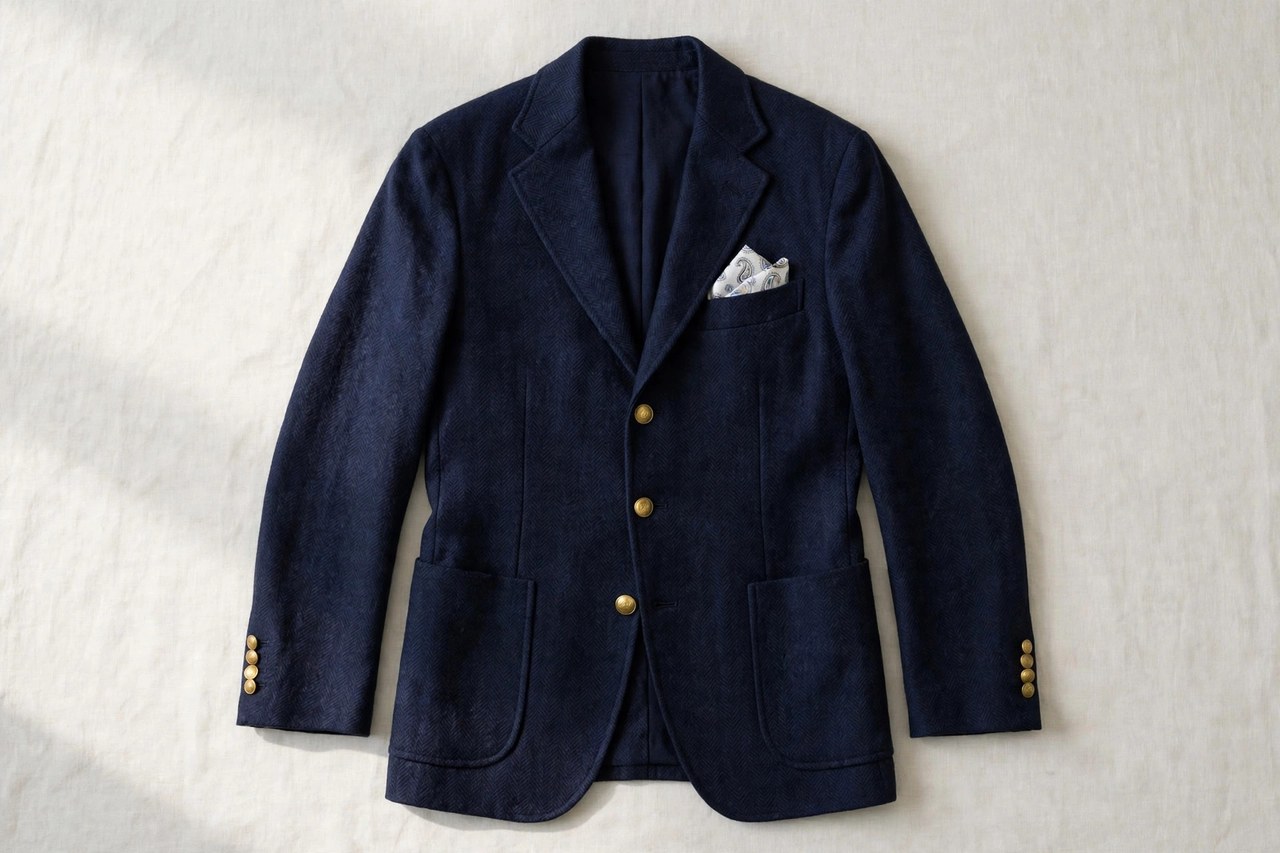
A men's blazer is the odd jacket that anchors smart-casual dress: a tailored, single or double breasted jacket - classically navy with metal buttons - worn with contrasting trousers rather than as part of a suit. It descends from rowing club and naval dress, and its job in a modern wardrobe is range: the blazer dresses up chinos and a tee, dresses down a tie, and covers more dress codes with one garment than anything else a man owns. This guide is built around the questions buyers actually ask: which style, which size, which fabric, and what will it look like after a year of real use - answered in order, with the trade-offs stated plainly.
Styles and Construction
The classic blazer is navy, in worsted wool or a wool blend with some texture, with gilt or horn-look buttons and patch or flap pockets. Around it orbit the seasonal variants: hopsack and fresco weaves that breathe in summer, flannel for winter weight, unstructured and unpadded shoulders for a softer Italian read, and double-breasted cuts that formalize the same idea. A blazer is not a suit jacket worn alone - suit jackets are smoother, finer and longer, and orphaned ones read wrong against odd trousers in a way observers feel before they can name.
Outerwear earns its price in the details you cannot see in a photograph: whether seams are taped or merely stitched, whether the zipper is a reputable make that runs without catching, whether cuffs and hems adjust to seal out weather, and whether the lining lets the garment slide over layers instead of gripping them. Shoulder construction decides how a coat hangs over a sweater or a suit jacket, and pocket placement decides whether your hands rest naturally or hover. Buy for the coldest, wettest day the garment will honestly meet, not the mildest.
Fit and Sizing
Shoulders and button stance decide everything: the jacket's shoulders must equal yours, the button should close without an X of pulling, and you should be able to slide a flat hand inside the closed jacket and no more. Length should cover the seat; sleeves should show a quarter to a half inch of shirt cuff. A tailor can take in a waist and shorten sleeves economically - budget for those two alterations when you buy and the blazer will look commissioned rather than borrowed.
Fit outerwear over the bulkiest layer it will honestly cover - a sweater for a casual jacket, a suit jacket for an overcoat - and test the full range: arms forward as if driving, arms raised, sitting with the garment closed. The shoulders of the coat should echo your own shoulders rather than extend past them, the closure should meet without strain across the chest, and the hem should reach the coverage the garment exists for. A coat that fits only over a T-shirt is a coat for a climate you may not live in.
Wearing and Care
Rest a blazer a day between wearings on a broad hanger, brush it after wear, and steam rather than press when creases need persuading - pressing flattens the roll of a lapel that steaming preserves. Dry clean sparingly, a few times a year at most, because the process ages cloth; spot-clean and air instead. Store it buttoned in a breathable bag, and the navy blazer will still be solving dress codes a decade from purchase.
Outerwear care begins with hanging it properly - broad hangers that support the shoulders - and resting it between wears so insulation and shape recover. Most pieces need washing far less often than owners think; spot-clean first, and when a full wash comes, use the maker's instructions and a technical or gentle detergent as the fabric demands. Refresh water-repellent finishes when rain stops beading, store the garment clean and uncompressed, and have leather and tailored pieces professionally cleaned rather than experimenting at home.
Blazer or sport coat? The two odd jackets differ in cloth, buttons and formality: see blazer vs sport coat for the definitions and pairing rules.
Common Questions
What is the difference between a blazer and a sport coat?
Tradition draws it by cloth and buttons: a blazer is solid - classically navy - often with metal buttons, descended from club and naval uniforms; a sport coat covers everything else in the odd-jacket family, including patterns, tweeds and checks. In modern retail the words blur, but a patterned jacket is never a blazer in the strict sense, and the distinction still guides formality judgments.
Can you wear a suit jacket as a blazer?
It rarely works. Suit jackets are cut from smooth, fine cloth, usually longer, with matching-trouser proportions in mind; worn with odd trousers they look like what they are - half a suit. A true blazer's textured cloth, contrasting buttons and slightly easier cut are designed to stand alone. One exception: a very textured suit jacket can pass, judged case by case.
What trousers go with a navy blazer?
The classic ladder: grey flannels for the most formal pairing, khaki chinos for the everyday standard, white or cream trousers in summer, and dark denim for the casual end. The blazer's gift is that all of them work - it is the trousers and shoes, more than the jacket itself, that set the outfit's formality dial.
More in Men's Clothes Guide B
The Blazer Defined
A blazer is a type of jacket resembling a suit jacket but cut more casually, generally distinguished from a sport coat as the more formal garment, tailored from solid color fabrics. Blazers often have naval-style metal buttons to reflect their origins as jackets worn by boating club members; a blazer’s cloth is usually durable, as it is intended as outdoor wear; and blazers are often part of a uniform — denoting, for example, an airline’s employees, students of a particular school, members of sports clubs, and athletes on a team.
Looking for Men's Clothing Stores?
This guide explains men's blazers. To browse where to buy, visit our men's clothing store directory, where you can find retailers that carry them.