Men's Big and Tall Suits Guide
Big and tall suits are tailored suits on the extended system: jackets in big sizes graded through chest, shoulder and midsection, tall fittings with the sleeve and body length a long frame requires, and trousers that continue the same pattern logic below the jacket. A suit is the most pattern-dependent garment a man buys, and extended sizes expose every shortcut - which is why this page is mostly about fit architecture: what a properly graded big or tall suit does that a stretched regular suit cannot.
Shop Men's Big and Tall Suits Now
Shop Men's Big and Tall Suits on Amazon Shop Men's Big and Tall Suits on eBayThe Amazon and eBay links on this page are affiliate links. If you make a purchase through them, Apparel Search may earn a commission.
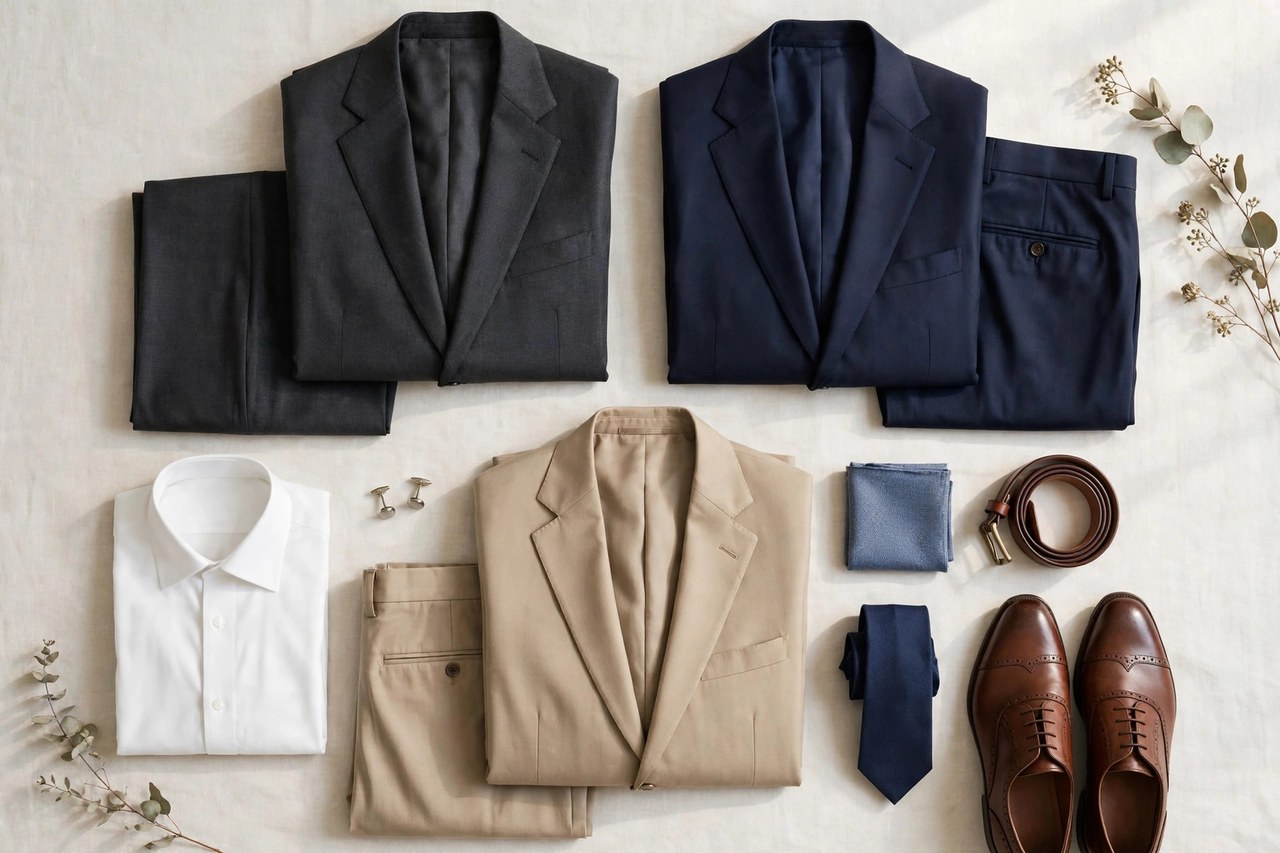
Big and tall suits are tailored suits on the extended system: jackets in big sizes graded through chest, shoulder and midsection, tall fittings with the sleeve and body length a long frame requires, and trousers that continue the same pattern logic below the jacket. A suit is the most pattern-dependent garment a man buys, and extended sizes expose every shortcut - which is why this page is mostly about fit architecture: what a properly graded big or tall suit does that a stretched regular suit cannot.
Big and tall sizing answers two different bodies with two different ranges: big sizes (1X through 6X in most lines) add circumference - chest, waist, seat and thigh - at regular lengths, while tall sizes (LT through 4XLT) add length - sleeves, body, rise and inseam - at a given circumference. Many men need one, some need both, and buying the wrong axis is the classic big-and-tall mistake: a big size bought for length drowns the shoulders, and a tall size bought for girth strains at every closure. Measure both axes - circumference where the garment closes, and length where it must reach - and order from the maker's own chart, because an X in one brand is a rumor in another.
Sizing for Bigger and Taller Frames
Size a suit by the jacket, and by the chest over a dress shirt - then audit the three things grading decides: the shoulder (the jacket's must equal yours; nothing else in tailoring is this non-negotiable), the button stance (placed for your torso length, closing without strain or a standing lapel), and balance (the jacket's front and back lengths in proportion, so the hem runs level). Tall suits add sleeve and body with the stance repositioned, not merely lengthened - a long jacket with a regular stance buttons at the wrong altitude and no tailor moves a buttonhole's family cheaply. Trouser drop (the waist difference from jacket size) varies by maker in extended lines; separates programs solve the big-top, smaller-waist figure that nested suits punish.
Proportions are the second half of the system. A garment simply scaled up in every dimension fits nobody: proper big-and-tall patterns widen the shoulder and chest without dropping the armhole to the waist, add rise so a waistband sits where trousers are meant to sit, and grade pockets, collars and cuffs up modestly rather than comically. When a tall or big version looks like a regular garment photographed through a magnifier, that is usually better than it sounds - restraint in grading is what keeps a 3X shirt reading as a shirt and not as a tent with buttons.
Fabric and Construction
Cloth for extended tailoring rewards substance: a midweight worsted with a little texture drapes a larger frame kindly, holds a press through a long day, and resists the shine that smooth cheap cloth develops at seat and elbow. Construction tiers - fused, half-canvas, full-canvas - matter as much at size 52 as at 38, and arguably more: canvas shapes and supports a larger chest over years of wear. Budget alterations into the purchase from the start - sleeves, trouser hem, waist and a nip at the jacket waist are the standard quartet - because an extended suit is finished by its tailor, not by its rack.
Outerwear earns its price in the details you cannot see in a photograph: whether seams are taped or merely stitched, whether the zipper is a reputable make that runs without catching, whether cuffs and hems adjust to seal out weather, and whether the lining lets the garment slide over layers instead of gripping them. Shoulder construction decides how a coat hangs over a sweater or a suit jacket, and pocket placement decides whether your hands rest naturally or hover. Buy for the coldest, wettest day the garment will honestly meet, not the mildest.
Wearing and Care
Care for suits in extended sizes follows the same rules as any quality garment, with two additions: the extra fabric weight makes hangers work harder, so fold heavy knits and use broad hangers for tailored pieces; and alterations budget matters more, because a hem or sleeve adjustment is often the difference between an extended size that fits and one that merely covers.
Outerwear care begins with hanging it properly - broad hangers that support the shoulders - and resting it between wears so insulation and shape recover. Most pieces need washing far less often than owners think; spot-clean first, and when a full wash comes, use the maker's instructions and a technical or gentle detergent as the fabric demands. Refresh water-repellent finishes when rain stops beading, store the garment clean and uncompressed, and have leather and tailored pieces professionally cleaned rather than experimenting at home.
Common Questions
What is the most important fit point in a big-size suit?
The shoulder, as in every suit - the jacket's shoulder must match yours exactly, since it cannot be altered economically - followed closely by a button stance that closes without strain. A big suit that fits the shoulder and closes calmly can be tailored nearly everywhere else; one wrong in either place is a return, however fine the cloth.
Should tall men buy tall suits or size up?
Tall suits, always: they add body and sleeve length and place the button stance, pockets and balance for a long torso. Sizing up a regular suit adds width everywhere to buy a little length, and the jacket reads borrowed in every photograph. If your chest is also big, the answer is the tall fitting of your big size - the two axes combine in genuine extended lines.
Are suit separates a good idea in big and tall?
Often the best idea: separates let a man whose jacket and trouser sizes do not follow the maker's assumed drop buy each piece in its own right size and pattern. The cloth is dyed to match across the program. For big-and-tall figures - whose proportions vary more than the nested suit assumes - separates are frequently the difference between an altered compromise and a suit.
More Big and Tall Guides
Background
Suits in extended sizes are part of the Big and Tall collection, listed on its second page. The links below lead to big and tall clothing stores and onward through the collection’s other categories, and this guide covers the garment’s extended sizing, fabrics, fit and care, written for big and tall men.
Looking for Men's Clothing Stores?
This guide explains men's big and tall suits and their sizing. To browse where to buy, visit our men's clothing store directory, where you can find retailers that carry extended sizes.