Apparel Search Consumer Guides
How a Suit Should Fit
The full fit check, top to bottom — and the honest line between what a tailor can fix and what he cannot.
Cloth, brand and price get the attention when men buy suits, but fit is what other people actually see. A modest suit whose shoulders sit where shoulders should sit, whose button closes without a fight, and whose trousers end in one clean fold will read as expensive. A costly suit that pulls, pools and gaps will not. Fit is also the part of the bargain almost entirely within your control: you cannot change how a jacket was cut, but you can refuse the wrong size, and a good tailor can correct most of what remains.
This guide is the check a good tailor runs, in the order he runs it: shoulders first, because they decide everything; then chest and button, sleeves and length, and the trousers from waist to hem. Two companion pages go deeper where it pays — trouser break and pant length, and the difference between a blazer and a sport coat. The garment detail behind each piece — cloth, canvas, construction — is covered by the men's garment guides linked further down this page.
Search Apparel Search
The Guides in This Section
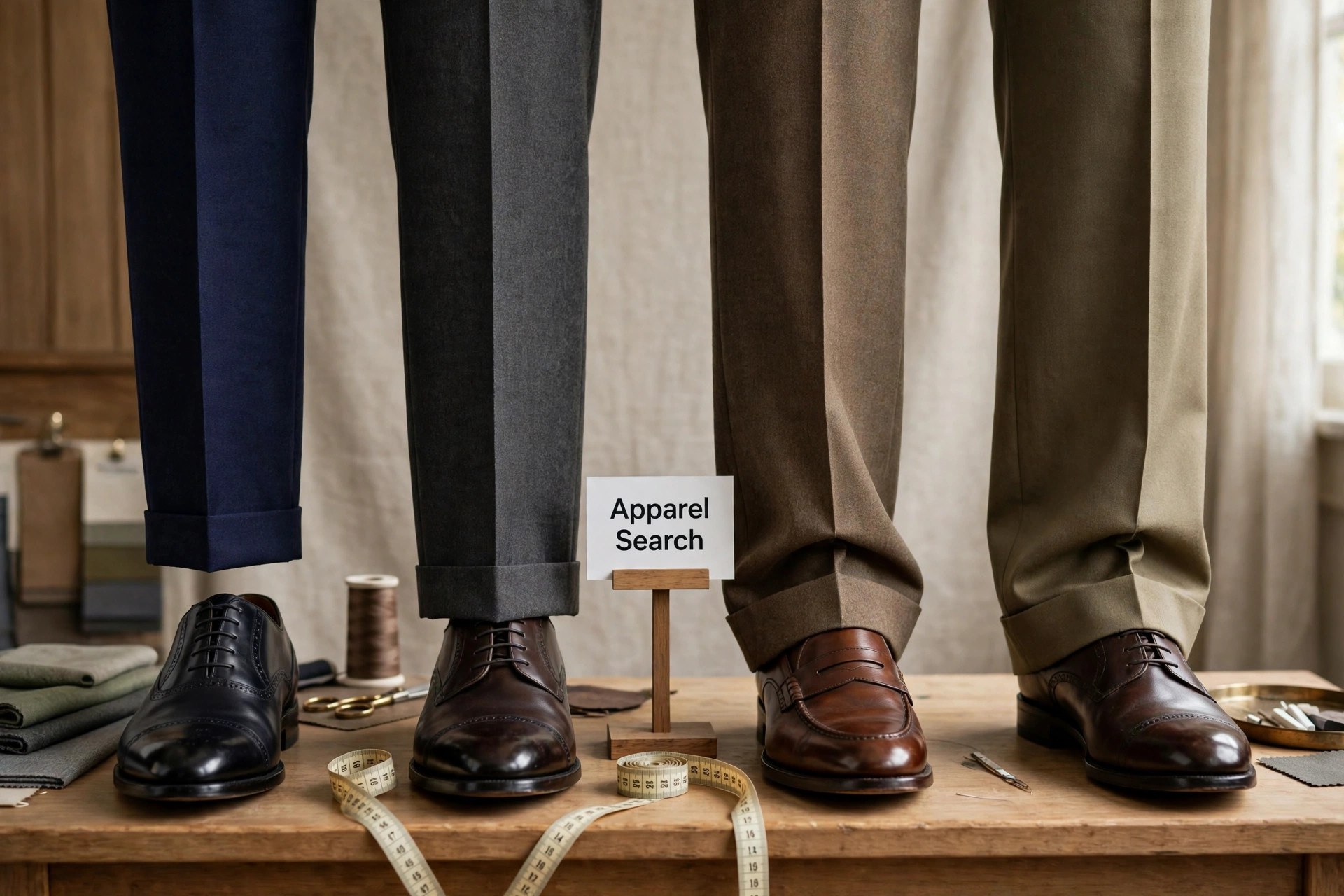 Trouser Break & Pant LengthNo break, quarter, half and full break defined, how break follows the leg opening and the shoe, and how to get the hem right at the tailor.
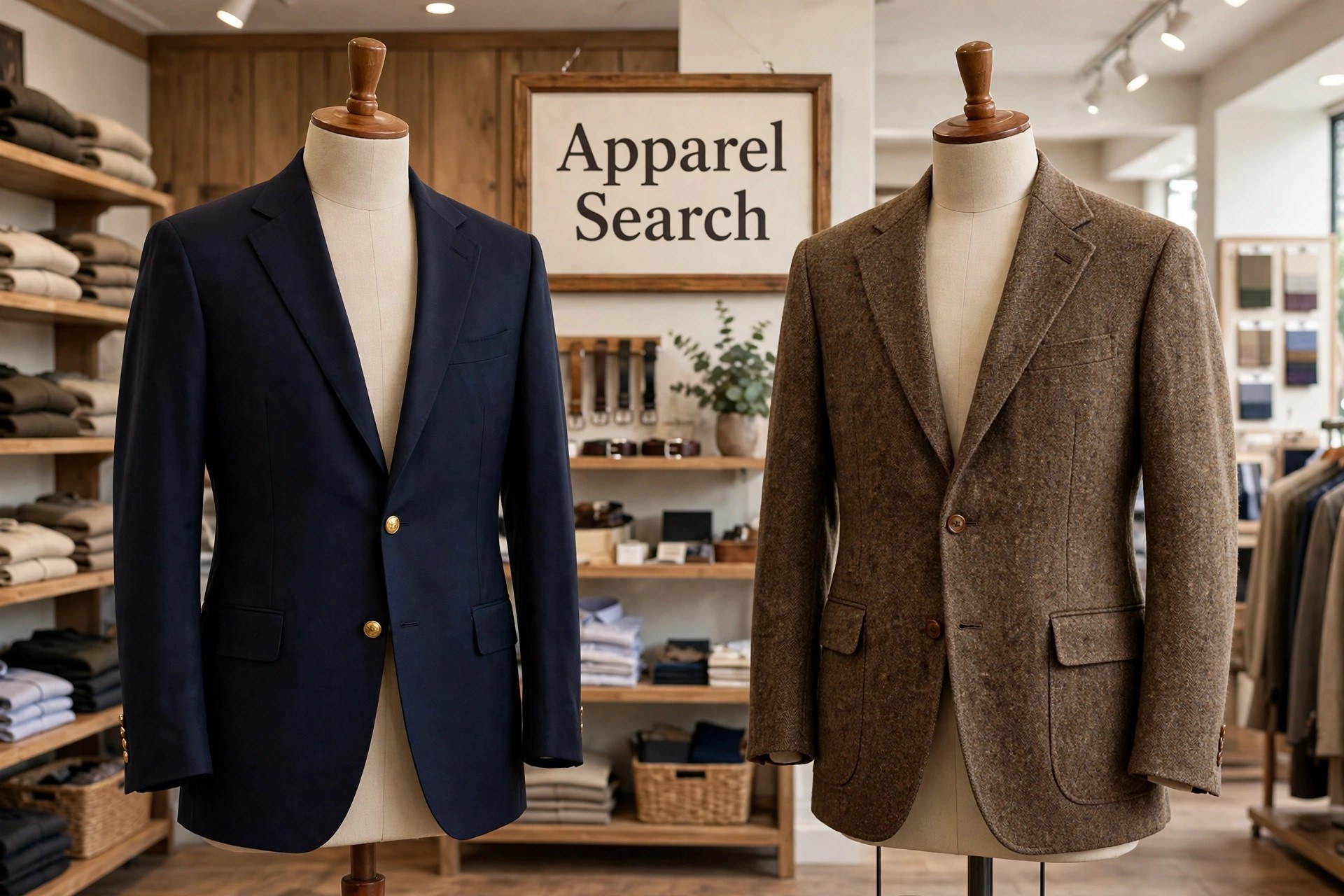 Blazer vs. Sport CoatThe honest comparison: structure, fabrics, buttons and formality, when each is the right jacket — and how each should fit.
Start With the Shoulders
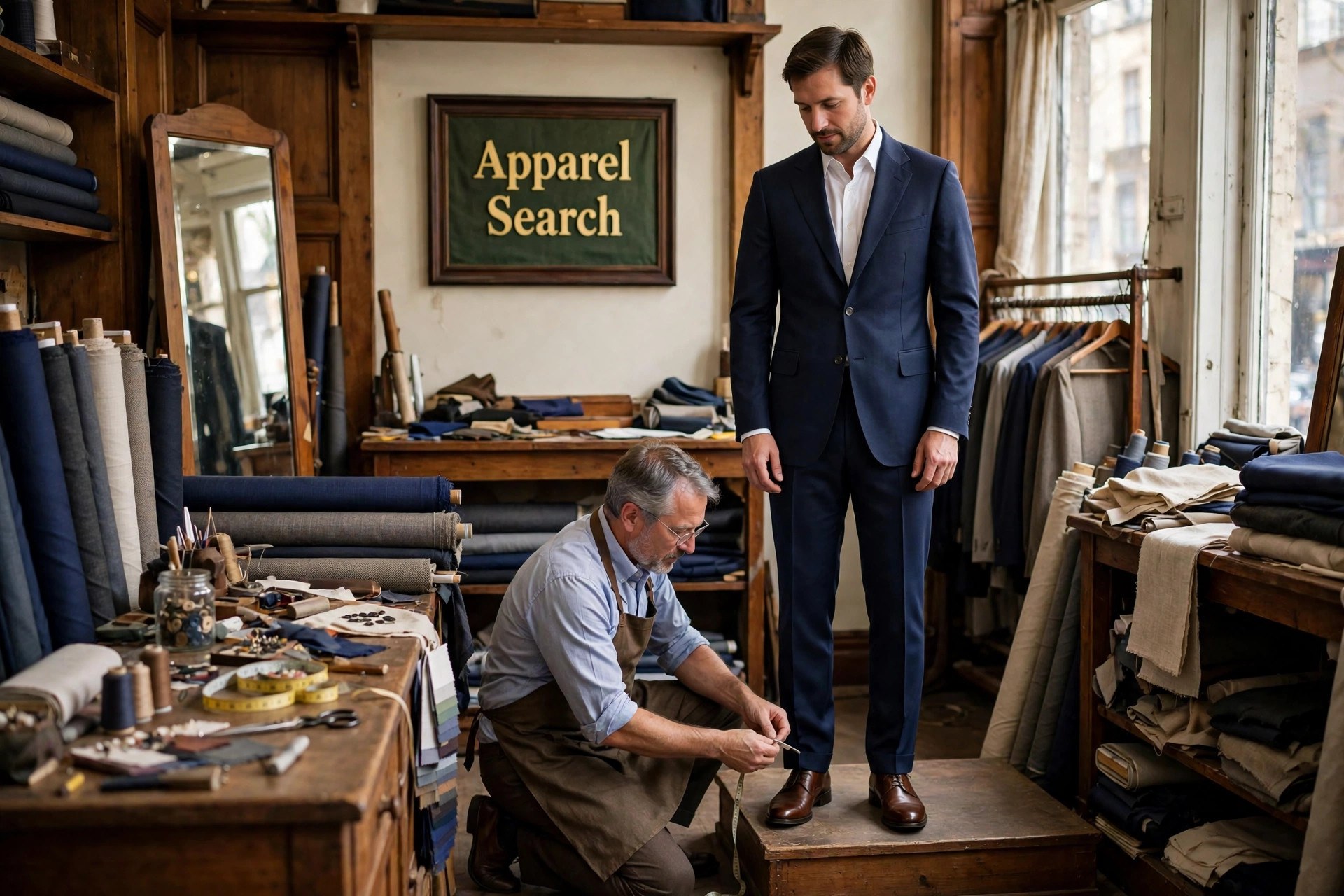
The shoulder is the one place a suit cannot be argued with. The jacket's shoulder seam should end where your shoulder ends — at the bone, not an inch beyond it and not short of it. Past the bone, the sleeve hangs off a shelf of empty cloth and the shoulder line droops; short of it, the whole jacket binds when you move. Run a hand down from the neck: the shoulder should feel smooth, with no hollow divot where the sleeve begins and no ridge standing up at the seam. Then the collar: it should rest against your shirt collar all the way around, showing roughly half an inch of shirt above the jacket at the back of the neck. A gap between jacket collar and neck means the jacket does not sit on you, and it is one of the few faults no alteration reliably cures. Judge all of this wearing a proper dress shirt — a collar judged over a T-shirt collar tells you nothing.
Chest, Button and Waist
Button the jacket standing straight, arms down. The front should close without strain: if the cloth pulls into an X from the button, or the lapels bow outward and refuse to lie flat, the chest and waist are too small, whatever the size label says. The tailor's test is a flat hand — slide one inside the buttoned jacket, flat against your chest; it should fit snugly. A whole fist means the jacket is a size generous. The button itself matters too: on a two-button jacket the fastening button should sit at or just above your natural waist, roughly the navel line; a stance far above it shortens you, far below it lengthens the skirt of the jacket. Below the button, the fronts should fall cleanly, the vents at the back lying flat and closed rather than splayed open — a vent that spreads is the jacket telling you the seat is too tight. A crease of horizontal pulling across the shoulder blades, or wrinkles radiating under the collar, says the back is working harder than it should.
Sleeves, Length and the Shirt Cuff
Jacket sleeves should end at the wrist bone, showing about a quarter to a half inch of shirt cuff — tailors call it 'linen', and that sliver is the difference between a suit worn by a man and a suit wearing him. Much less and the jacket reads too long; much more and it reads borrowed. Jacket length is judged against your seat and your height together: the hem should cover your seat, and as a rough measure it should split the distance from the bottom of the collar to the floor in about half. Cup your fingers under the hem standing naturally — the classic check is that the hem rests in your curled fingers, though proportion matters more than any single rule. Sleeves and hems are the two judgements a shop's mirror distorts most, so take them standing straight, feet together, in the shoes you will wear.
The Trousers: Waist, Seat and Rise
Suit trousers are worn at the natural waist, near the navel — not on the hips like jeans. At that height the waistband should stay up on its own, with room for one or two fingers inside and no need for a belt to do structural work; a belt is a finish, not a clamp. The seat should be smooth: horizontal wrinkles under it mean too tight, a curtain of spare cloth means too loose, and either will crease the whole line of the suit. The rise — the distance from waistband to the fork of the legs — should let you sit, climb stairs and stride without the trousers pulling or dropping. Through the thigh and knee the cloth should follow the leg with a little ease, narrowing toward the hem; the length question, where trousers meet the shoe, is important enough to have its own page: our trouser break and pant length guide.
The Four Movement Tests
A suit that only works standing still in front of a mirror does not work. Run these before you pay:
- The button-and-breathe. Button the jacket, take a full breath and settle your shoulders. The front should stay composed — no X-pull appearing, no lapels lifting.
- The sit. Sit down as you would at a desk or table. Trousers should not strain across the thigh or drag the waistband down at the back, and the jacket, unbuttoned as it should be when seated, should not bunch into your lap.
- The reach. Raise both arms and reach forward, as if for a handshake or a shelf. Some tightening is normal; binding that stops the reach, or a jacket back that tents outward, means the chest and back are too small.
- The walk. Take ten paces. The trousers should swing and settle back to the same fold over the shoe, the vents should stay closed, and nothing should need adjusting when you stop.
What a Tailor Can Fix — and What One Cannot
This is the table that saves money. Alterations divide cleanly into the cheap and routine, the possible-with-limits, and the effectively impossible — and the impossible ones are exactly the places to judge when buying.
| Fitting fault | Can a tailor fix it? | Notes |
|---|---|---|
| Trousers too long | Yes — routine | Hemming is the cheapest alteration there is; buy length, then set it exactly. |
| Jacket sleeves too long | Yes, within limits | Shortened from the cuff; working buttonholes ('surgeon cuffs') make it slower and dearer. |
| Trouser waist an inch or so out | Yes | In or out about an inch to an inch and a half before the seat's balance suffers. |
| Jacket too loose through the waist | Yes | Taking in the center and side seams is standard work and transforms a boxy jacket. |
| Trouser seat too full | Yes, mostly | Taken in through the seat seam; a severe excess distorts the crease line. |
| Shoulders too wide | No — buy another size | Remaking a shoulder means rebuilding the jacket's frame; the cost approaches a new suit. |
| Chest too tight | No | There is almost no cloth to let out; pulling at the button is a size problem, not a tailoring one. |
| Jacket too long | Practically no | Shortening moves every pocket and button out of proportion; a tailor may trim a little, never fix a lot. |
| Rise too high or too low | No | The rise is set when the trousers are cut; discomfort here does not alter away. |
| Collar standing away from the neck | Rarely | Often a posture and shoulder-slope mismatch with the jacket's cut — a different maker may solve it. |
The buying rule the table teaches: fit the shoulders and chest off the rack, and let the tailor handle everything below them. A suit bought a size up 'for the tailor to fix' is usually a suit whose expensive parts — shoulders, chest, length — are the very ones he cannot.
What those fixes cost — the typical price of each job a tailor quotes, and the point at which a tailor’s bill makes a different size the better buy — is covered in our guide to how much alterations cost.
Garment Guides for Men
Common Questions
What is the most important part of a suit fitting correctly?
The shoulders. The jacket shoulder should end at your shoulder bone, smooth, with no overhang and no hollow where the sleeve begins. Shoulders are the frame of the whole jacket: remaking them costs nearly as much as a new suit, so a jacket that is wrong there is wrong everywhere. Buy your size by the shoulders and chest, and let a tailor adjust the waist, sleeves and hems, which alter easily.
How much shirt cuff should show below a suit jacket sleeve?
About a quarter to a half inch of shirt cuff — tailors call it showing linen. The jacket sleeve should end around the wrist bone with your arms hanging naturally. Much less cuff and the sleeve reads too long, a common fault that makes even a good suit look borrowed; much more and the jacket reads too small. It is one of the cheapest alterations to have exactly right.
Can a tailor fix a suit jacket that is too big in the shoulders?
No — not economically, and often not at all. Correcting shoulder width means removing the sleeves, rebuilding the shoulder line and resetting the collar and chest: bespoke-level reconstruction priced accordingly. The faults a tailor fixes well are the waist taken in, sleeves shortened, trousers hemmed and the seat adjusted. Judge shoulders and chest in the shop, because those are the parts you are actually buying.
Should a suit feel tight to look sharp?
No. A sharp suit has clean lines, not tension. Buttoned, it should let a flat hand slide inside against your chest; you should be able to sit, reach and climb stairs without the cloth pulling into wrinkles. Cloth that strains at the button, bows the lapels outward or creases across the back is not a modern slim fit — it is a size too small, and it will wear out faster at exactly those strain points.
Dressing for a Formal Office?
Fit is only half of a work wardrobe — the other half is buying the right pieces at the right formality in the first place. Our men's work wardrobe essentials organizes the office list by dress code level, and the dress codes hub explains how to read each level.
Fit is read most closely where the audience is most conservative: a courtroom. A party to a case wears the suit the way counsel does — as part of being heard — and our what to wear to court guide explains the standard by role, from the suit itself to the shoes that survive the security line.