Apparel Search Consumer Guides
Trouser Break & Pant Length Guide
No break, quarter, half and full — what each looks like, which legs and shoes each suits, and how to leave the tailor with the right length.
Ask a tailor which alteration he performs most and the answer is the trouser hem — and ask which one clients most often get wrong and it is the same job. Pant length looks like a detail, but it decides whether a pair of trousers reads tailored or tired, because the hem is where the whole vertical line of the leg either lands cleanly or collapses. The fold of cloth that forms where the trouser meets the shoe is the break, and choosing it deliberately — rather than accepting whatever length the trousers came with — is the cheapest large improvement most men can make to how they dress. This page is the length companion to our how a suit should fit guide, which covers the waist, seat and rise above the hem.
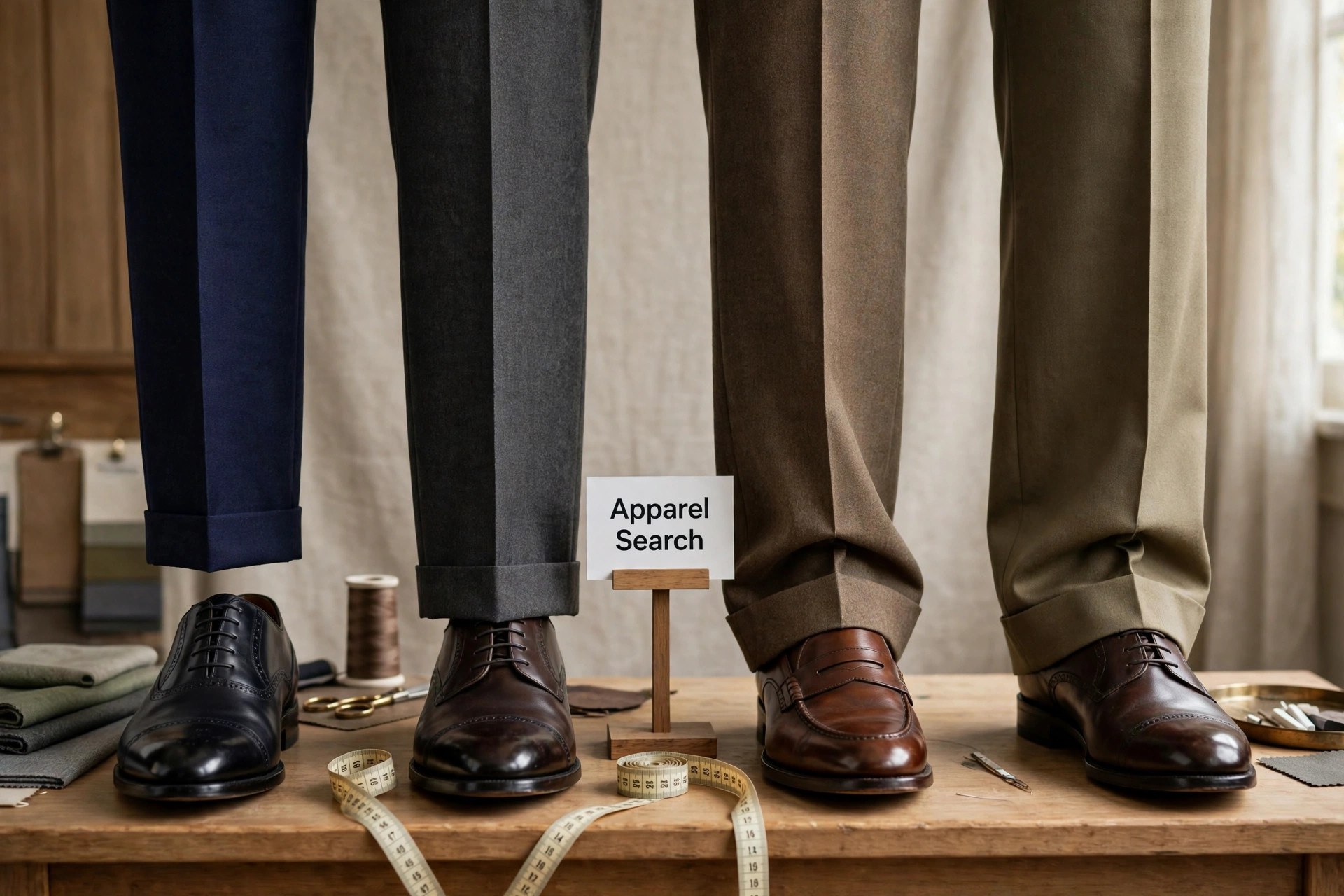
The Four Breaks, Shortest to Longest
- No break. The hem ends just at, or a whisker above, the top of the shoe, with no fold at all — the leg line runs unbroken from hip to hem. It is the modern, deliberate choice for slim trousers and shows the whole shoe, and a flash of sock when walking. The risk: sitting raises any hem, and a no-break trouser rides highest of all. If the cloth clears your ankle bone at rest, it is not a break choice, it is too short.
- Quarter break (slight break). The hem rests lightly on the shoe and folds once, faintly, at the front. It keeps the clean line of no break with a margin of forgiveness — the length most younger tailoring aims at, and a safe choice for narrow legs and dress shoes alike.
- Half break. One clear, single fold across the front of the shoe, the cloth settling rather than stacking, the back of the hem a touch longer than the front. This is the default recommendation of most tailors and the length that flatters the widest range of men and trousers: formal enough for a suit, tidy enough for separates, and kind to both slim and fuller legs.
- Full break. A deep fold, with the cloth visibly resting and creasing above the shoe — sometimes a second smaller fold above it. This is the traditional length, at home on fuller-cut, pleated trousers worn with substantial shoes. On a slim modern leg it stops reading as tradition and starts reading as too long: there is a line between a full break and pooling, and it is about one fold deep.
Break Follows the Leg Opening
The break you can wear is set by the width of the trouser at the hem. Narrow legs have nowhere for a deep fold to go — a full break on a slim trouser does not fold, it crumples, stacking in untidy wrinkles around the ankle. Wide, classic legs have the opposite need: hemmed with no break, a full leg swings and flaps like a flag, and the length looks accidental. Cuffs (turn-ups) change the equation by adding weight and a horizontal line at the hem: they hold a straighter, fuller leg down neatly and sit naturally with a half or full break, while on a slim leg a cuff with a slight break is the classic Ivy combination. Many tailors also cut the hem on a slant — a fraction longer at the back than the front — so the front shows the intended fold while the back covers the heel of the shoe; ask for it by name if your hems keep riding up behind.
The Shoe Decides the Effective Length
A hem is not a number; it is a relationship with a shoe. The same inseam that gives a half break over a low dress shoe gives a quarter break over a loafer worn without socks and can vanish entirely over a boot, whose higher top meets the hem sooner. Judge and pin the length in the shoes the trousers will actually be worn with — a suit trouser hemmed over trainers will be wrong over oxfords every time. If a pair of trousers must serve two very different shoes, hem for the dressier one and accept a slightly shorter read on the other, or split the difference with a quarter-to-half break, which tolerates the most variation. Our men's shoes guide covers the constructions involved; our men's trousers guide and dress pants guide cover the trousers themselves.
At the Tailor: Getting the Hem Right
- Wear the shoes. Bring — or wear — the shoes the trousers belong with, and a belt if you wear one, since the belt settles where the waistband sits and therefore where the hem falls.
- Stand naturally. Feet at your normal stance, eyes forward, weight even. Men unconsciously stand to attention for a tailor, which lifts the waistband and shortens the apparent hem; the pin should be set on the posture you actually have.
- Name the break. 'Half break' is a complete instruction; if you are unsure, it is also the right default. Ask to see the fold pinned on one leg before the second is matched to it.
- Buy long, hem exact. Purchase trousers an inch or two long rather than an inch short — cloth can always come off, and a too-short finished trouser can only be let down by the depth of its hem allowance, which on some trousers is nearly nothing.
One last check belongs at home: walk in the finished trousers before you call the job done. The right length settles back into its fold after every stride; the wrong one needs a tug at the waistband or a shake of the leg, and it will ask for that tug all day.
Common Questions
What trouser break is the safest choice for most men?
The half break: the hem rests on the shoe with one clean fold at the front and a touch more length at the back. It suits slim and classic legs alike, works with or without cuffs, and reads correct with everything from a business suit to odd trousers and loafers. If a tailor asks and you have no strong preference, half break is the answer that is almost never wrong.
Should you wear your dress shoes when getting trousers hemmed?
Yes — always. Break is the relationship between the hem and a specific shoe, and shoes differ enough in height and shape to change the result by a full break category. A trouser hemmed over trainers will sit differently over oxfords. Wear or bring the shoes the trousers will be worn with, and a belt if you use one, because the waistband position changes where the hem falls.
Can you combine cuffs with a no-break length?
You can, but it fights itself. Cuffs add weight and a strong horizontal line that traditionally anchors a half or full break on a fuller leg; a no-break hem is about an unbroken line. The combination tends to read as neither — cropped trousers that happen to have cuffs. On slim legs, pair cuffs with a slight (quarter) break instead: it keeps the clean line and lets the cuff sit properly on the shoe.
How long is too long for trousers?
When the cloth does more than fold once. A full break — one deep fold resting on the shoe — is the longest deliberate length. Beyond it, fabric stacks in extra wrinkles around the ankle, the hem drags at the back, and the trousers read as unhemmed rather than traditional. If you can pinch a second fold of spare cloth above the shoe, the trousers need shortening regardless of the style you were aiming for.
Back to the How a Suit Should Fit Guide
The full fit check — shoulders, button stance, sleeves, waist and seat — plus what a tailor can and cannot fix.