Apparel Search Consumer Guides
Style Guide for Short Men
Under about five foot eight, the standard pattern stops being neutral: rises run long, jackets swallow the seat, sleeves cover the knuckles. The answer is proportion — clothes whose lengths agree with the man wearing them.
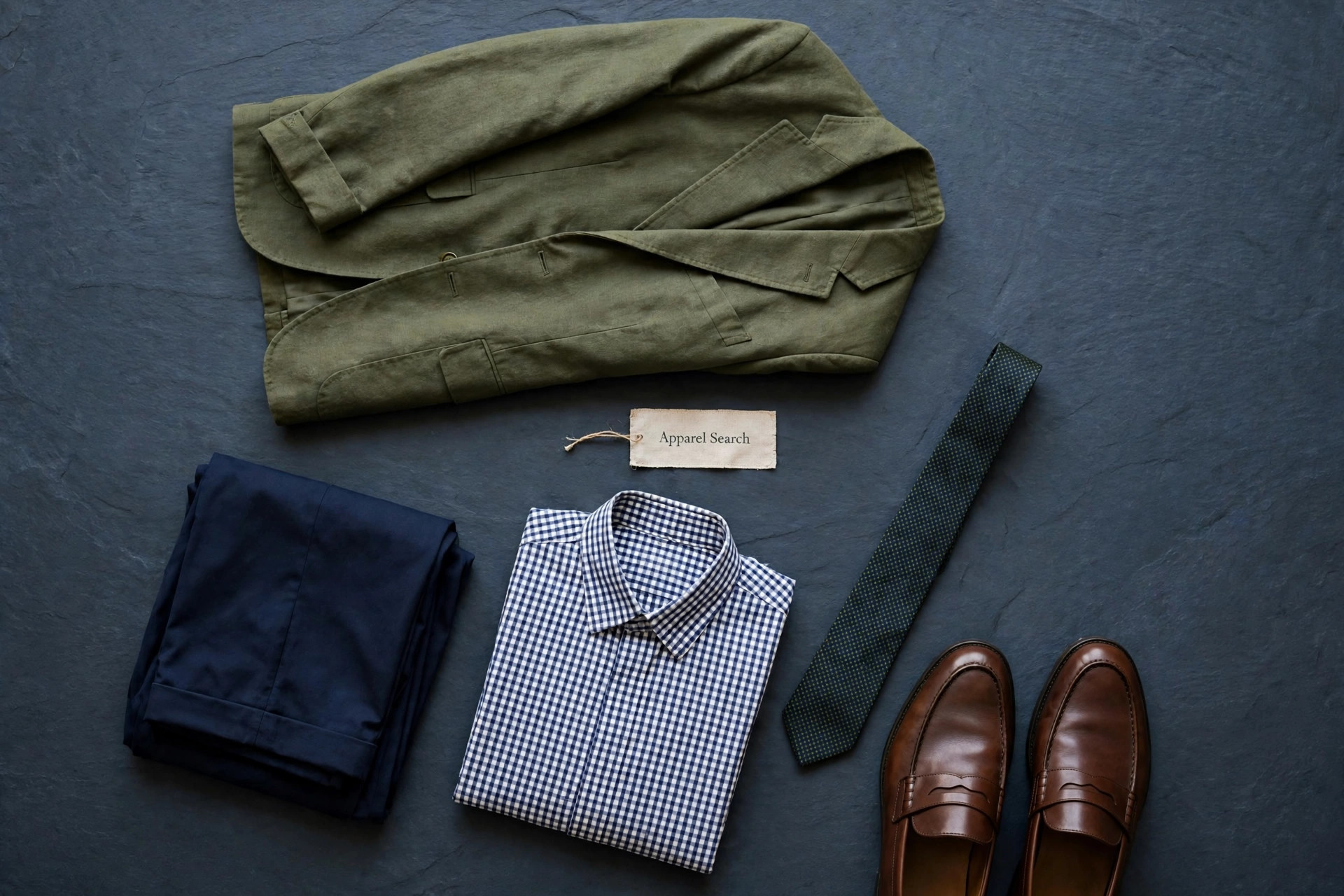
The principles on this page are introduced for everyone in our short stature style guide — the vertical line, the correctly placed waist, scale matched to frame. This page is the men’s working version: the same proportion logic applied to the garments men actually buy, the short sizes the menswear trade actually sells, and the alterations actually worth paying for. It is part of our men’s style by height and build guides, and nothing in it is about disguise. A well-proportioned outfit does not make a man look taller; it makes him look dressed on purpose, which is the thing other people actually notice.
The Proportion Rules
- Shorten the rise, keep the waist true. Trousers cut for a taller frame carry a longer rise, and the spare cloth sits as a sagging crotch and a waistband that wanders. A shorter rise, worn at your natural waist rather than slung low, gives the leg its full length back — and because rise cannot be altered, it is the first reason to buy short fittings where they exist.
- Let the trousers just meet the shoe. Break is where length leaks away. A full break stacks cloth at the ankle and shortens the leg line with every fold; no break or a slight half break keeps the column clean from waist to shoe. The trouser break and pant length guide works the four breaks in detail — for shorter legs, the shortest two are home ground.
- Cap the jacket at the seat. A jacket should cover the seat and stop: every inch past it is an inch taken from the legs. Short (S) suit lengths exist precisely to grade this down, along with the button stance and pocket placement that a tailor cannot move on a regular jacket.
- Shrink the pattern, not just the garment. Checks, stripes and prints are scaled for a regular torso. On a shorter frame a wide-spaced check or a bold stripe reads oversized before the garment’s fit is even judged; small-scale patterns, narrow stripe spacing and fine textures read as texture instead — the same rule our short stature guide applies to lapels, cuffs and pockets.
- Build one column of colour. Trousers and top in the same family of tones, a tucked shirt, and layers kept thin: the eye travels the full height without being stopped at a hard horizontal break. Contrast belongs in small doses — a shoe, a belt — not as a wide band across the middle.
Where Short Sizes Are Actually Sold
The menswear trade is better at the tall end than the short end, but short sizing exists if you know its names. Suit retailers are the stronghold: jackets and suits come in Short lengths (36S to 48S) as a standard offering, graded in body, sleeve and stance together. Trousers in 28- and 29-inch inseams are stocked by a minority of brands and are otherwise a hemming job — which is routine and cheap. Dedicated short-men’s retailers pattern whole ranges under 5′8″, and made-to-measure removes the pattern problem altogether at a price. What barely exists is a short department in a general store: expect to shop by measurement, not by label, and to keep your numbers — inseam, rise, sleeve, back length — on record, as our sizing and fit guide recommends.
Tailoring Priorities, in Order
Regular clothes can be rescued, and this is the order that spends money where it shows. First, hem the trousers to your chosen break — the cheapest alteration and the largest visual return. Second, shorten sleeves on jackets and shirts so the hand and the shirt cuff both show. Third, taper the leg if the trouser is wide; spare width reads as spare length. Fourth, take in the waist and seat. What not to budget for: shortening a jacket body by more than about an inch (the pockets and button stance end up in the wrong places), or shortening a rise, which cannot be done at all. The full menu, with the difficult and impossible jobs marked, is in our clothing alterations guide.
The Suit Shortcut
If you alter one category least, make it suits. A Short-length suit grades the jacket body, sleeve, button stance and trouser rise together from the pattern — four fixes a tailor would charge separately for, two of which (rise and stance) he cannot truly do. Buy the S, then spend the alteration budget on the hem and the waist. Our suit fit guide gives the fit points to check in the fitting room.
Footwear Proportions
Shoes finish the column, and proportion rules apply to them too. A low-profile shoe — a loafer, a slim derby, a plain boot with a modest heel — continues the leg line and lets the trouser hem sit cleanly; a Chelsea or dress boot adds a little height honestly, inside a silhouette that reads as footwear rather than apparatus. What works against you is bulk: a very chunky sole or an oversized toe box widens the base of a narrow column and draws the eye down to it. Whatever the style, fit comes first — length and width checked properly, as the shoe fit guide sets out — because a shoe that fits badly shortens your stride before it shortens anything else.
Common Questions
What height is considered short for men’s clothes?
About five foot eight and under is where regular patterns start to fight back: suit makers cut their Short lengths for this range, and it is the height band the dedicated short-men’s retailers pattern for. The line is really about proportion, though — a man of 5’9” with a short torso and long legs may need none of this, and a man of 5’7” with regular proportions may need only a hem. Measure, don’t assume.
Should short men avoid cuffs, horizontal stripes and wide lapels?
They are trade-offs, not bans. Trouser cuffs add a horizontal stop at the ankle and shorten the leg line, so plain hems are the safer default; a fine horizontal stripe high on the chest is harmless, while a wide band of contrast at the waist cuts the column where it hurts; lapels and ties should match the frame’s scale, which usually means narrower. The rule underneath all three: keep horizontals few, narrow and away from the middle.
Are short sizes worth hunting, or should I just tailor regular clothes?
Both, by garment. Buy short fittings where the unalterable parts live: trousers (rise cannot be shortened) and suit jackets (button stance and pocket placement cannot be moved). Tailor the rest — hems, sleeves, tapers and waist adjustments are routine, cheap and fully effective on regular shirts, knitwear and casual trousers. The expensive mistake is paying alteration prices to fight a pattern; the cheap win is a short size plus a hem.
What inseam should a short man buy?
Your measured inseam, finished to the break you want — typically a 28- to 30-inch finished leg, hemmed to the shoe you will wear with it. Buy trousers by the waist and rise that fit, in the longest convenient unfinished length if they are sold that way, and let the tailor set the hem. An inseam number is a starting point for the fitting, not the result.
Related Guides
Men’s Style by Height & Build
The parent guide: the length axis and the shape axis, the four deciding measurements, and the tall and body-type companions to this guide.