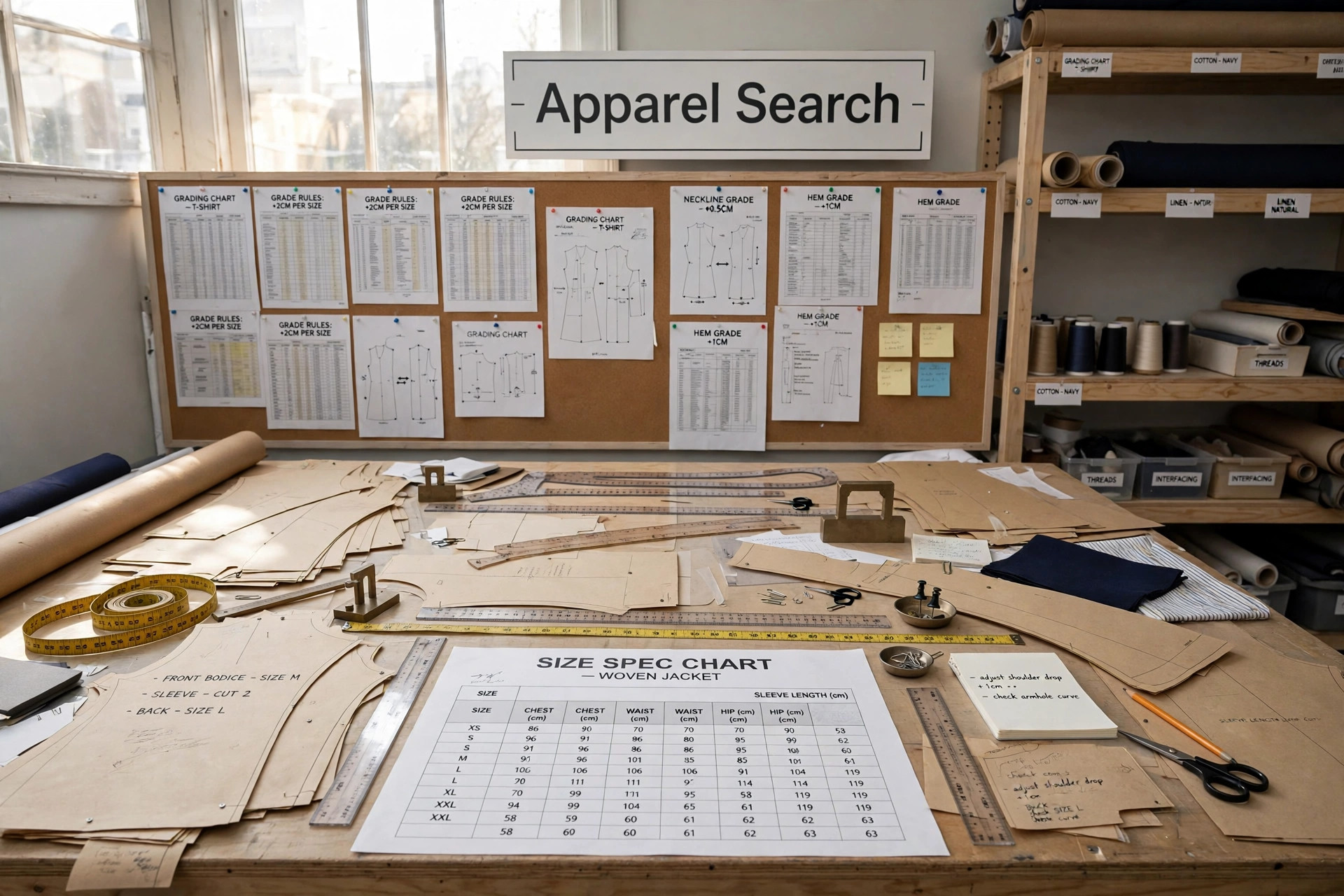
A clothing size is not a measurement. It is the name of one slot in a sizing system that a brand builds for itself — from population body data, through a base-size pattern, grade rules, ease decisions and live fit sessions, until the result is flattened into the size chart a shopper reads. This guide walks that whole chain. If you only need to convert a size you already know, skip to the practical tools at the bottom: our clothing size conversion chart does the arithmetic. Everything between here and there is about why the numbers are what they are.
Most arguments about sizing — "sizes are getting bigger", "this brand runs small", "the chart said it would fit" — are really arguments about one link in that chain. A brand can measure bodies carefully and still produce confusing clothes if its grading is lazy; it can grade beautifully and still disappoint if the fit model it approved everything on is nothing like its customers. Understanding sizing means seeing the chain whole, because a weakness anywhere in it shows up at the same place: on your body, in front of a mirror.
From Body to Label: The Sizing Chain
- Measure the population. Everything starts with anthropometric data — real bodies, measured in campaigns and surveys, reduced to tables of bust, waist, hip, height and dozens of other dimensions, split by percentile so a brand can decide which slice of the population it is dressing.
- Choose a size system. The data is organised into a system: a set of sizes, the body measurements each size stands for, and the intervals between them. Different countries formalised different systems, which is why sizing systems around the world do not line up neatly.
- Draft the base size. A pattern maker drafts one size completely — usually a middle size — and that pattern carries the design: its proportions, its style lines, and the ease the designer intends.
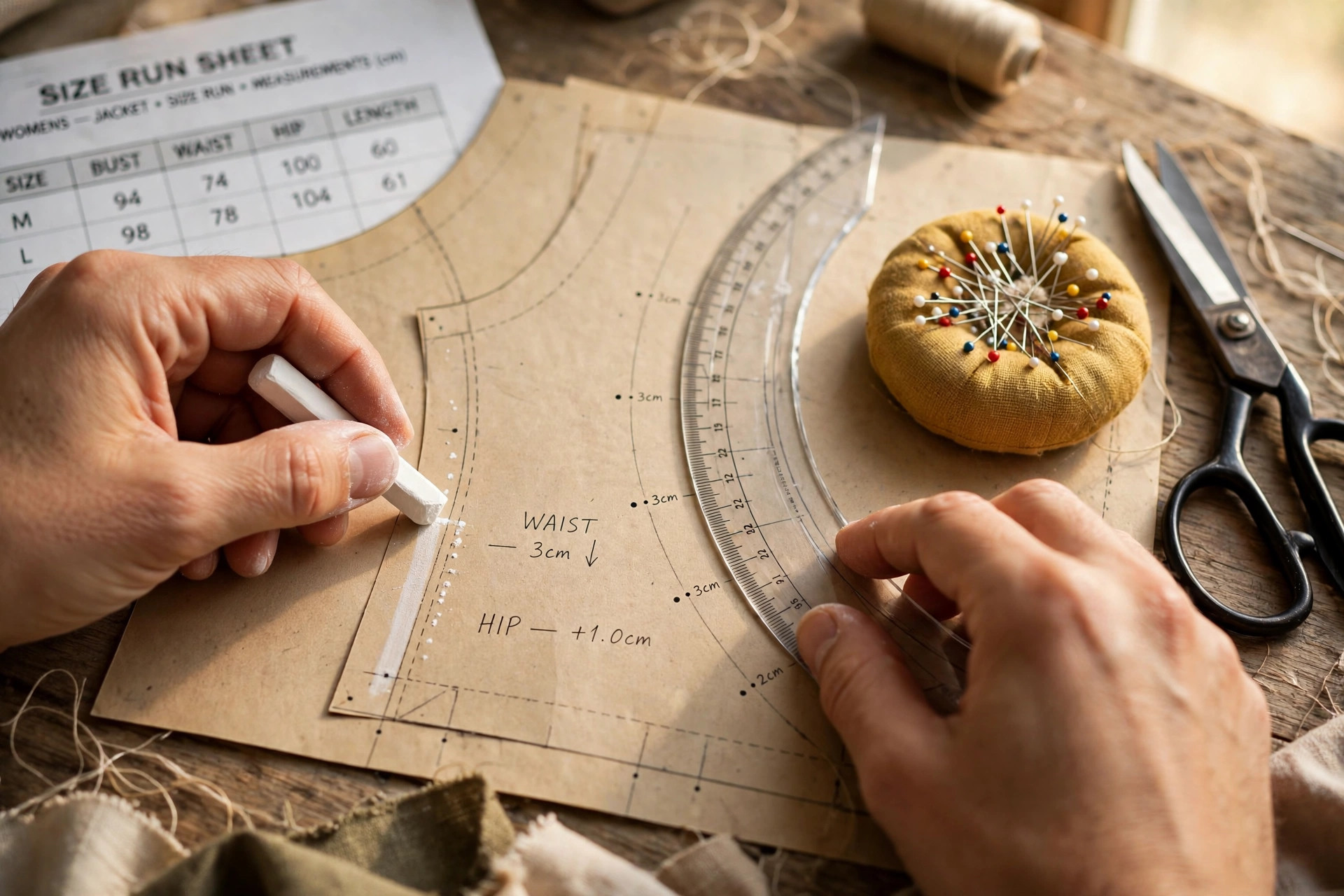
- Grade the other sizes. Pattern grading grows and shrinks the base pattern into the rest of the size range using grade rules — small, deliberate increments at each measurement point, not photocopy scaling.
- Approve the fit on a body. Sample garments are tried on a fit model in fit sessions, pinched, pinned and commented on until the fit is approved — then graded sizes are checked against the same standard.
- Publish the chart. Finally the brand turns its system into a size chart for shoppers — and, over the years, may quietly let the labels drift, which is how vanity sizing happens.
The Seven Technical Guides
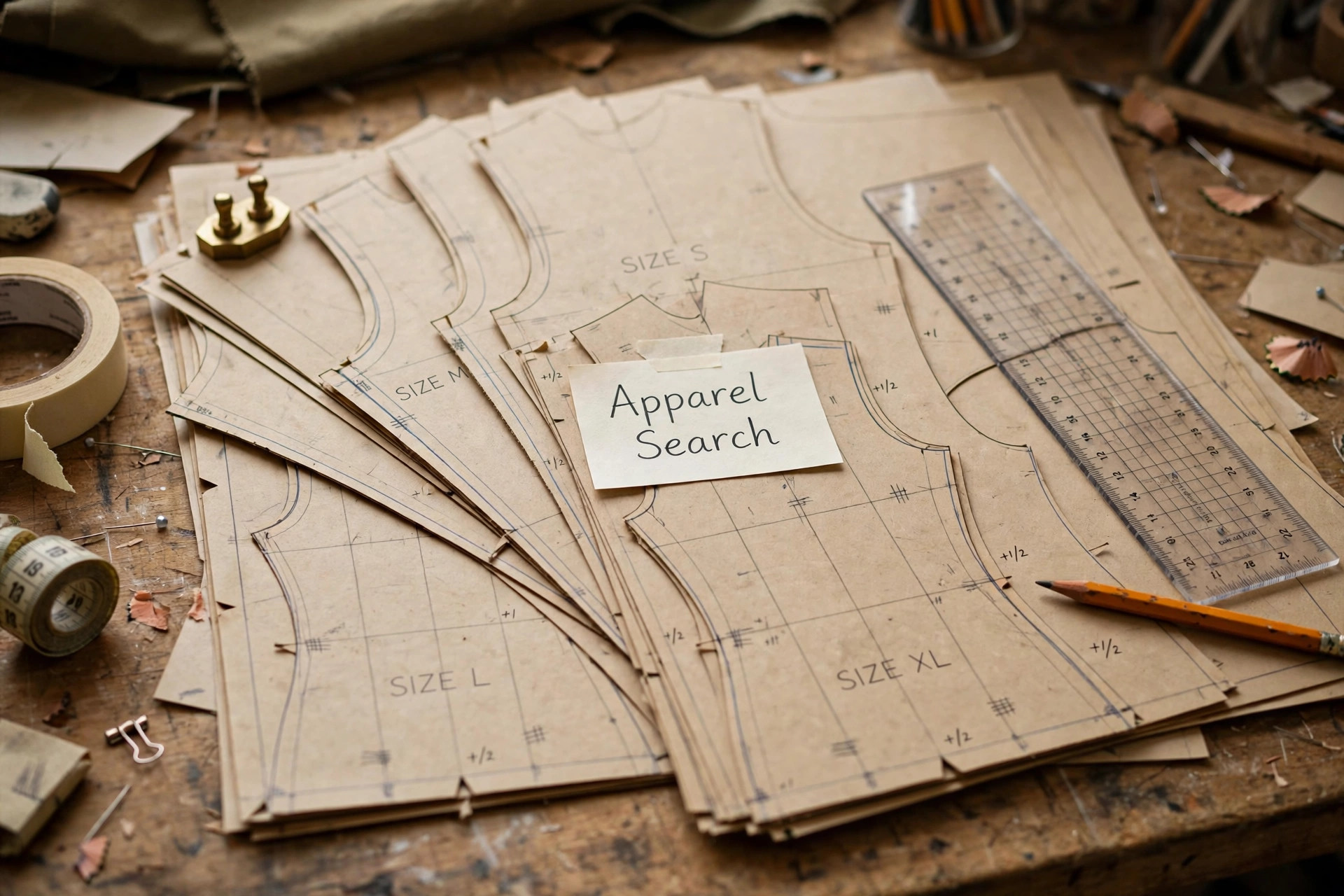 Pattern Grading ExplainedBase sizes, grade rules, and why grading a pattern is not simply scaling it up or down.
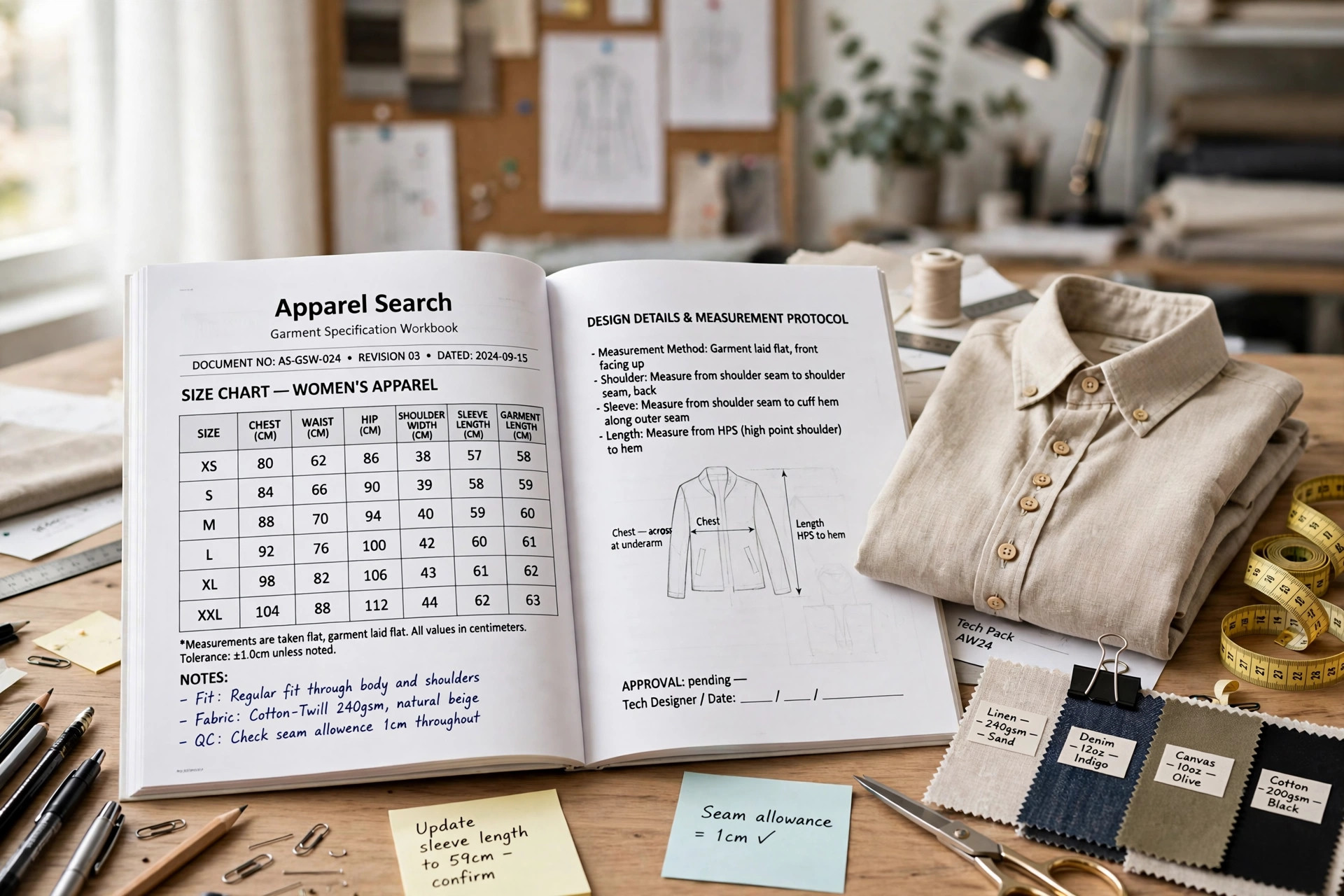 How Size Charts Are BuiltBody measurements versus garment measurements, tolerances, and why two honest charts can disagree.
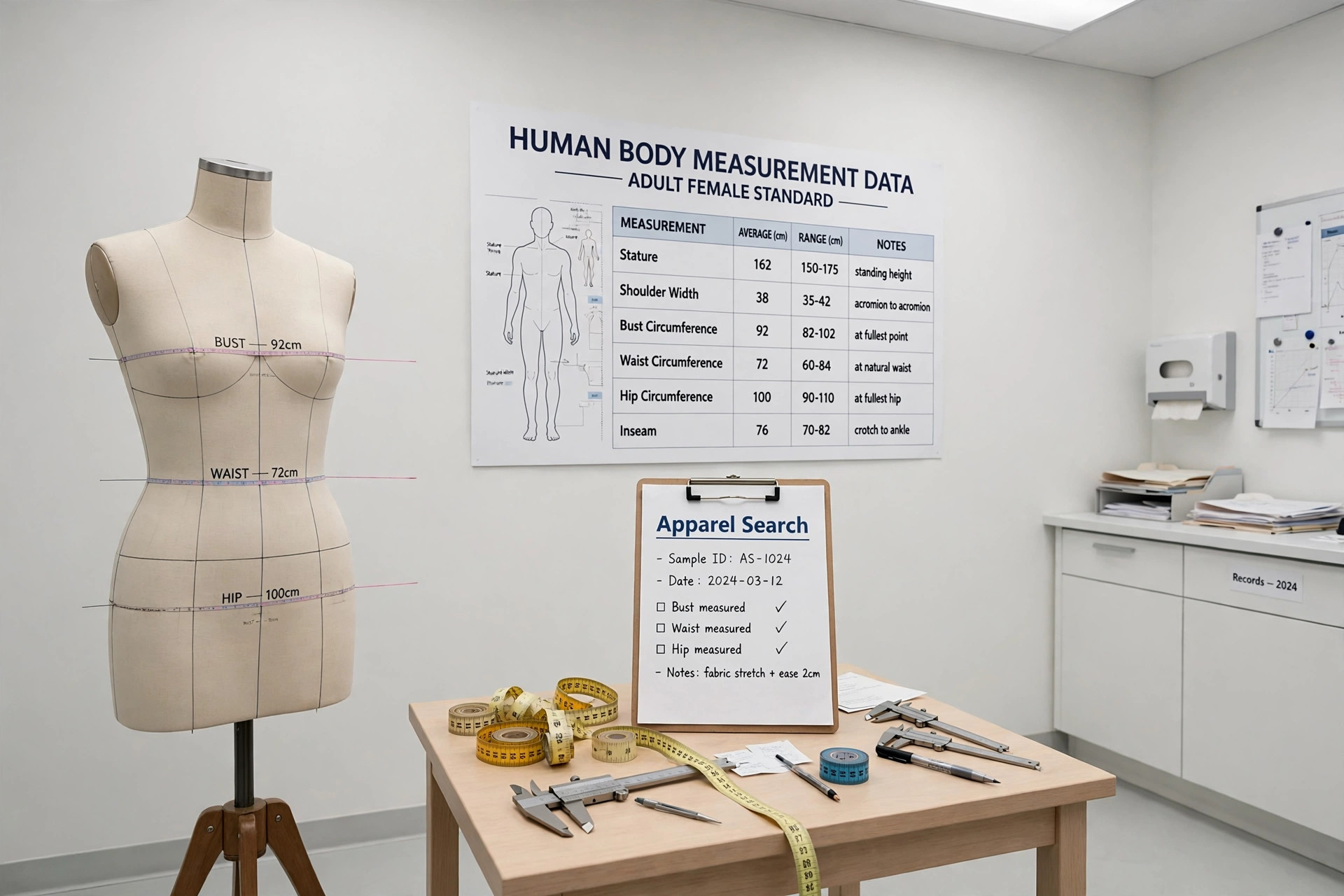 Anthropometrics & Body Measurement DataMeasurement campaigns, percentiles and the sizing standards that turn populations into size systems.
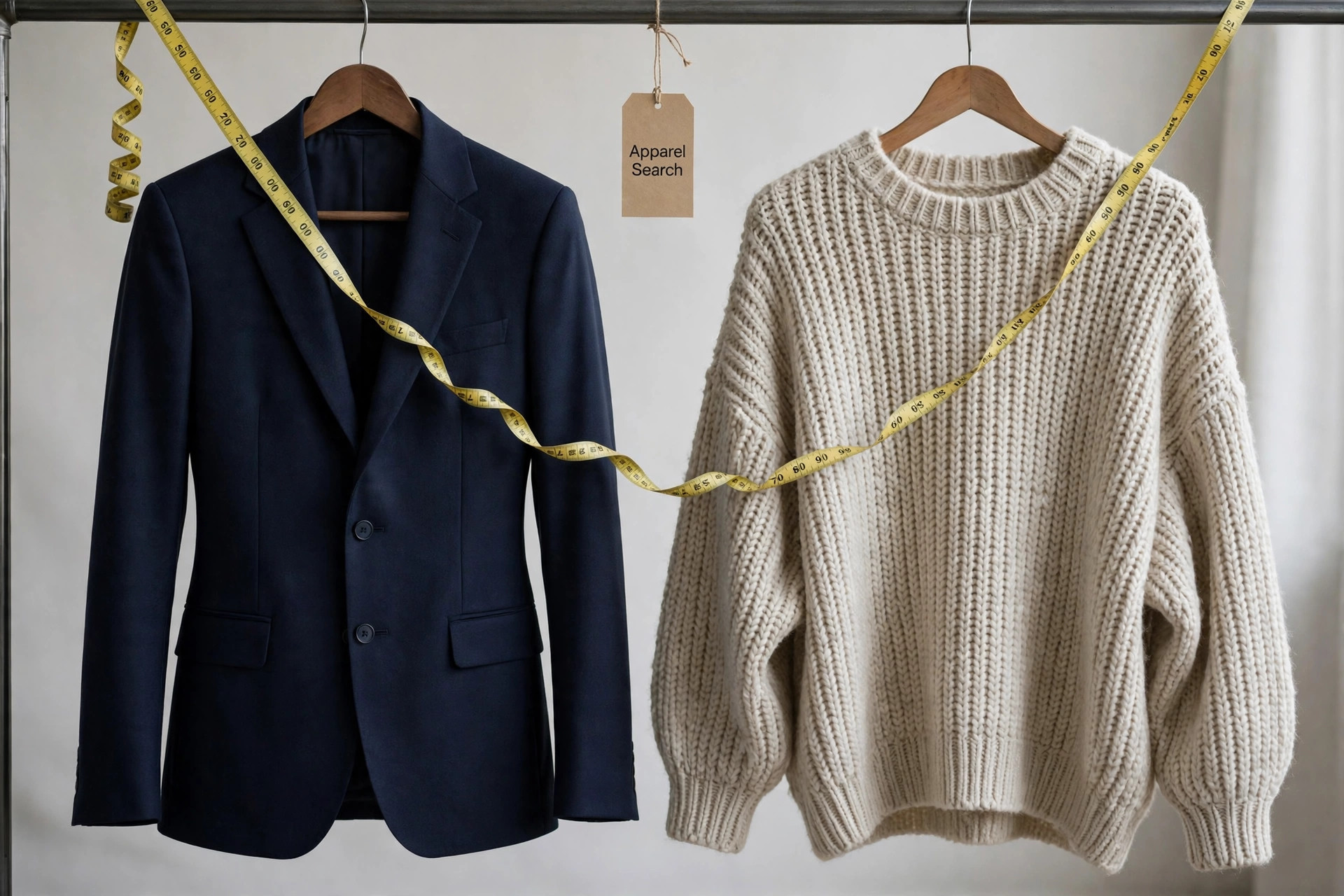 Ease Explained: Design Ease, Wearing Ease & Negative EaseThe space between body and garment — the single biggest reason two same-size garments fit differently.
 Fit Models & Fit SessionsHow brands choose the body every size is approved on, and what actually happens in a fitting.
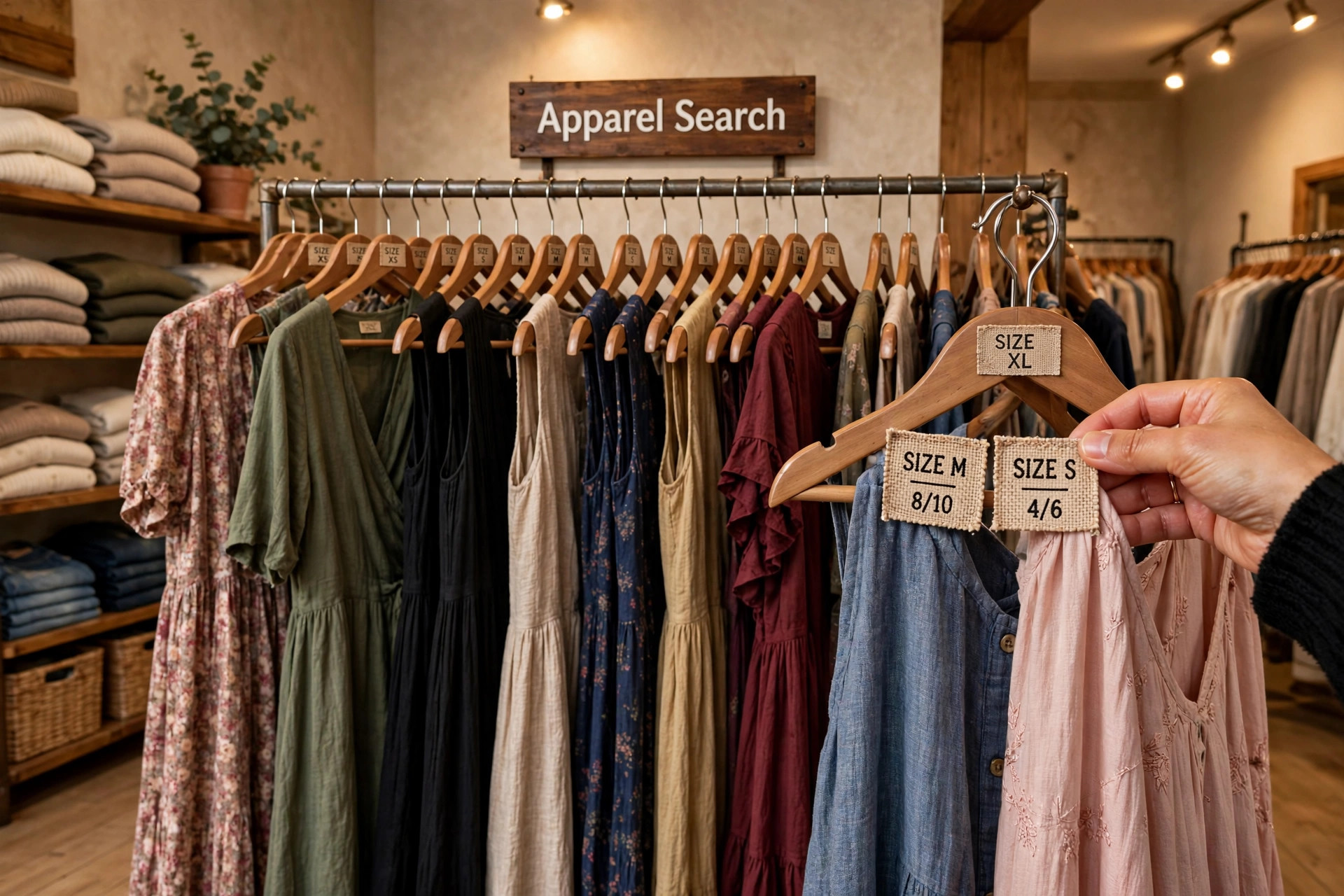 Vanity Sizing & Why Sizes Differ Between BrandsHow size labels drifted over the decades, and the practical way to shop across brands anyway.
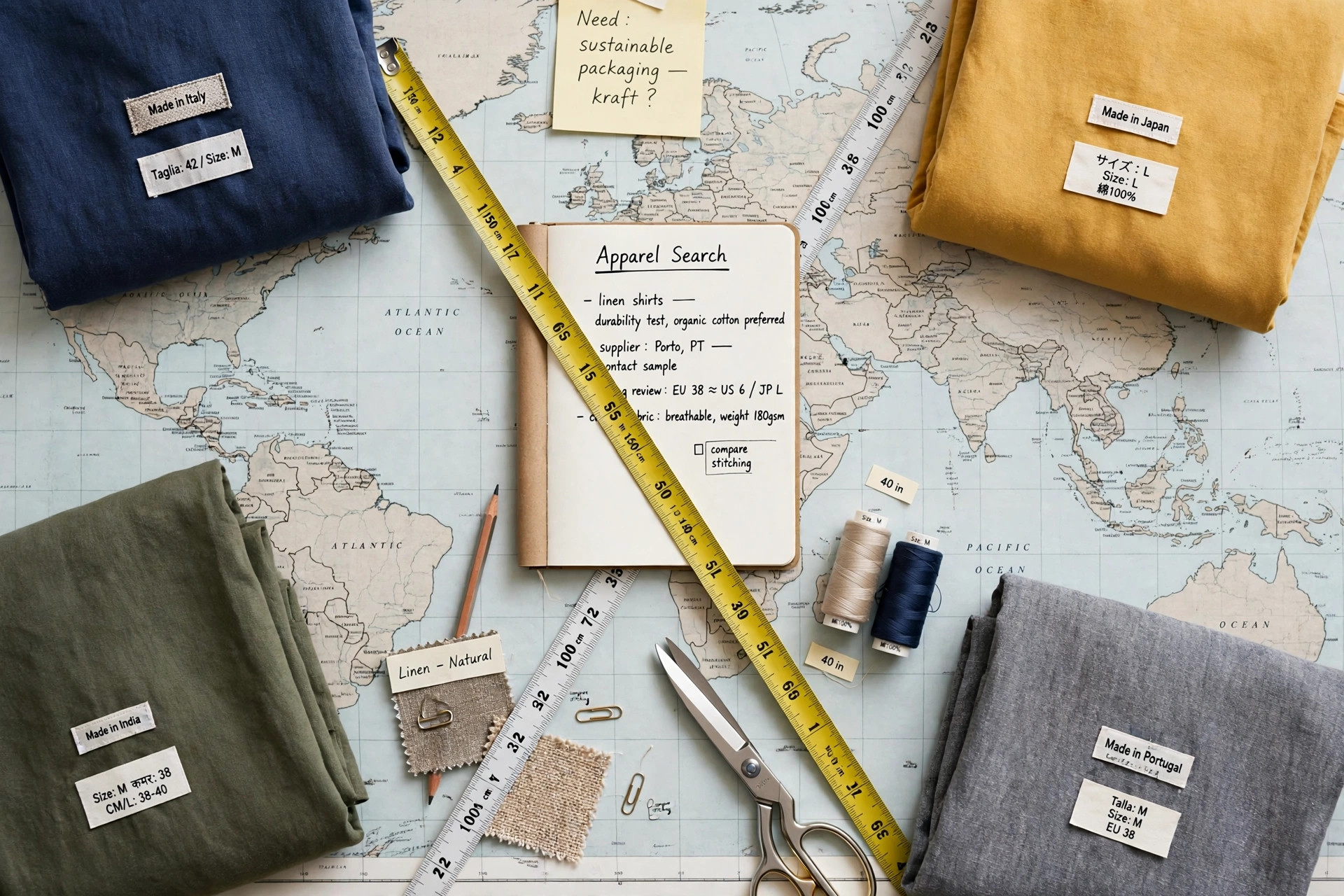 Sizing Systems Around the WorldUS, UK, European and Asian conventions, letter sizes, waist-size labelling and the standards beneath them.
Practical Sizing Tools
This guide is the theory; Apparel Search also keeps the practice. If you are a shopper, start with the clothing size conversion chart to translate a size between US, UK, European and other systems, and our how to measure pages and body measurements guides to take your own numbers correctly. Small items have their own charts too — see the button size chart for ligne and millimetre conversions. If you are a brand building a chart from scratch, the step-by-step companion is how to create a size chart; read it alongside our page on how size charts are built, which explains the decisions the steps rest on.
Common Questions
- Why is a clothing size not a measurement?
- A size label such as 10 or M is the name of a slot in one brand's sizing system, not a measurement of a body or a garment. Each brand builds its system from its own body data, base pattern, grade rules and ease choices, so the same label can stand for different measurements at different brands. Only the measurements behind the label — bust, waist, hip, inseam — are comparable.
- What is the difference between body measurements and garment measurements?
- Body measurements are taken on the person; garment measurements are taken on the finished clothing laid flat. The garment is almost always larger than the body it fits, because the difference — ease — is what lets you move, breathe and sit down. Size charts may publish either set of numbers, and confusing the two is the most common reason a chart seems 'wrong'.
- Why do sizes differ so much between brands?
- Because every step of the system is a brand decision: which population data to use, which body to make the base size on, how much to grade between sizes, and how much ease the design carries. Add vanity sizing — labels drifting smaller over the decades — and two brands' size 10 can differ by several centimetres at the waist.
- Where can I just convert my size to another country's system?
- Use the Apparel Search clothing size conversion chart, which maps US, UK, European and other systems for women, men and children. This technical guide explains how those systems are built; the conversion chart is the practical tool for using them.
Sizing Is a System, Not a Number
Once you see sizing as a chain — data, system, pattern, grading, ease, fit approval, chart — the confusing parts stop looking like chaos and start looking like decisions. Decisions can be examined, compared and chosen between, which is a much better position to shop, design or manufacture from.
Start anywhere in the chain: most readers begin with pattern grading or vanity sizing.