AI Tools for Fashion / Selling
AI Sizing and Fit Prediction
AI sizing and fit prediction recommends the size a shopper is most likely to keep, using questionnaires, purchase and return history, garment measurements and, in some systems, body scans. This guide explains how each method works, why clothing sizing is inconsistent in the first place, how to think about returns without borrowed statistics, and what separates a trustworthy fit tool from a confident guess.
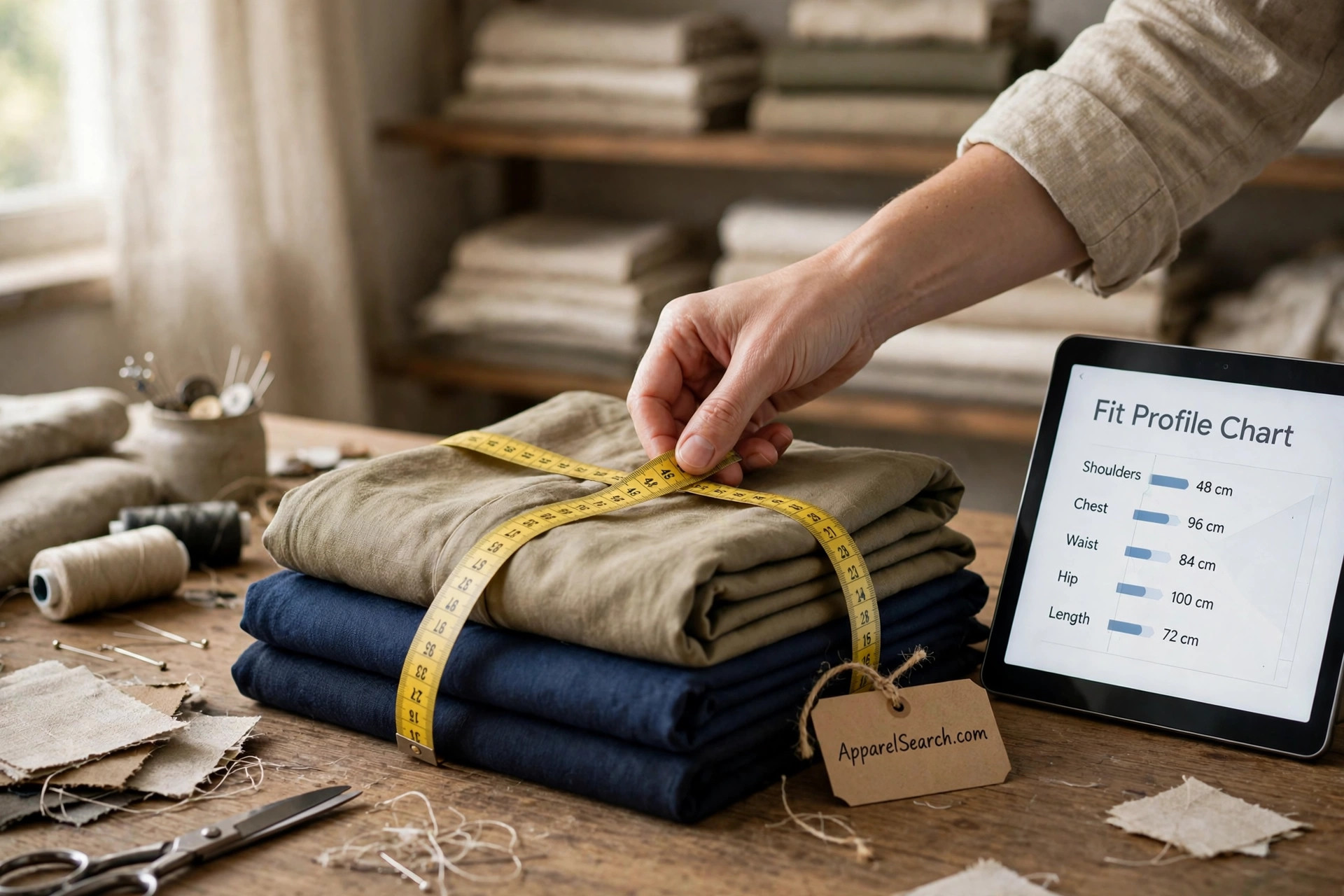
Why Sizing Fails
Why Clothing Sizing Is Broken
A size label looks like a measurement. It is not. A size is a category each brand defines for itself, built from its own fit model, its own target customer and its own pattern grading — which is why the same shopper is a different size in different brands, and why a size that fit five years ago may not fit today. One well-documented cause is vanity sizing: labeling a garment with a smaller size than its measurements would historically suggest, so the number on the label drifts even when bodies do not. Standards exist — ASTM International maintains body-measurement tables — but brands are not required to follow them, and most develop their own specifications instead.
Fit is also more than overall size. Two garments cut for the same body measurements can fit differently because one has a higher rise, more hip room, a different shoulder slope or more wearing ease — the extra space a pattern adds for movement and silhouette. Add fabric behavior (a rigid denim and a stretch knit in the same labeled size are different experiences), international size conversions that do not map neatly, and the simple fact that online shoppers cannot try anything on, and the result is predictable: shoppers guess, order multiple sizes, and return what does not work. Apparel Search’s consumer-facing Sizing and Fit Guide helps shoppers navigate sizes brand by brand; this guide covers the AI systems retailers use to close the gap at the source.
The Methods
How AI Fit Prediction Works
Fit prediction systems combine what a shopper tells them, what shoppers like them did before, and — in some systems — the shopper’s actual body measurements. The main methods differ in what they ask for and what they can know.
| Method | Inputs | How the recommendation is made | Strength | Watch out for |
|---|---|---|---|---|
| Questionnaire recommendation | Height, weight, usual size, fit preference, sometimes a brand the shopper already wears | Answers are matched against garment data and the outcomes of similar shoppers | Fast to deploy; no photos or scans required | Only as honest and accurate as the answers; struggles with unusual proportions |
| Purchase and return history models | Orders, keeps and returns with reasons, across many shoppers and brands | Patterns in what similar shoppers kept — not just bought — predict the size most likely to be kept | Learns real fit behavior at scale, including brand-by-brand differences | Needs substantial order volume; new brands and new styles start cold |
| Body scanning | Smartphone photos or video, or an in-store scan | Measurements are estimated from the images and matched to garment specifications | Works from the body itself rather than from labels | Photo quality, pose and clothing worn during the scan affect accuracy; the most private input of all |
| Garment-to-garment comparison | A garment the shopper already owns and loves | The owned garment’s measurements are compared with the new garment’s measurements | Grounded in a fit the shopper has already verified in person | Requires good garment measurement data for both items |
The strongest implementations layer these methods: a questionnaire for a first recommendation, purchase-and-return learning that improves with every order, and garment measurement data underneath it all. The recommendation itself usually appears as a widget on the product page — “Your recommended size: M” — sometimes with a confidence note or a fit description for specific areas such as shoulders, waist or length. Behind that one line sits the unglamorous work that decides whether it is right: accurate garment measurements for every size, consistent return-reason coding, and honest handling of styles that are meant to fit oversized or close.
Fit prediction also pairs naturally with try-on imagery. A generated image can show how a garment looks, while the fit engine decides which size to order; Apparel Search’s guide to AI Virtual Try-On Technology explains the image side, and retailers comparing commercial fit and retail platforms will find them listed in AI Tools for Fashion Retail.
The Economics
Returns: The Cost Nobody Can Ignore
Every returned garment costs more than the refund. There is shipping in both directions, inspection, repacking or disposal, customer-service time, and — for seasonal fashion — the risk that the item comes back after its selling moment has passed. Fit is one of the few return causes a retailer can act on before the purchase, which is why sizing technology is usually the first AI investment a fashion retailer can justify. This guide deliberately cites no universal return-rate or savings figure: rates vary enormously by category, price point and market, and vendor case studies describe that vendor’s best customers, not your store. The honest calculation is your own — your fit-related return rate, your cost per return, and a controlled test of any tool against a holdout group of shoppers who do not see it.
Three terms worth knowing
- Bracketing
- Ordering the same item in two or more sizes with the intention of returning all but one. It is a rational shopper response to unreliable sizing — and a sign the size information failed.
- Fit-related return
- A return whose stated reason is size or fit — too small, too large, or a specific fit problem — as opposed to damage, late delivery or a change of mind.
- Keep rate
- The share of delivered items a shopper keeps. For judging a fit tool, the keep rate of recommended sizes matters more than the click rate on the widget.
Doing It Well
What Good Implementations Do
Measure the garments, not just the shoppers
Accurate per-size garment measurements are the foundation. A model trained on labels alone learns the labels’ inconsistencies; a model grounded in real measurements can translate between brands.
Explain the recommendation
“Recommended because you kept size M in similar trousers” builds more trust than a bare letter. Good widgets show fit notes by area and admit uncertainty instead of faking precision.
Respect the intended fit
An oversized design is not a sizing error. Good systems encode how each style is meant to fit, so they do not steer every shopper toward a close fit.
Learn from returns honestly
Return reasons must be captured consistently, including “both sizes returned.” A system that only learns from keeps will confidently repeat its mistakes.
Work for every body in the range
Test accuracy at the ends of the size range and across heights and proportions, not just at the best-selling middle sizes where data is plentiful.
Stay useful after purchase
A saved fit profile should follow the shopper across categories with their permission, so the second purchase is easier than the first — and deletable when they ask.
Retailers should also plan for the cold start: a new store or a new brand has little history for the models to learn from, so early recommendations lean on questionnaires and garment data, and accuracy improves as orders accumulate. Set expectations accordingly, and do not judge a pilot in its first weeks by the accuracy a mature deployment achieves.
Trust
Shopper Privacy: Bodies Are Sensitive Data
Fit systems collect some of the most personal data in retail: height, weight, body measurements, photographs and scan data. Shoppers share it expecting one thing in return — clothes that fit — and retailers hold it to a higher standard than ordinary browsing data. Good practice is plain: ask only for what the method needs, say why each input helps, state how long body data is kept and whether it is used to train models, let shoppers see, correct and delete their fit profile, and never sell body data or quietly reuse it for unrelated marketing. A shopper who trusts the fit profile shares better information; a shopper who feels measured for someone else’s benefit rounds, guesses or leaves.
Common Questions
Common Questions
How does an AI size recommendation work?
Most systems combine three kinds of information: what the shopper reports (height, weight, usual size, fit preference), what similar shoppers bought and kept, and the actual measurements of the garment in each size. Some systems add body measurements estimated from smartphone photos. The output is the size the model judges most likely to be kept.
Why am I a different size in every brand?
Because each brand defines its sizes from its own fit model, target customer and grading rules, and no binding standard forces them to agree. Vanity sizing — labeling garments with smaller sizes than their measurements historically suggested — adds further drift over time, and pattern choices such as rise, ease and shoulder shape change fit even at identical measurements.
Is body scanning more accurate than a questionnaire?
It can be, because it works from the body rather than from labels, but accuracy depends on photo quality, pose and the clothing worn during the scan, and a scan is also the most private input a shopper can share. Many retailers layer methods: a questionnaire first, refined by purchase and return history over time.
What data does a fit tool collect about me?
Depending on the method: height, weight, sizes you usually wear, your orders and returns with their reasons, and possibly photos or measurements from a scan. Check the retailer’s notice for how long body data is kept, whether it trains models, and how to view or delete your fit profile.
Keep Exploring
More to Explore
AI Guides
AI Personalization and Recommendations
How recommendation engines decide which garments each shopper sees.
Read the guide ↗AI Shopping Assistants and Chatbots
Conversational assistants that help shoppers find and compare clothing.
Read the guide ↗AI Product Photography for Fashion
On-model imagery and product visuals created without a traditional studio shoot.
Read the guide ↗Related Guides
Sizing and Fit Guide
The Apparel Search consumer guide to clothing sizes and fit.
Explore ↗Virtual Try-On and Fit Technology Directory
The companion Apparel Search directory of virtual try-on and fit technology providers and definitions.
Explore ↗AI Fashion Term
How the fashion industry uses the term AI fashion.
Explore ↗Search Apparel Search