AI Tools for Fashion / Selling
AI Personalization and Recommendations in Fashion Retail
AI personalization decides which garments each shopper sees, in which order, with which message — from recommendation rails and personalized homepages to style quizzes, visual search and tailored email. This guide explains how the engines work, where the sensitive edge of dynamic pricing lies, what consent should really mean, and how a small brand can start with the data it already has.
The Engine Room
How Recommendation Engines Work
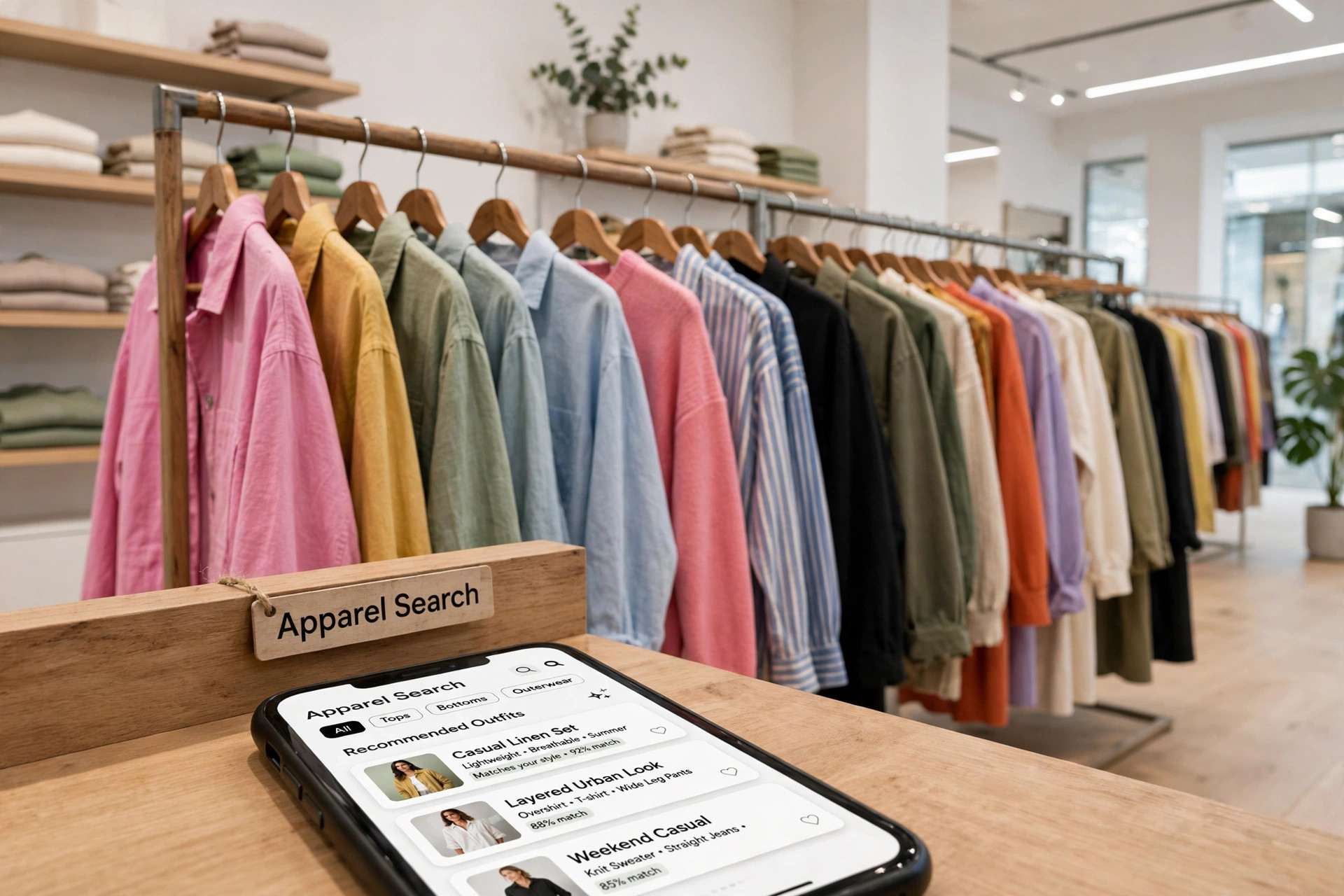
A fashion recommendation engine answers one question, over and over, in milliseconds: given everything known about this shopper and this catalog, which items are most worth showing next? It draws on three kinds of signal. Behavioral signals come from what shoppers do — items viewed, clicked, saved, bought and returned, and the order they did them in. Product signals come from the catalog itself: category, color, fabric, price, silhouette and the attributes a good catalog records consistently. Context signals describe the moment: season, weather, location, device and whether the shopper arrived from a search for “wedding guest dress” or a link to a specific coat.
Two classic techniques still do much of the work. Collaborative filtering learns from crowds: shoppers who bought this coat also bought those boots, so a coat buyer sees the boots. Content-based recommendation learns from the items themselves: a shopper who keeps viewing linen, wide-leg trousers in earth tones is shown more garments with those attributes, including new arrivals no crowd has rated yet. Modern systems blend both, add sequence learning (what tends to come next in a browsing session), and increasingly use image understanding so that “similar” means visually similar — neckline, drape and print — not merely filed in the same category. Every recommendation is then ranked, filtered for stock and size availability, and shown; the shopper’s response becomes new training data. That feedback loop is the engine’s strength and its trap: it gets better at showing what it already shows, which is why good teams deliberately inject variety and newness.
Beyond the Product Page
Personalized Homepages, Email and the Whole Storefront
Recommendations are only the most visible layer. The same shopper profile can reorder a homepage so a returning visitor sees their categories first, rebuild a category page around their size and price range, assemble outfit suggestions that complete items already in the basket, and choose which products fill an email — so two subscribers receive genuinely different messages from the same campaign. In physical stores, clienteling tools give associates a view of a known customer’s preferences and past purchases, with the customer’s permission, so advice starts from what the shopper actually wears. Each layer raises the same design question: is the personalization serving the shopper’s task, or the retailer’s surplus stock? Shoppers can tell the difference, and trust follows the answer.
Guided Discovery
Style Quizzes and Visual Search
Not every shopper arrives with history. Style quizzes solve the cold start by asking directly: which of these outfits would you wear, what do you never wear, what is the occasion, what is the budget? A short, visual quiz gives a new visitor a useful first set of recommendations and gives the retailer declared preferences — data the shopper chose to share — instead of inferences alone. The discipline is restraint: every extra question costs completions, and questions should visibly change the results, or shoppers learn that answering honestly changes nothing.
Visual search attacks a different cold start: the shopper has a picture, not words. A photo of a friend’s jacket, a screenshot or a street-style image is analyzed for garment type, color, pattern and silhouette, and matched against the catalog. It is especially valuable in fashion, where the vocabulary problem is real — few shoppers can name the neckline, weave or cut they are looking at, but they know it when they see it. Visual search also powers “shop the look” features that break an outfit photo into its buyable pieces. Both tools feed the same profile the recommendation engine uses, which is why they belong in one personalization strategy rather than as separate novelties.
The Sensitive Edge
Dynamic Pricing: Where Personalization Gets Controversial
Personalization decides what a shopper sees; pricing decides what they pay, and the two should not be confused. Ordinary dynamic pricing changes a public price in response to demand, inventory, season or competition — everyone visiting at that moment sees the same price. Individualized pricing goes further, estimating what a specific person might be willing to pay from their personal data and showing them a different price for the same item at the same moment. That second practice is where trust and regulatory attention concentrate: shoppers reasonably expect the displayed price to be the price, and undisclosed personal-data pricing can read as unfair even where lawyers debate its status.
The practical guidance for fashion retailers is conservative. Personalize discovery, ranking, content and offers openly; be extremely cautious about personalizing the price itself; never let a pricing system produce different prices that shoppers can screenshot side by side without an explanation you would be proud to publish. A promotion targeted at lapsed customers is understood. A quietly higher price for a loyal one is a reputation event waiting for its moment.
Data and Consent
Privacy, Consent and Shopper Control
Personalization runs on personal data, and fashion data is more revealing than it looks: sizes, bodies, occasions, gift purchases and life changes are all legible in a purchase history. A defensible program starts from consent and clarity — what is collected, what it is used for, and what it is never used for — written in language a shopper can finish reading. Shoppers should be able to shop without personalization, to see and correct the preferences stored about them, and to delete their profile. Retailers should also audit outcomes, not just inputs: a system can use only permitted data and still learn to show some shoppers a narrower, pricier or less diverse store than others. Checking who sees what — across sizes, price bands and demographics — is part of running the engine, not an optional extra.
Where this guide ends and the directory begins: this page teaches the concepts and the choices. The commercial platforms that sell personalization, fit and assistant technology to retailers are listed, with what each one does, in AI Tools for Fashion Retail — use the two together when building a shortlist.
Starting Small
Entry Points for Small Brands
Personalization is not only for large retailers, but small brands should enter where the data they already have is sufficient. The realistic ladder looks like this:
- Start with the catalog. Consistent attributes — color, fabric, fit, occasion — improve every downstream tool, including ordinary site search. No algorithm compensates for a messy catalog.
- Use the platform you already have. Major e-commerce platforms and email services include recommendation blocks, “complete the look” modules and segmented sends. Turn them on, measure against a holdout, and learn what your shoppers respond to before buying more.
- Add one declared-data tool. A short style quiz or a fit finder collects preferences shoppers choose to give, and improves recommendations from the first answer.
- Personalize email before the homepage. Email audiences are identified and consented by definition, segments are easy to test, and a wrong guess lands in one inbox — not on the storefront every visitor sees.
- Buy specialized tools last. Dedicated engines earn their cost when traffic and catalog size outgrow built-in features. When you reach that point, the conversational tools in AI Shopping Assistants and Chatbots for Fashion and the lifecycle tools in the marketing guide become relevant next steps.
At every rung, the measurement rule is the same: compare personalized against not-personalized for the same audience, and count returns and unsubscribes alongside conversion. A system that sells more of the wrong things has not personalized anything except the disappointment.
One final habit separates mature programs from expensive ones: a named owner for the shopper experience the engine produces. Algorithms optimize what they are told to optimize, and without a person regularly reading real recommendation outputs — the odd pairing, the tone-deaf email, the size range that quietly disappears — small distortions compound into a store that no longer resembles the brand that built it.
Common Questions
Common Questions
How do fashion recommendation engines decide what to show me?
They combine what shoppers like you viewed, saved, bought and returned, the attributes of the products themselves — category, color, fabric, price and silhouette — and context such as season and the search that brought you in. Collaborative filtering learns from crowd behavior; content-based methods learn from item attributes; most systems blend both and re-rank for stock and size availability.
What is the difference between dynamic pricing and personalized pricing?
Dynamic pricing changes a public price with demand, inventory or season, and everyone visiting at that moment sees the same price. Personalized or individualized pricing estimates what a specific person might pay from their personal data and can show different prices for the same item at the same time — the practice that draws shopper distrust and regulatory scrutiny.
Can a small brand use AI personalization?
Yes, by starting where its data is sufficient: a clean, consistently attributed catalog, the recommendation and segmentation features already built into its e-commerce and email platforms, and one declared-data tool such as a short style quiz. Dedicated engines earn their cost later, when traffic and catalog size outgrow the built-in tools.
What control should shoppers have over personalization?
Shoppers should be able to use the store without personalization, see and correct the preferences stored about them, and delete their profile. Retailers should state plainly what is collected and what it is never used for, and audit who actually sees what, so permitted data does not quietly produce an unfair store for some shoppers.
Keep Exploring
More to Explore
AI Guides
AI Virtual Try-On Technology
How photo-based, 3D and AR try-on produce the image of a garment on a body.
Read the guide ↗AI Sizing and Fit Prediction
How fit prediction recommends the size a shopper is most likely to keep.
Read the guide ↗AI Product Photography for Fashion
On-model imagery and product visuals created without a traditional studio shoot.
Read the guide ↗Related Guides
Search Apparel Search