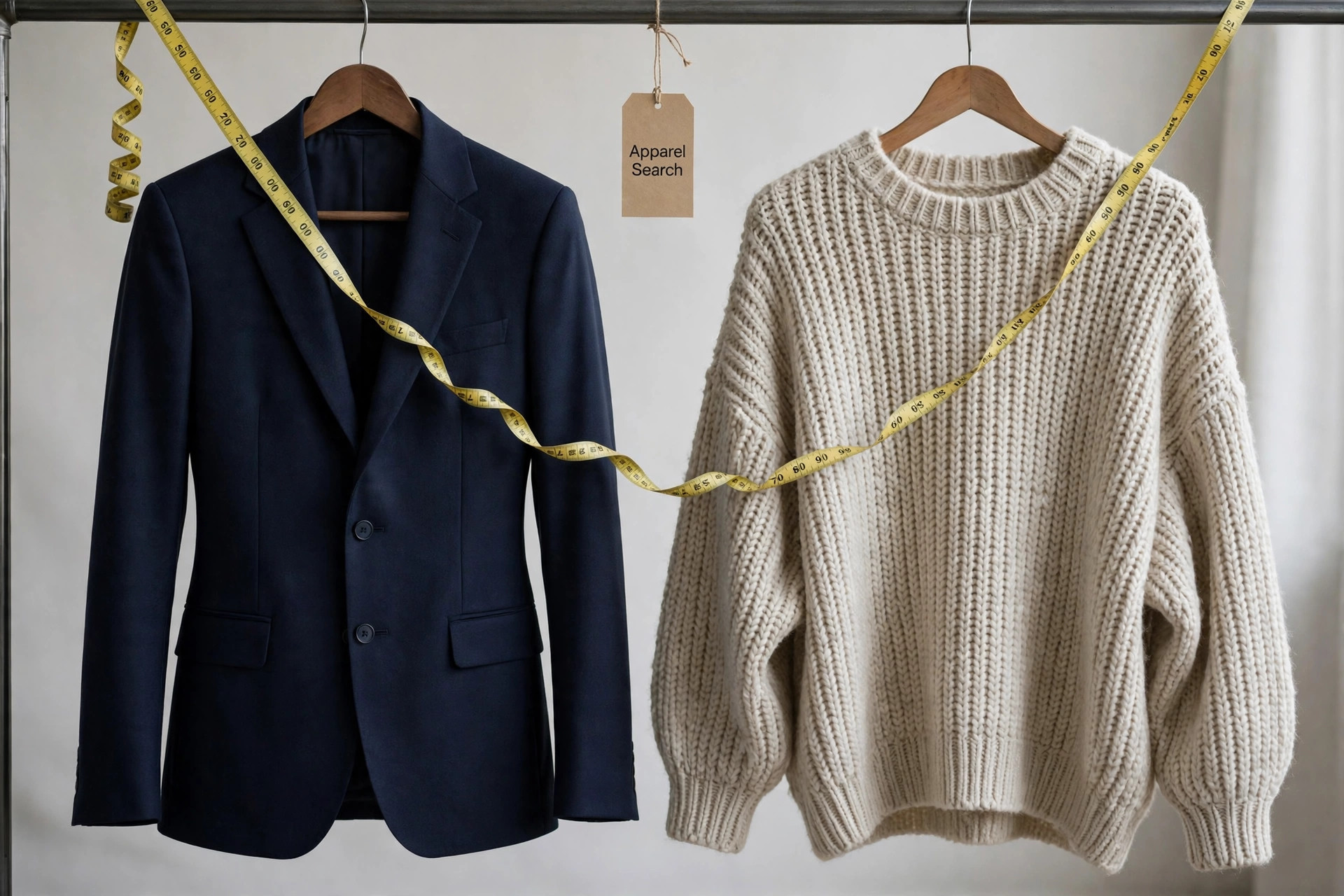
Ease is the difference between the size of a garment and the size of the body inside it — the deliberate gap that turns fabric into something a living person can move in. It comes in three kinds: wearing ease, the functional minimum; design ease, the extra volume that creates a silhouette; and negative ease, where the garment is smaller than the body and stretch does the work. This guide consolidates our glossary entries on design ease, wearing ease and negative ease into one working explanation, as part of the Clothing Sizing & Fit Guide.
Wearing Ease: The Non-Negotiable Minimum
A body is not a statue. It breathes, which expands the chest; it sits, which flexes the hip and knee and shortens the available room at the waist; it reaches, bends and climbs stairs. Wearing ease is the room a pattern must contain so all of that can happen: a few centimetres at the chest and waist of a woven shirt, more across the back and seat of trousers, more again in a coat that must close over everything underneath it. Take it away and the garment still "fits" standing still in a fitting room — then pulls, rides and splits its seams in real life.
Wearing ease is mostly physiology, so it is fairly stable across brands and decades for a given garment type. It also varies by measurement point: waists need room to sit, elbows and knees need length as much as girth, and shoulders need room for arms to come forward. This is why ease is specified point by point on a pattern, never as one global percentage — the same mistake, at garment scale, as scaling a pattern instead of grading it.
Design Ease: Where Silhouette Lives
Everything beyond the functional minimum is design ease, and it is pure fashion. The difference between a sculpted sheath dress and a billowing smock in the same size is not the body — it is tens of centimetres of design ease placed differently. Oversized streetwear, cocoon coats, wide-leg trousers: each is a decision about how much air to build between body and cloth, and where to put it.
Because design ease is a style decision, it is the largest single reason "your size" in one brand feels nothing like your size in another. The two brands may share body data, base size and grade rules — the whole rest of the sizing chain in our hub guide — and still produce garments a full size apart in feel, purely because one designer likes volume and the other likes line. When a brand says an item is "oversized" or "true to size", it is making a claim about its design ease, and the claim only makes sense relative to that brand's normal.
Negative Ease: Smaller Than the Body
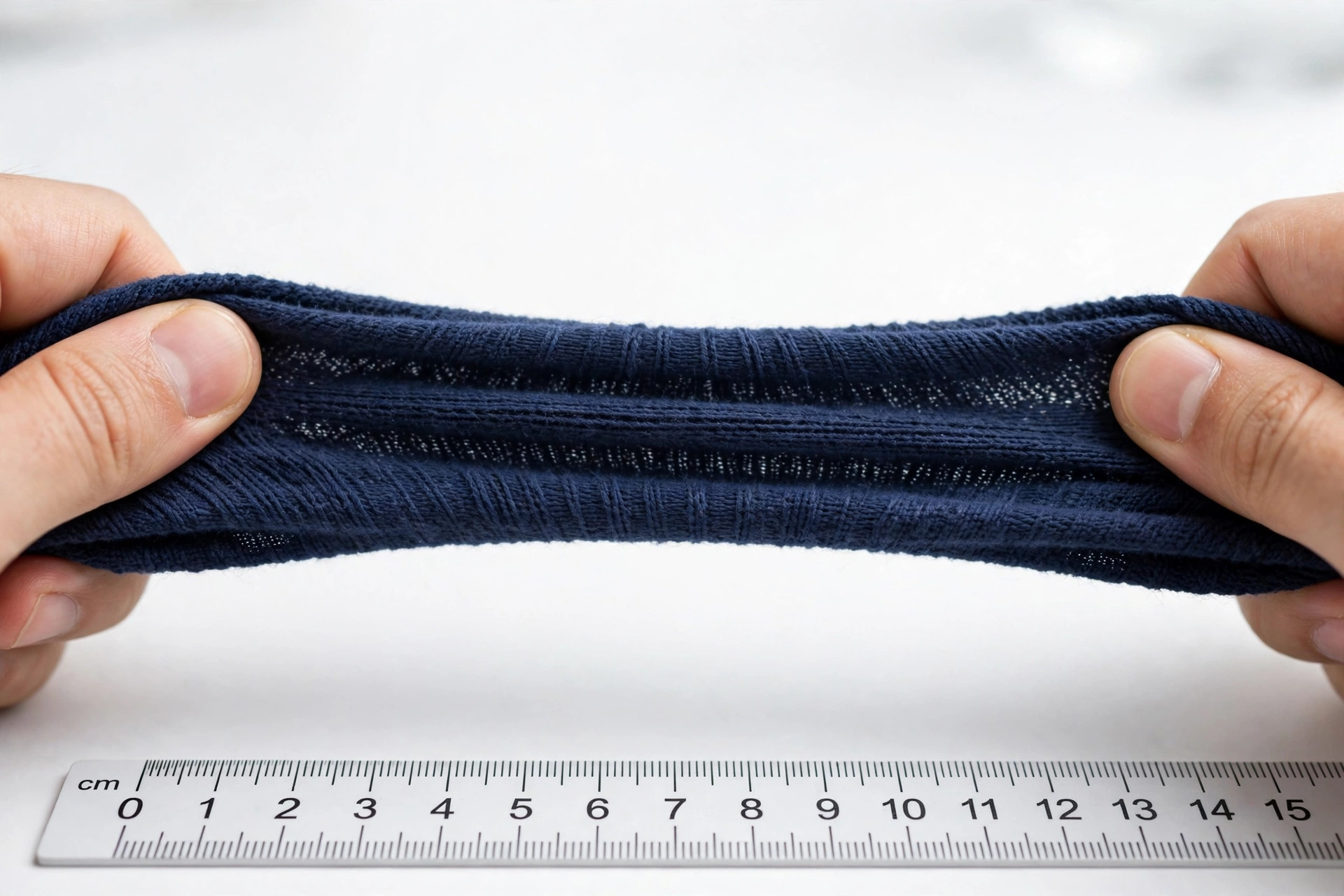
Stretch fabrics invert the logic. Swimwear, leggings, fitted knit dresses, base layers and compression sportswear are cut smaller than the body — negative ease — and rely on the fabric's stretch to close the gap in wear. The amount is usually discussed as a percentage: a garment cut 10% under body size must stretch 10% just to reach the skin, and more to move.
Negative ease makes the fabric a fit partner. Its stretch percentage, and even more its recovery — the ability to return to size rather than bag out — decide whether a garment stays sculpting or goes slack by lunchtime. This is where knit construction and fit meet: gauge, structure and elastane content determine how a knit handles negative ease, which is why our Knitwear Construction Guide is the natural companion read. It also explains a chart-reading trap covered in how size charts are built: a negative-ease garment's flat measurements look impossibly small next to body measurements, and both are correct.
Putting a Number on It
Ease is measured at a point: garment measurement minus body measurement, at the same location, in the same size. Positive result, positive ease; negative result, the garment is relying on stretch. Pattern makers build ease into the base pattern before grading, and fit sessions confirm it on the body — a fit model raising her arms, sitting and walking is, functionally, an ease test. When you alter or sew, the same arithmetic runs in reverse: decide the fit you want, choose the ease that produces it, and the garment measurements follow.
Common Questions
- What is ease in clothing?
- Ease is the difference between a garment's measurements and the measurements of the body wearing it. If a chest measures 100 cm and the shirt measures 108 cm at the chest, the shirt has 8 cm of ease. Ease is designed in deliberately — it is what makes clothing wearable rather than a second skin.
- What is the difference between wearing ease and design ease?
- Wearing ease is the minimum room a body needs to move, breathe, sit and reach — a functional requirement that changes little with fashion. Design ease is everything added beyond that minimum to create a silhouette: the volume of an oversized coat or the closeness of a sculpted dress. Wearing ease is physiology; design ease is style.
- What is negative ease?
- Negative ease means the garment is smaller than the body and relies on stretch to fit — the normal construction for swimwear, leggings, fitted knitwear and compression garments. A swimsuit might measure 10–15% less than the body at rest and stretch to fit in wear. The fabric's stretch and recovery, not the cut alone, decide how such a garment feels.
- How much ease should a garment have?
- It depends on the garment type, fabric and intended fit. A tailored shirt needs only a few centimetres at the chest to move comfortably; a winter coat worn over knitwear needs much more; a stretch garment needs none at all. There is no universal figure — ease is specified per style by the designer and pattern maker, and it is a large part of why two garments in the same size can fit completely differently.
More from the Sizing & Fit Guide
Back to the Clothing Sizing & Fit Guide Ease is one link in the chain from body data to size label. See the whole system in the Sizing & Fit Guide hub.