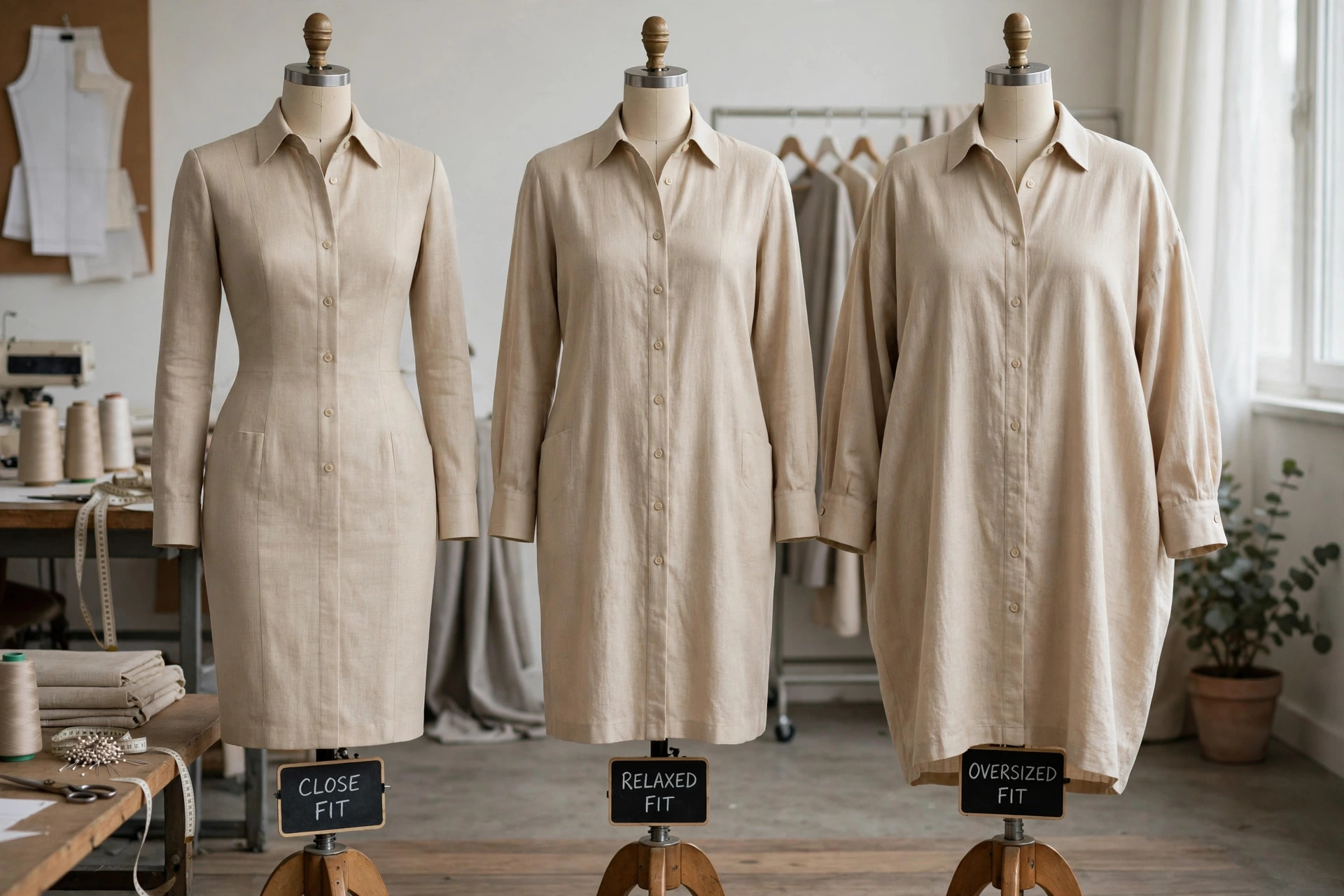
Design ease is all the fullness in a garment beyond the functional minimum of wearing ease, added deliberately to create a silhouette. A close-fitting sheath carries almost none; a relaxed shirt carries several inches; an oversized coat may carry a foot or more. Design ease is distributed as carefully as it is measured — placed at the chest, swept into a hem, gathered at a yoke — because where the extra cloth sits is precisely what makes one style read as tailored, another as fluid and a third as deliberately voluminous.
Reading Design Ease in Numbers
Comparing a garment's finished measurements with the body it is meant for reveals its design ease, and size charts publish it implicitly: two shirts labelled the same size can differ by 6 inches (15 cm) at the chest because their design ease differs. Pattern makers record it on the pattern; shoppers can use it too — measure a favourite garment, compare it with your body, and you have the design-ease figures that suit you.
- Sewing — the Apparel Search sewing section
- Close fit — 0–2 in (0–5 cm) beyond wearing ease at the bust.
- Classic / semi-fitted — about 2–4 in (5–10 cm) beyond wearing ease.
- Relaxed and oversized — 4 in (10 cm) upward, with the distribution, not just the total, defining the look.
Ease as a Design Language
Fashion cycles are largely ease cycles: the sculpted 1950s silhouette, the generous 1980s shoulder, the slim 2000s and the oversized 2020s are the same bodies wrapped in different amounts of design ease. Designers add it with dart manipulation and slash and spread; brands guard their ease standards as carefully as their sizes, because consistent design ease is what makes a label's fit recognisable from season to season.
Manufacturers formalise design ease in their size specifications: the finished garment measurements a buyer approves are body measurements plus wearing ease plus the season's design ease, style by style. That is why the same brand's tailored blazer and relaxed blazer carry different chest measurements at the same labelled size, and why comparing finished measurements — not size labels — is the reliable way to shop across styles. For the pattern maker, recording the design ease used on each block keeps a range coherent when new styles are added.
FAQs
- How can I tell a garment's design ease before buying?
- Compare the garment's finished chest, waist and hip measurements (or measure a garment you own and love) against the body measurements for the size. The difference beyond a couple of inches of wearing ease is design ease.
- Is design ease the same as oversizing?
- Oversizing is one use of it. Design ease also includes modest amounts — an extra inch for a semi-fitted shirt is design ease, not oversizing.
- Does design ease change between sizes?
- In good grading it grows slightly with size so proportions hold; in poor grading it stays fixed, which is why plus sizes of a slim style can end up effectively closer-fitting.
Detailed Guides: see Design Ease in the glossary A–Z listing of the Apparel Search fashion glossary for related terms.