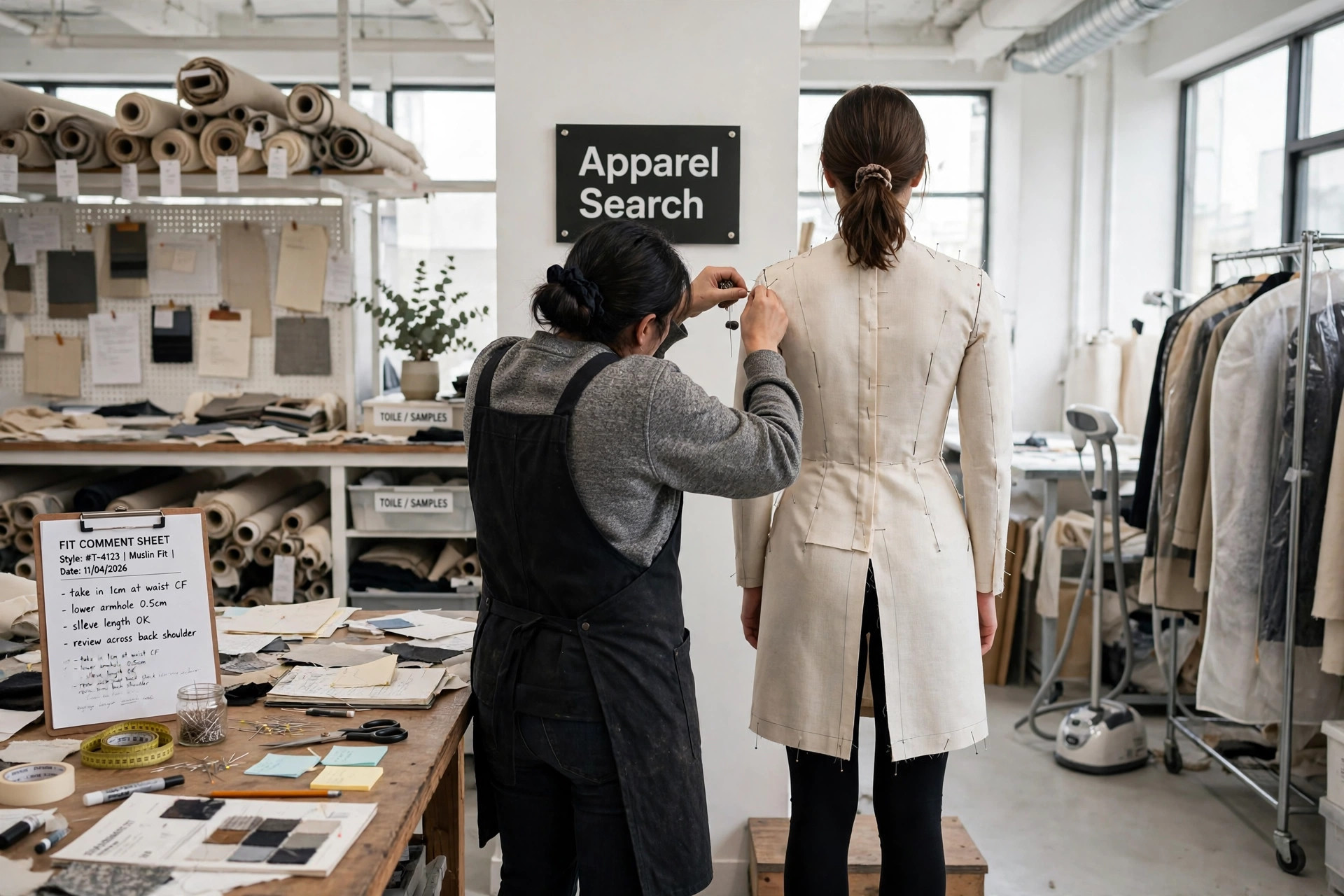
Every size a brand sells was approved, at base size, on one particular human body: the fit model. Fit sessions — the working meetings where samples are tried, pinned, measured and corrected on that body — are where fit stops being numbers and becomes clothing. This page explains how fit models are chosen and how a fitting actually runs, as part of our Clothing Sizing & Fit Guide.
The Job: A Living Standard, Not a Photograph
A fit model is not a runway or photographic model, and the skills are different. The job is to be the brand's base size, reliably, for months or years: measurements that stay stable, proportions that match the target customer profile drawn from the brand's body data, and posture and shape that represent how its customers are actually built. Just as valuable is feel — a good fit model reports that a waistband digs when sitting, that an armhole binds reaching forward, that a trouser rises uncomfortably — sensations no tape measure records.
Brands find fit models through agencies that keep their measurements on file, or keep a trusted model on regular call. The measurements are verified at intervals because the whole system leans on them: if the fit model's waist quietly changes by 2 cm, every approved pattern drifts with it. Some brands supplement the human with a dress form built to the same measurements for quick checks, but forms cannot sit, reach or report, so they assist the fitting rather than replacing it.
Anatomy of a Fit Session
- The sample goes on. The current sample — a first prototype, a revised fit sample, or a pre-production sample — is worn with the shoes and underpinnings the garment is designed for, because both change the fit.
- The team reads the garment. Designer, technical designer and pattern maker circle the model: drag lines pointing at strain, hems levelling or climbing, seams twisting, closures pulling. The model stands, walks, sits, raises her arms — the ease test in action.
- Corrections are pinned and marked. Excess is pinned out, tight areas are let out or marked for addition, style lines are taped into their corrected positions — the garment becomes its own correction note.
- Measurements are checked against spec. The sample is measured against the points of measure in the technical spec, so the team can separate pattern problems from sewing problems: a garment can be sewn off-spec, or sewn perfectly to a pattern that is wrong.
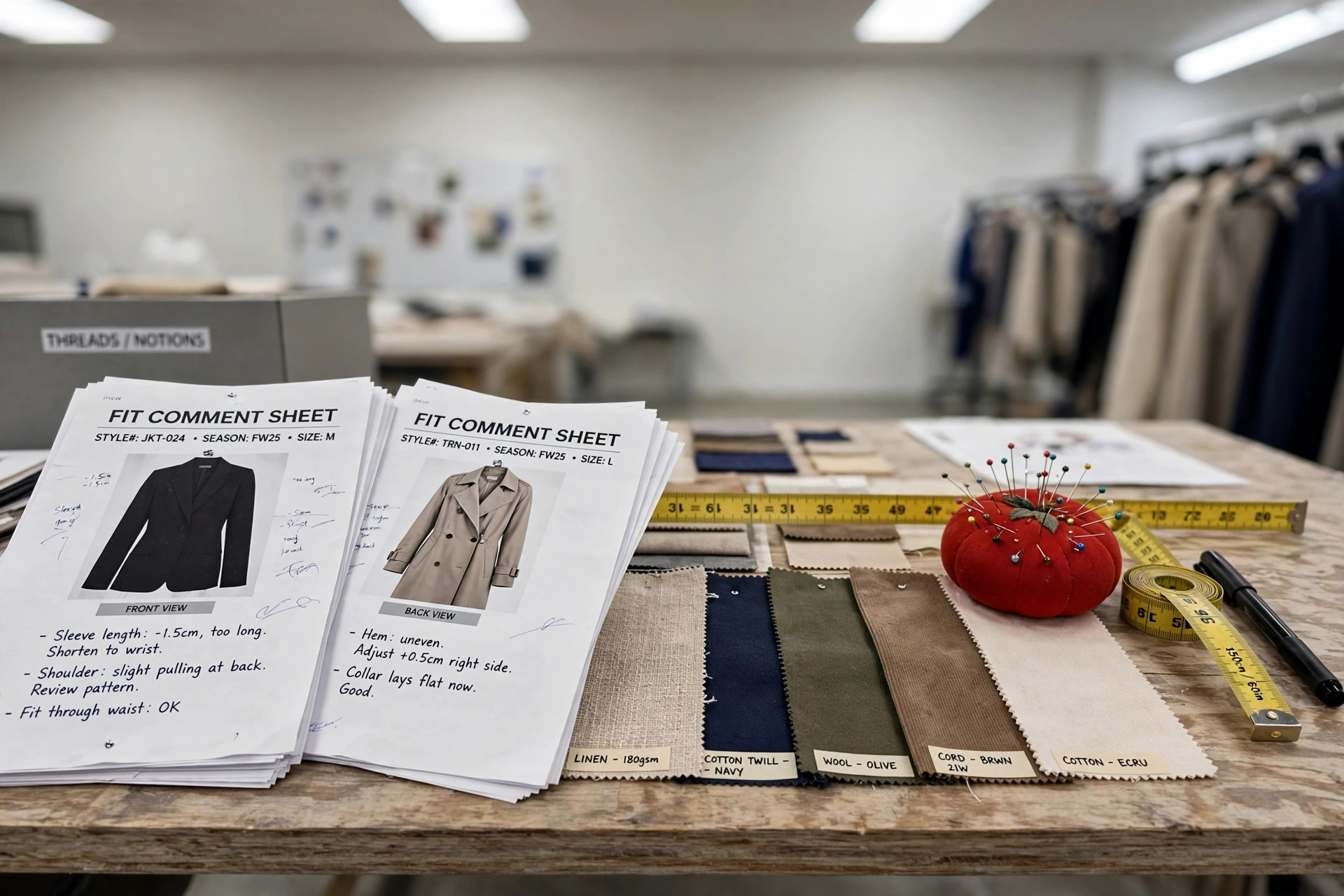
- Fit comments are written. Every correction is documented with photos and measurements as fit comments and sent, with the revised spec, to the factory or pattern maker. The next sample is judged against them.
- Approval, or another round. When the base size fits as intended, it is approved — and only then are graded sizes produced from it by pattern grading. Major ranges may repeat the process for a fit check at the extremes.
Why One Body Decides So Much
The concentration of authority in one body is both the system's strength and its known weakness. Strength, because consistency is what makes a brand's fit recognisable season after season — customers learn "this brand's 12 fits me" only if the 12 keeps meaning the same body. Weakness, because no single body represents a population: a fit model with a particular shoulder slope, hip spring or torso length bakes those traits into every pattern, and customers built differently experience them as the brand "running" oddly. Brands serving broader or different bodies than their historic fit model — extended size ranges are the common case — need fit models for those ranges too, not just arithmetic. That is the human version of the lesson in anthropometrics: design for a real cluster of bodies, or fit none of them well.
Common Questions
- What is a fit model?
- A fit model is a person whose measurements and proportions match a brand's target customer for the base size, and who tries on sample garments so the design and technical team can judge and correct the fit on a real body. Fit modelling is a technical job, not a photographic one: consistency of measurements and the ability to articulate how a garment feels matter more than camera presence.
- What happens in a fit session?
- The fit model puts on the sample garment; the designer, technical designer and pattern maker examine it standing, moving, sitting and reaching; they pin, tuck and mark corrections directly on the garment, measure it against the spec, photograph it, and record fit comments — the written instructions the factory or pattern maker uses to revise the pattern before the next sample.
- What are fit comments?
- Fit comments are the documented output of a fitting: a list of corrections tied to measurements and photos — 'reduce waist by 1 cm', 'armhole is cutting at front', 'add length to back rise'. They are sent to the factory with the revised spec and pattern corrections, and the next sample is checked against them. They are the paper trail of fit approval.
- Why do brands fit only the base size?
- Time and cost. Fitting every size on a matched set of models would multiply the sampling process, so the industry standard is to perfect the base size and grade the rest. Better practice — and what better brands do — is to also fit-check the ends of the range and any plus or petite extensions, because grading alone cannot catch proportion changes at the extremes.
More from the Sizing & Fit Guide
Back to the Clothing Sizing & Fit Guide Fit approval is one link in the chain from body data to size label. See the whole system in the Sizing & Fit Guide hub.