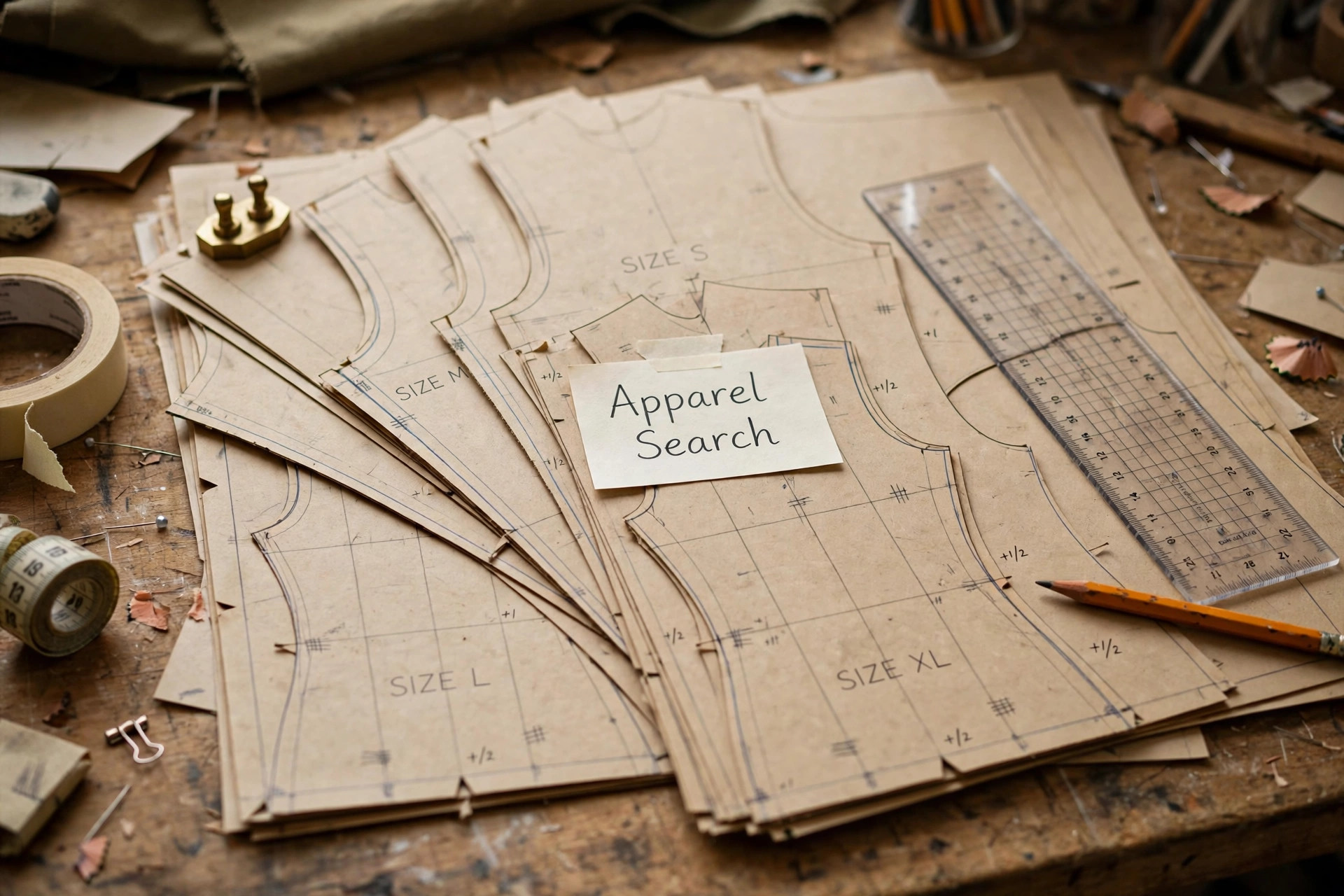
Pattern grading is how one approved garment becomes a size range. A pattern is perfected in a single base size; grading then grows and shrinks that pattern, point by point, into every other size — using grade rules that say exactly how far each point moves. This page is part of our Clothing Sizing & Fit Guide, which follows the whole chain from body data to the label in the neck. Our glossary carries the short definition of pattern grading; what follows is the full working explanation.
Start With One Size: The Base
Nobody drafts nine sizes of the same dress. A pattern maker drafts one — the base size, typically near the middle of the intended range, such as a women's size 10 or a men's medium. That size is cut, sewn, and fitted on a fit model until the brand is satisfied: the proportions are right, the ease feels as designed, the style lines sit where the sketch put them. Only then does grading begin, and every other size is a descendant of this one approved pattern.
That single fact explains a persistent fitting-room experience: the middle sizes of a range usually fit best. They are closest to the size that was actually perfected on a body. The further a size sits from the base, the more it is the product of arithmetic rather than fitting — which is why careful brands fit-check the extremes of a range separately, and careless ones discover the problem in their returns data.
Grade Rules: Different Increments at Different Points
A grade rule is a table of movements. For each point on the pattern — neck point, shoulder tip, armhole, bust, waist, hip, hem — the rule states how far that point travels, horizontally and vertically, for each step up or down in size. The crucial insight is that the movements are not equal. Girths grow fastest; lengths grow slowly; some points, like neck width, barely move at all, because real bodies behave that way — the anthropometric data behind the size system says so.
| Pattern point | Typical movement per size step | Why |
|---|---|---|
| Bust / chest girth | Full grade — often 4–5 cm (about 2 in) of total girth in women's misses ranges | Girth is what the size system is built on; it carries the biggest change |
| Waist and hip girth | Full grade, similar to bust, but not always identical | Waist and hip grow at slightly different rates in the population data |
| Shoulder width | Partial grade — a fraction of the girth grade | Skeletal width changes far less than soft-tissue girth |
| Armhole depth | Small partial grade | Arms grow in girth faster than the armhole deepens |
| Neck width | Minimal grade | Necks change very little across adult sizes |
| Body lengths (back waist, rise) | Small grade, and zero in some ranges | Height varies independently of girth; many ranges hold length constant and offer petite/tall separately |
Historically this was done by hand — the grader shifting the pattern on a grading machine or redrawing it point by point. Today CAD systems apply the grade rule table automatically once it is built, which makes grading faster but not simpler: the software applies the rules perfectly, including the wrong ones. Building the rule table remains the skilled act, and it rests on the same body data that size charts are built from.
Why Grading Is Not Scaling
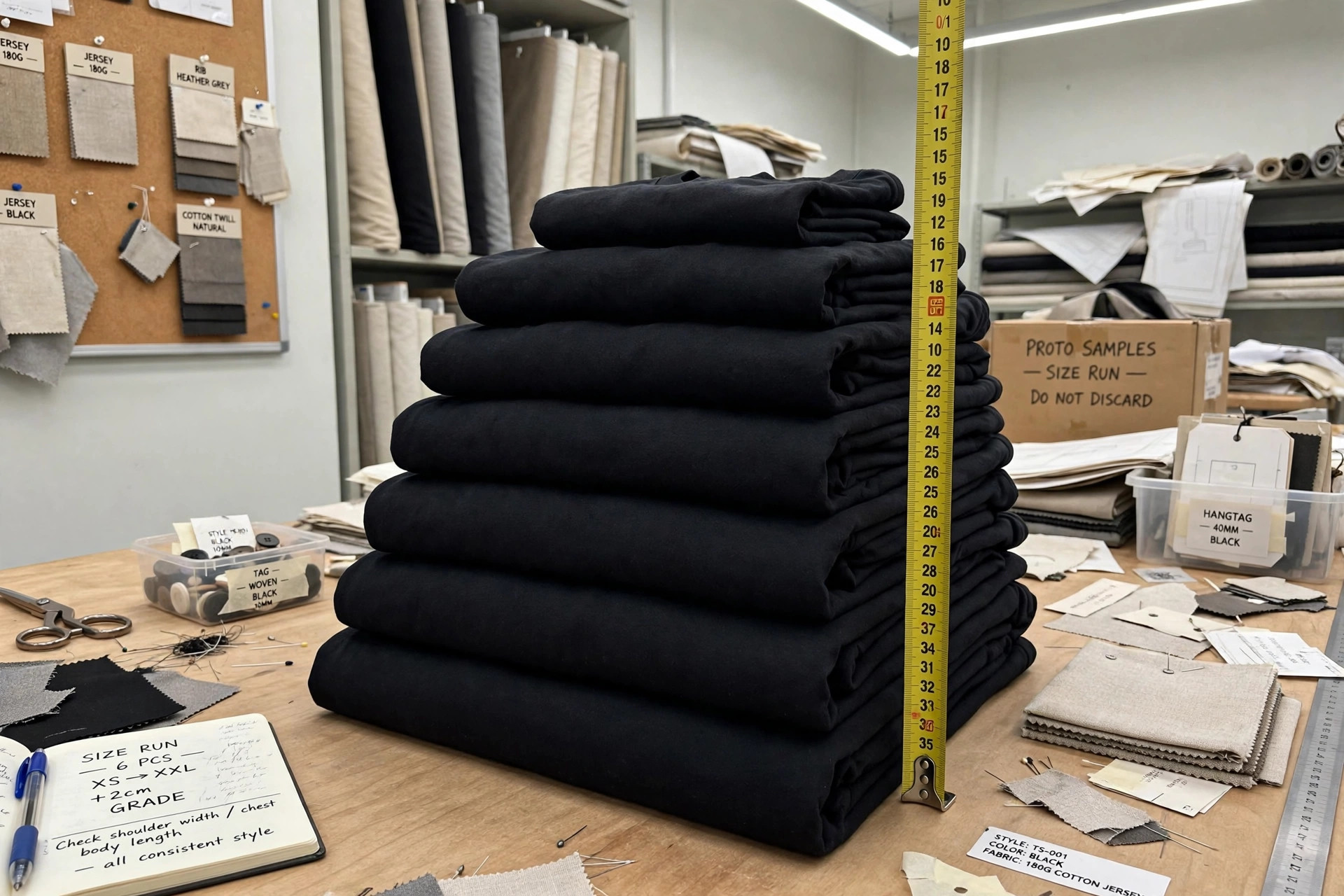
It is tempting to imagine grading as the photocopier's enlarge button: 104% for the next size up. The table above shows why that fails. Uniform scaling grows the neck as fast as the bust, lengthens the body as fast as it widens, and deepens the armhole out of proportion — producing a large size that fits like a distorted medium, because anatomically it is one. Bodies change shape as they change size; grading respects the shape change, scaling does not.
There are two further complications graders manage. First, the grade itself often changes across a range: many systems use a smaller increment between small sizes and a larger one between plus sizes, because population data shows girth spreading faster at the upper end. Second, some styles deliberately break their own rules — a brand may hold a fashion silhouette's proportions by grading the style lines less than the body, accepting a closer fit in larger sizes. That is a design decision, but it should be a conscious one. Grading is also where sizing meets money: the size range and grade increments a brand chooses directly affect fabric consumption per garment, a connection our Garment Costing & Production Economics Guide works through.
Where Grading Goes Wrong
- Grading from a bad base. Every flaw in the base size is faithfully reproduced, nine times over.
- One grade for everything. Applying the same increment to knit and woven, or to junior and misses ranges, ignores that the underlying bodies differ.
- Never fitting the ends. The base gets a fit session; sizes 0 and 22 get arithmetic. End sizes deserve at least a check fitting.
- Length neglect. Holding all lengths constant across a wide range is common and sometimes right — but when it is wrong, tall customers in large sizes notice first.
Common Questions
- What is pattern grading in clothing?
- Pattern grading is the process of producing the full size range of a garment from one approved base-size pattern. Instead of drafting every size from scratch, the grader moves each pattern point by small, specified amounts — the grade rules — so the garment grows or shrinks in the places real bodies do, and stays put in the places they do not.
- Why can't you just scale a pattern up by a percentage?
- Because bodies do not scale uniformly. When a waist grows by 5 cm, the neck does not grow by the same proportion, armholes deepen by less than the chest widens, and lengths change more slowly than girths. Percentage scaling would distort all of these relationships; grade rules exist to apply a different, correct increment at every point.
- What is a base size?
- The base size is the one size of a style that is drafted, sampled and fit-approved in full — often a middle size such as a women's 10 or men's M. Every other size in the range is graded from it, which is why the base size usually fits best: it is the only size that was perfected on a body.
- Why do the largest and smallest sizes in a range often fit worst?
- Because grade rules assume steady, proportional change, and real bodies at the ends of a range change differently — posture, proportions and the distribution of girth all shift. Each size away from the base also accumulates small grading compromises. Brands that fit-check the end sizes, not just the base, avoid most of this.
More from the Sizing & Fit Guide
Back to the Clothing Sizing & Fit Guide Grading is one link in the chain from body data to size label. See the whole system in the Sizing & Fit Guide hub.