Apparel Search Consumer Guides
Shoe Fit Guide
How a shoe should fit — the room at the toes, the width letters explained, heel hold, toe box shapes, and how the rules shift between running shoes, dress shoes and boots.
Apparel Search has guides to nearly every kind of shoe there is — dress shoes and running shoes, boots and sandals, for women, men and children. What the site has never covered, until now, is the subject every one of those guides quietly assumes you already know: how a shoe should actually fit. That gap matters, because "your size" is the least reliable part of shoe shopping. A size is a label each maker prints on a box; your foot is a length, a width and a shape, and the two meet differently in every brand and every style. Fit is a learnable subject, and it is the half of buying shoes that decides whether a pair is worn for years or abandoned after a month.
This guide covers the fit itself: how much room belongs in front of your toes, what the width letters on a shoe box really mean, how a heel should hold, and how the shape of a toe box should answer the shape of your foot. Three companion guides go deeper — how to measure your feet at home, arch support and insoles explained as product categories, and fitting children's shoes as their feet grow. For the shoes themselves, the Clothes Guide's shoe sections — linked at the bottom of this page — remain the place to browse types.
Search Apparel Search
The Guides in This Section
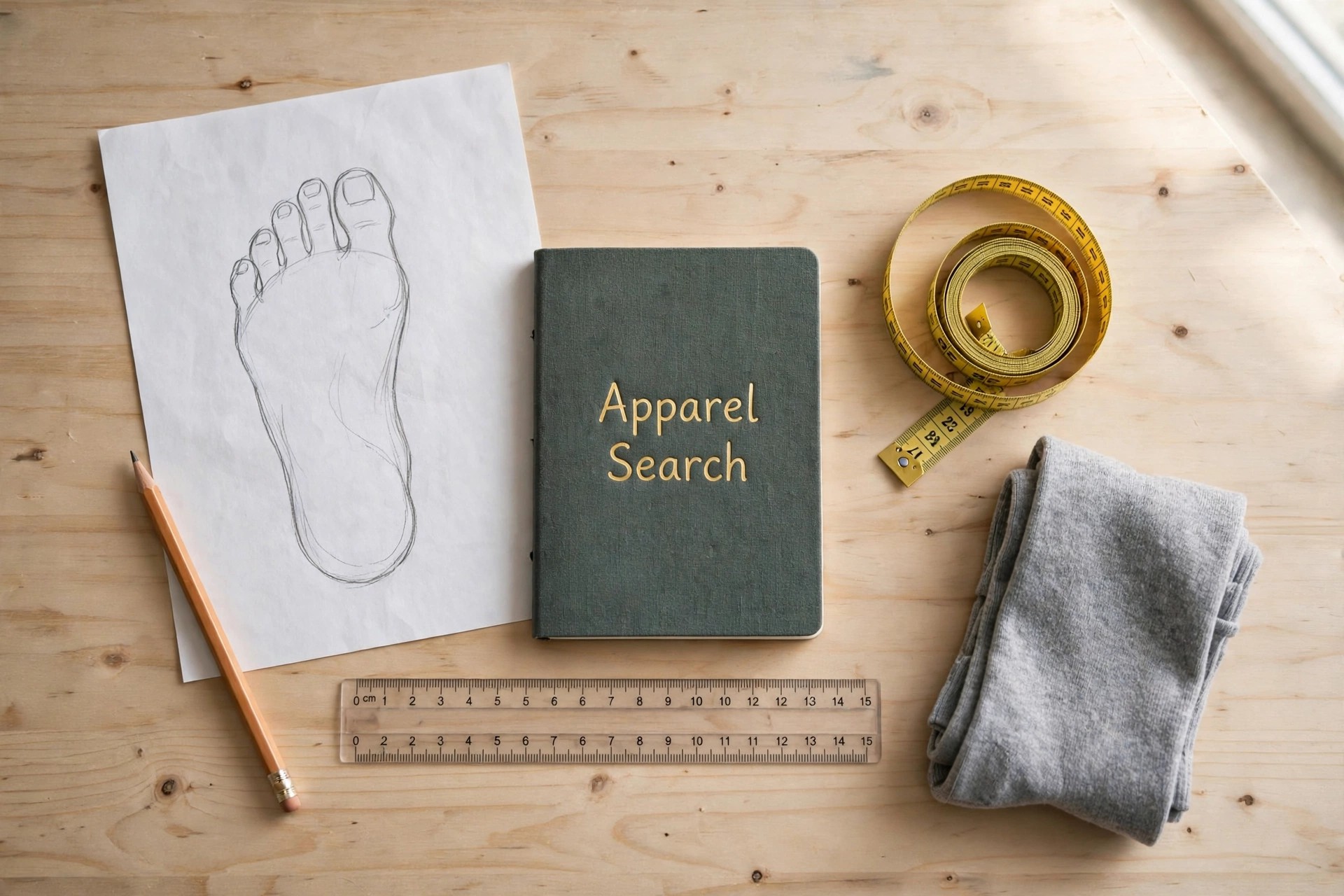 How to Measure Your FeetThe trace-and-measure method at home, what the numbers mean, and what a Brannock device in a shoe shop measures that paper cannot.
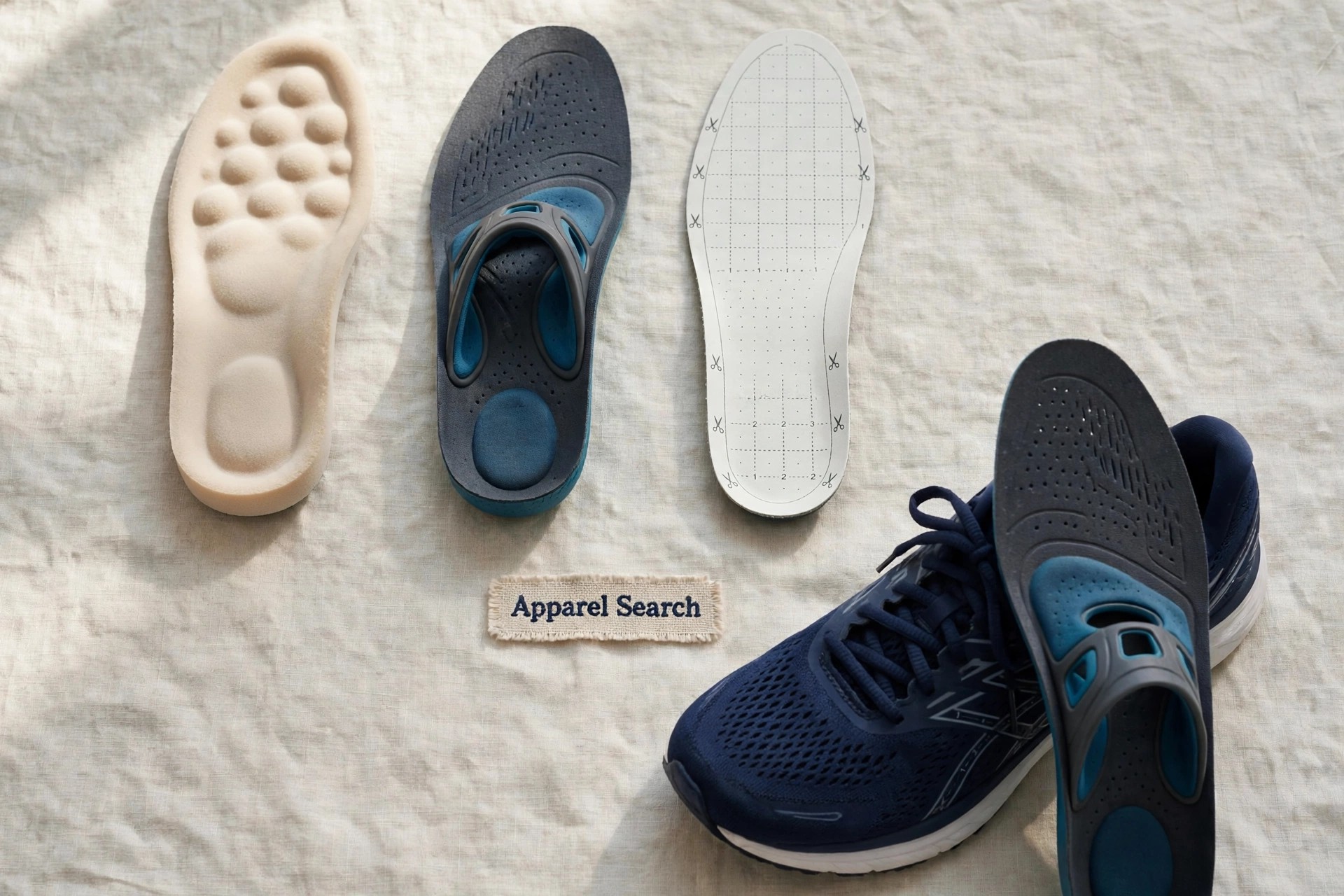 Arch Support and Insoles GuideArch types described as fit, the wet test at home, insole categories, and how an insole changes the room inside a shoe.
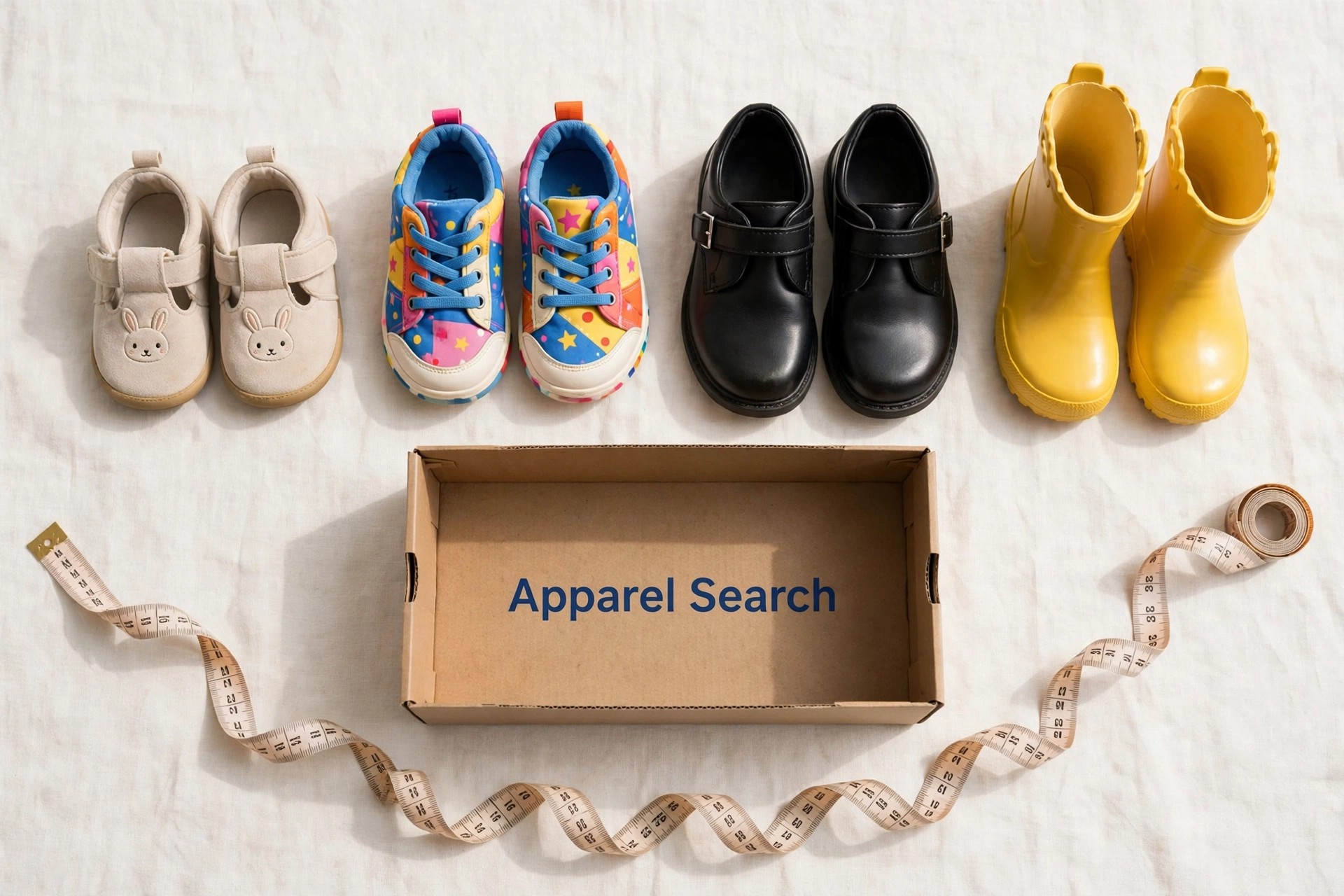 Kids' Shoe Fitting GuideHow fast children's feet grow, how often to check fit, the right amount of growing room, and a careful word on hand-me-downs.
Length: Room in Front of the Toes
Start with the simplest check in shoe fitting. Standing in the shoe, with your weight on the foot, there should be about a thumb's width of empty shoe in front of your longest toe — roughly 3/8 to 1/2 inch, about a centimetre. It is a rule of thumb in the literal sense, and it deserves to be used as one: a useful starting point, not a law of nature. The room exists because feet lengthen under load and slide slightly forward as you walk; toes that start the day touching the end of a shoe spend the day pressed against it.
Two cautions keep the rule honest. First, the longest toe is not always the big toe — on many feet the second toe reaches furthest, and the room is judged from that one. Second, too much room is also a fit fault: a shoe that is too long lets the foot slide forward, lifts at the heel, and creases across the toes where it bends in the wrong place. Length also hides a subtlety that our measuring guide covers in full — the distance from your heel to the ball of your foot, sometimes called arch length, decides where a shoe flexes, and a shoe can match your toe length yet bend in the wrong place.
Width: The Half of the Size Most People Never Check
Shoe sizes are sold as a number, but feet come in two dimensions, and the width letters on the box are the forgotten half. In US grading, a medium width is usually marked B for women's shoes and D for men's, and the scale runs in both directions — A and AA for narrow, E, EE and beyond for wide. The letters are a maker's grading, not a standard: they step in small increments, and one brand's wide is another brand's medium. What the letters cannot tell you, your feet can. A shoe that is too narrow shows itself: the sides of your foot bulge over the edge of the sole, the upper strains across the widest part of the foot, and the little toe is pressed against the side. A shoe that is too wide lets the foot swim — the heel lifts, the foot slides forward, and the laces pull the two rows of eyelets nearly together.
Width has a quiet partner, too: volume. Two feet with the same length and width measurements can fill a shoe differently, because one has a higher instep and stands taller inside the shoe. That is why a shoe can be the right length, the right width letter, and still feel wrong — and why trying shoes on beats ordering by numbers alone whenever you can.
Heel Hold and Toe Box Shape
The heel of a well-fitting shoe cups your heel and holds it without gripping it. A little movement in a new, stiff shoe is normal and usually disappears as the sole starts to flex; a heel that lifts out of the shoe as you walk is a fit fault, whatever the size label says. Lacing is part of heel hold — snug lacing through all the eyelets, and the extra top eyelet on most athletic shoes (the runner's loop) exists precisely to lock a heel down.
At the other end, toe boxes come in shapes — pointed, almond, round, square, and the roomier foot-shaped profiles found on comfort and outdoor shoes — and the right one answers the shape of your forefoot. Toes should lie flat and straight in their natural line, able to wiggle, never stacked on top of each other or curled to fit. A pointed fashion toe is a style choice that costs room; the honest check is whether your toes can lie flat inside it, not whether the shoe is your usual number.
Try Shoes Like a Fitter
- Shop late in the day. Feet swell as the day goes on and are at their largest by afternoon. Shoes fitted in the morning can be tight shoes by evening; fit for the largest version of your feet.
- Wear the right socks. Try shoes in the socks they will actually be worn with — boot socks for boots, running socks for runners, thin dress socks for dress shoes. A thick sock can use up a whole width of room.
- Put both shoes on. Most people have one foot slightly larger than the other. Fit the larger foot; a smaller foot can be accommodated far more easily than a larger one can be squeezed.
- Stand up and load the shoes. Seated checks lie. Standing spreads and lengthens the foot, and every fit check on this page assumes your full weight is on your feet.
- Walk on a hard floor. Carpet forgives everything. A few lengths of the shop's hard floor show heel slip, toe contact and where the shoe bends far more truthfully.
- Check the flex point. The shoe should bend where your foot bends, at the ball. A shoe that creases far forward or resists bending there is the wrong length for your arch, whatever the toe room says.
Fit Changes with the Category
The principles are constant, but their settings differ by shoe type. Running shoes want the full measure of toe room and sometimes a little more: feet swell and splay over distance, and toes travel forward on descents, so runners are commonly fitted roomier than the same person's street shoes. Dress shoes fit closer by design — a neat fit through the heel and waist of the shoe, in thin socks — and leather gives a little across the width with wear, though never in length, which is why a dress shoe that is snug across the foot can be right while one that is short never will be. Boots are fitted with their own socks, and heel hold does more work: with the foot laced in over the instep, a boot's heel should sit still even though the shaft moves. Sandals are judged by the footbed: the print of your foot should sit inside its edges, heel and toes contained, with straps holding the foot rather than your toes gripping to keep the sandal on.
When Fit Is Not the Whole Story
This guide covers fit as a clothing subject — sizes, shapes, materials and comfort features. If your feet hurt persistently, or something about them has changed, that is a question for a podiatrist or another foot-care professional. A shoe guide is the wrong tool for it, and no fit tip here is offered as a substitute for that advice.
One category starts where this guide leaves off: socks and shoes designed together for shoppers who need the inside of the shoe to do nothing but behave — non-binding sock tops, seamless toes, extra-depth shoes with smooth interiors. Our diabetic socks and footwear guide covers that category feature by feature, and its fitting advice is this page’s method with the margins widened.
Small adult feet are a fitting case of their own: adult styling and construction thin out quickly below the middle of the size range, while children’s shoes fill the sizes without the styling. The footwear notes in our little people & short stature clothing guide cover that ground, and its companion short stature style guide covers footwear proportions — how the shoe’s shape and scale finish an outfit.
Common Questions
How much room should there be in front of my toes?
The usual fitting target in closed shoes is about a thumb's width — roughly 3/8 to 1/2 inch (about 1 cm) — between your longest toe and the end of the shoe, checked standing with your weight on the foot. Take it as a starting point rather than a law: running shoes often want the full amount or a little more, while a close-fitting dress shoe may sit at the lower end of the range. Your longest toe is not always the big toe, so judge the room from whichever toe reaches furthest forward.
Should new shoes need breaking in?
A well-fitting shoe should feel right in the shop: no pinching, no pressure points, and no heel lifting out as you walk. Stiff leather uppers and soles do soften and mould a little with wear, and that softening is the honest part of breaking in — but a shoe's length never changes, a narrow shoe does not become a wide one, and discomfort is not a stage of the process. If a shoe does not fit on the shop carpet, it will not fit on the pavement either.
Is heel slip a sign of the wrong size?
A small amount of movement at the heel is common in brand-new stiff shoes, especially leather dress shoes and boots, and it often settles as the sole begins to flex. Slipping you can feel on every step, or a heel that lifts clear of the shoe, points to a fit problem instead: the shoe may be too long, too wide at the heel for your foot, or simply built on a different foot shape than yours. Lacing can help when the rest of the fit is right — a runner's loop through the extra top eyelet snugs the heel on athletic shoes.
Why does the same size fit differently in different brands?
Because a size is an index into each maker's own system, not a standard unit of length. Shoes are built on lasts — foot-shaped forms — and every maker's last has its own grading, width and shape. Add the genuine differences between US, UK and European scales, and the same number can describe noticeably different shoes. Your foot measurement in centimetres is the constant; the size printed on the box is each brand's translation of it.
Start with Your Own Numbers
Everything on this page gets easier once you know your feet as measurements instead of a remembered size. Our how to measure your feet guide gives the full method — paper, pencil, ten minutes — and explains what the metal Brannock gauge in a shoe shop measures that paper cannot.