Apparel Search Consumer Guides
Diabetic Socks & Footwear
A whole footwear category designed around the inside of the shoe — how these socks and shoes are made, feature by feature.
Some socks and shoes are designed from the foot outward for shoppers who look for footwear with nothing inside it that rubs, bunches or squeezes — most often under the word “diabetic”. This guide reads that word the way a clothing guide should: as a description of how the garments are made. It gathers the design features that define these ranges — non-binding tops, seamless toes, moisture-managing yarns and cushioning in the socks; extra depth, smooth interiors and adjustable closures in the shoes — and leaves every medical question to the reader’s own care team. It sits in the same family as our post-surgery and medical dressing guide and our adaptive clothing guide, and it leans on our shoe fit guide for the fitting half of the subject.
Search Apparel Search
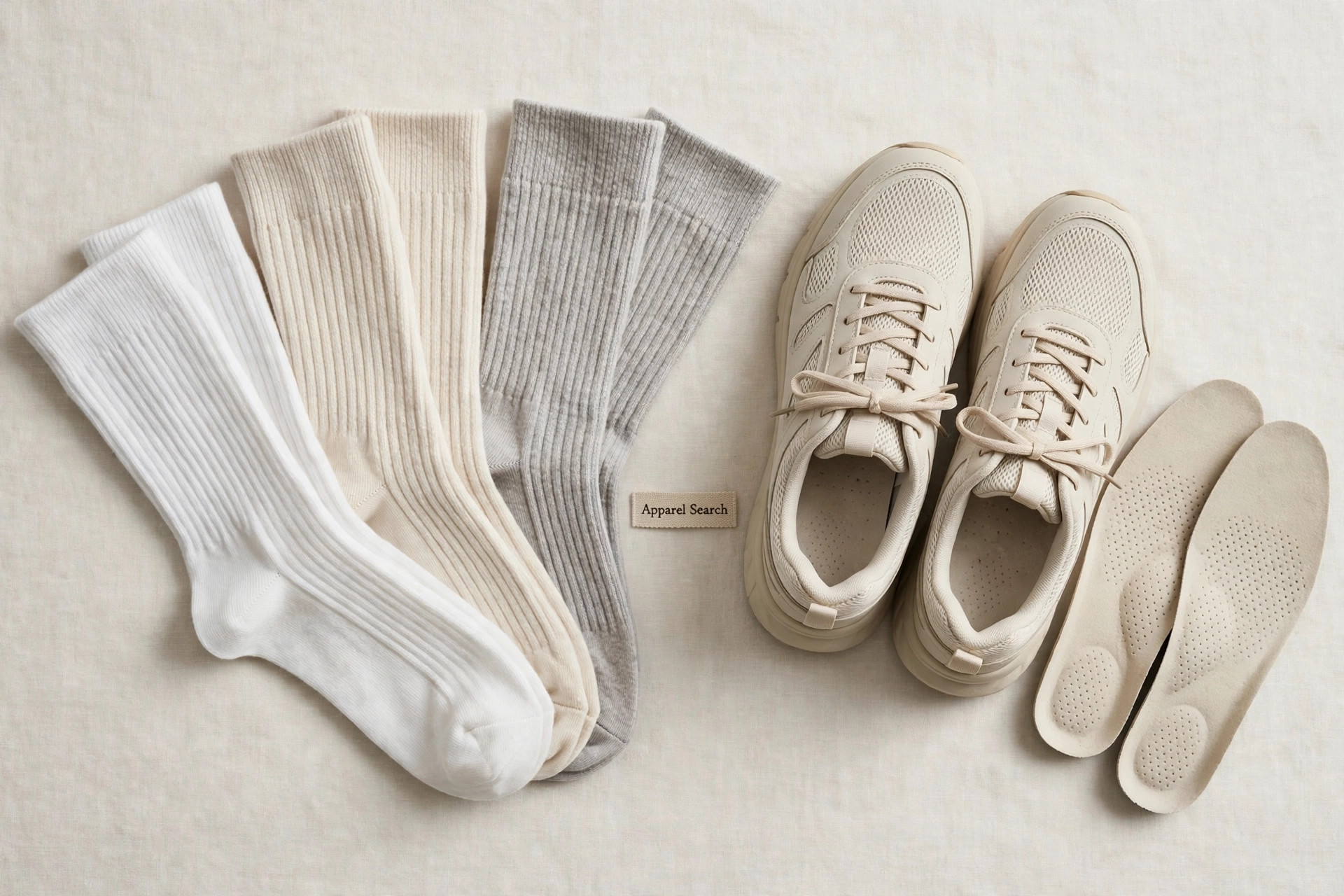
The Guides in This Section
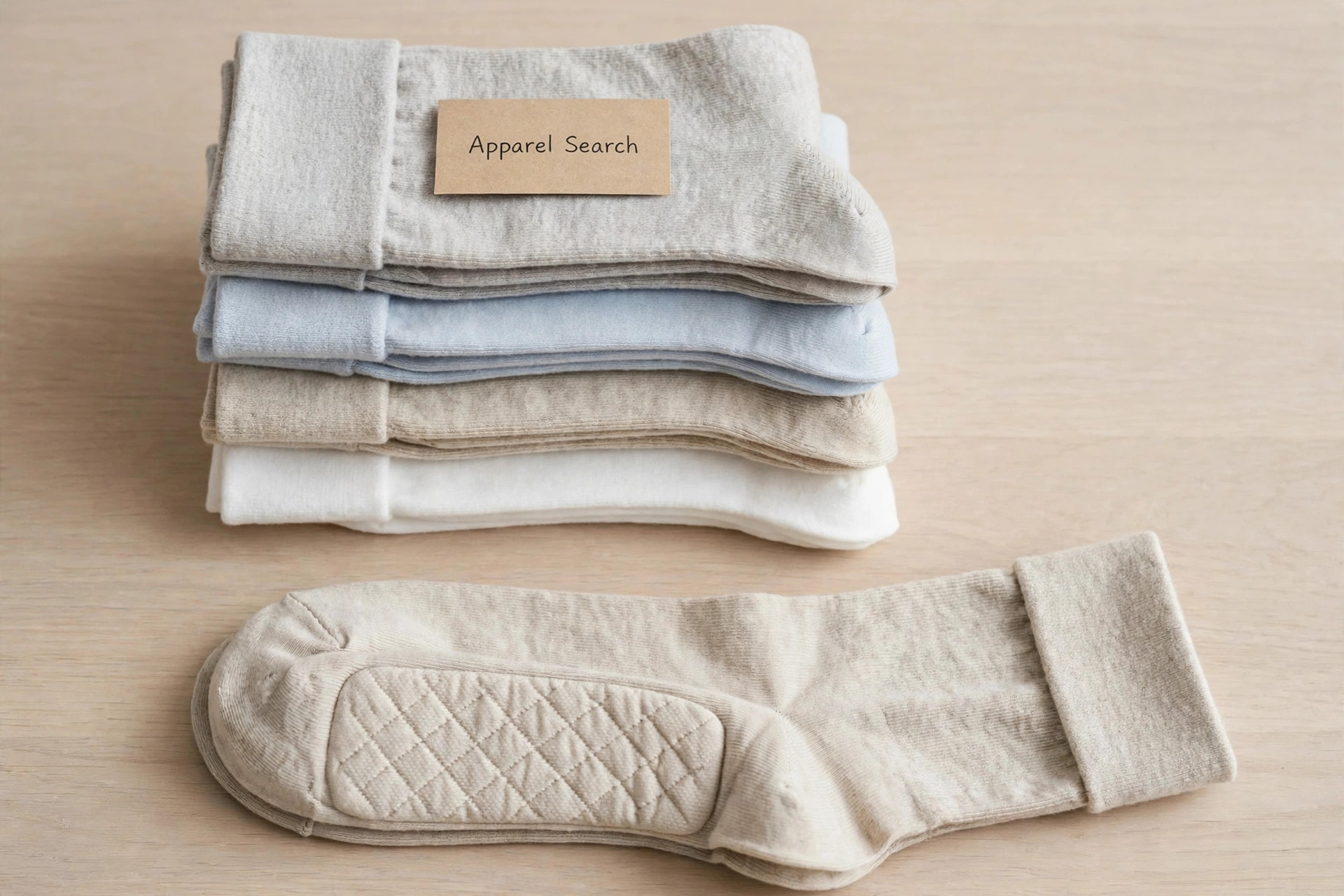 Buying Diabetic SocksHow the non-binding top should fit, cotton against moisture-managing blends, cushion levels, heights, how many pairs a rotation needs — and how to read the package skeptically.
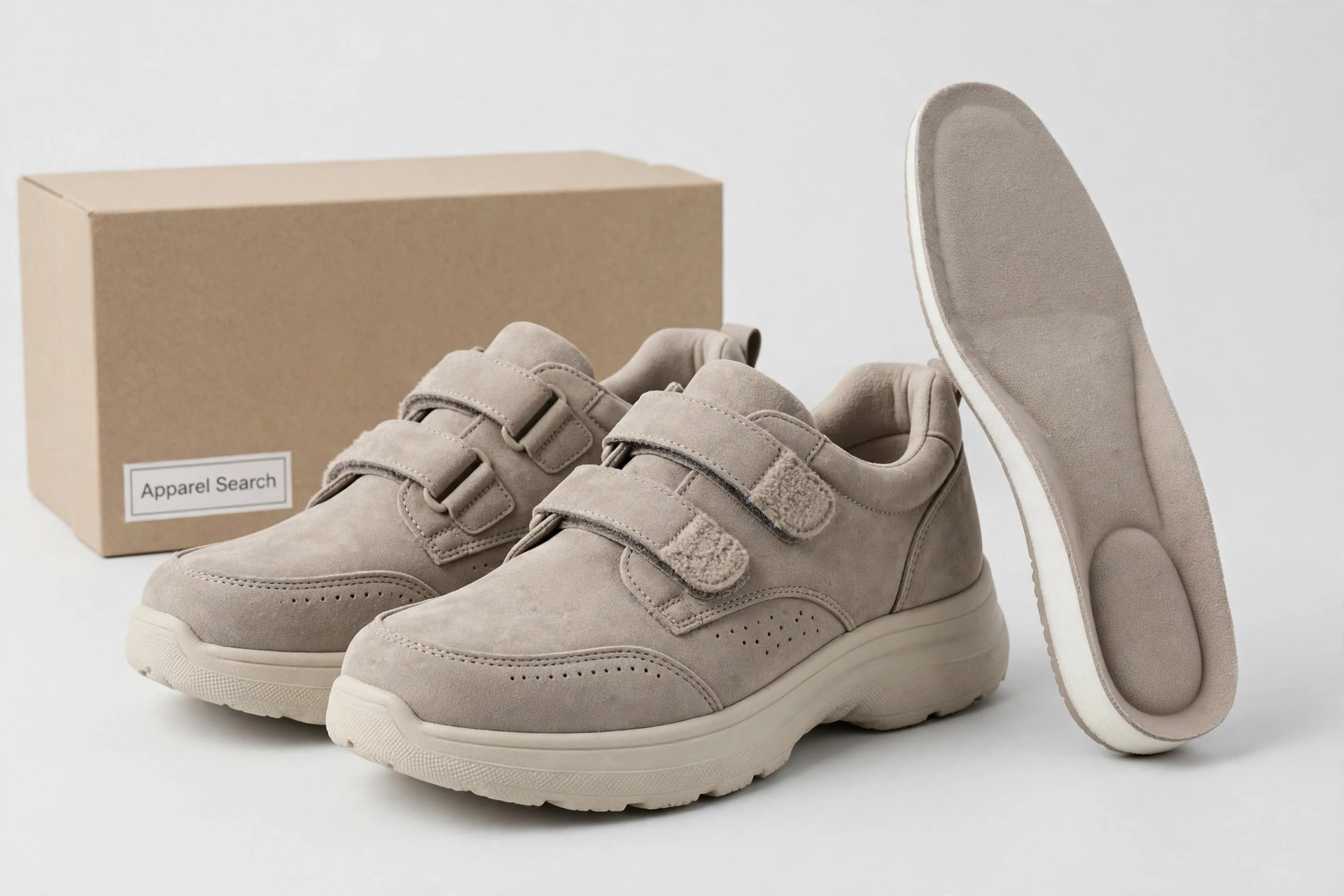 Diabetic-Friendly ShoesExtra-depth toe boxes, seamless interiors, removable insoles, rocker soles and closures that adjust through the day — plus fitting a foot that changes size as the day goes on.
Why These Ranges Exist
The design brief, as the makers state it, is about the inside of the shoe. Ordinary socks are built to stay up and look neat; ordinary shoes are built to a fashion last. These ranges start from a different list: no ridge across the toes, no tight band at the calf, no seam inside the shoe, room for the foot as it is at the end of the day rather than the start. Everything in this section is a construction answer to one of those points — which is why the features, not the label, are what to shop by.
The Socks, Feature by Feature
Non-binding tops. The cuff is knitted wide and stretchy, so the sock holds up by gentle contact along the leg rather than by a tight elastic grip. Compare an ordinary dress sock, whose band is deliberately tight, and a compression stocking, whose knit is made to squeeze in a graded pattern — this top is built to the opposite pattern from both.
Seamless toes. An ordinary sock’s toe is closed with a sewn seam, and the ridge sits right across the toes. Socks in this category close the toe flat — knitted across or linked stitch by stitch — so a finger run inside the sock finds no ridge. Run that finger test in the shop: it is the quickest check in this whole section.
Moisture-managing yarns. Cotton absorbs moisture and holds it. The blends used here — acrylic, polyester and wool, usually with a little elastane for shape — are chosen to move moisture along the fiber and dry faster, so the sock’s climate stays steadier through a long day in shoes.
Cushioning. Extra terry padding is looped into the sole, heel and sometimes the toe — the places where foot meets shoe. Cushion levels vary from a light all-over pad to a thick, almost slipper-like sole; the buying guide works through the choice.
Light colors. Most ranges are sold in white and pale shades. That is a design decision rather than a fashion one: pale fabric shows moisture and marks clearly instead of hiding them, where a black sock would conceal both. Visibility is the feature.
The Shoes, in Brief
The matching shoes are built on extra-depth lasts: a tall, wide toe box, a lining without internal seam ridges, one or two removable insoles so the wearer’s own insole fits, a cushioned sole that often curves into a rocker, and straps or laces that adjust. The diabetic-friendly shoes guide takes each feature in turn, with the fitting method borrowed from our how to measure your feet page.
A Category Label, Not a Certification
“Diabetic” on footwear is a range name used by makers, not a tested standard with a certifying body behind it. Any brand can use the word; what separates the genuine article is the construction listed above. Judge a product by the features you can check — the toe closure, the top band, the fiber percentages, the insole that lifts out — rather than by the word on the packet.
A Garment Guide, Not Medical Advice
This page covers clothing: how socks and shoes in this category are designed, fitted and cared for. It describes what the garments are made of and how they are put together — nothing here is a claim about what any garment does for a medical condition. Questions about your feet belong to your own doctor or care team, and their guidance outranks anything in a product description — including the ones described here.
Shop Diabetic Socks & Footwear on Amazon
Ready to shop? Product links are kept in one place on the Apparel Search shopping guide:
Shop Clothing on AmazonThis link opens the Apparel Search shopping guide for Amazon, where the product links are kept in one place.
Common Questions
What does “diabetic” mean on a sock or shoe label?
It is a range name, not a certification. Makers use it for footwear built with a consistent set of features: socks with non-binding tops, flat or seamless toes, moisture-managing yarns and cushioning, and shoes with extra depth, smooth interiors and room for insoles. There is no single consumer standard behind the word, so the features — which you can check — are the reliable part of the label.
Are diabetic socks the same as compression socks?
No — in fit terms they are close to opposites. A diabetic sock’s top is designed to hold up without gripping the leg. A compression garment is knitted to squeeze, firmest at the ankle and easing further up the leg, and specialist ranges state that squeeze as a printed pressure range. The two sit on different shelves because they are built to opposite patterns.
Why are diabetic socks usually white or pale?
Visibility. Pale fabric shows moisture and marks clearly instead of hiding them, and makers choose light colors for exactly that reason. Dark colors dominate ordinary fashion socks; in this category the pale palette is a design feature of the garment, like the seamless toe.
Do I need the shoes as well as the socks?
Not necessarily — the features matter more than the category name. Many wearers pair these socks with ordinary, well-fitting shoes. The shoes in this category add depth, width and smooth interiors in one package, which suits shoppers whose regular shoes feel crowded or rough inside. Our shoe fit guide covers the fitting checks either way.
Please note: Apparel Search is a fashion and clothing guide, not a medical authority. Pages in this section describe clothing features and dressing ideas only. We make no claim that any garment or special product will improve, treat, or help with any medical condition, and descriptions of product features reflect how those products are designed and marketed, not a medical endorsement. Please check with your own doctor or care team about what is right for you.