Adaptive Clothing Guide for Adults
A practical buying guide to adult adaptive clothing: what the features do, who they help, and how to use the Apparel Search directory to find garments that are easier to put on, take off, and wear all day.
Shop Adaptive Clothing Now
Shop Adaptive Clothing on Amazon Shop Adaptive Clothing on eBayThe Amazon and eBay links on this page are affiliate links. If you make a purchase through them, Apparel Search may earn a commission.
Who Adaptive Clothing Helps
Adaptive clothing is ordinary-looking clothing designed so dressing takes less reaching, gripping, lifting, or bending. It helps adults who dress one-handed, people who dress while seated, older adults who find small buttons tiring, and anyone whose range of movement makes overhead tops, back zips, or narrow openings awkward. It also helps caregivers, because garments that open flat or at the back can be put on without pulling arms through tight sleeves.
Start from the dressing task, not the label. Write down the one step that is hardest: fastening a shirt, reaching a back zip, pulling trousers up while seated, or coping with labels and seams against the skin. That single step tells you which feature to shop for first, and it prevents buying a garment that solves a problem you do not have. Our adaptive clothing features guide explains each feature in plain language.
The Feature Vocabulary, Briefly
Magnetic closures hide behind a normal button front, so a shirt looks conventional but closes with a light press. Hook-and-loop fasteners replace small buttons and laces where grip is limited. Side zips and full side openings let trousers and skirts open wider. A seated rise gives trousers more length at the back than the front. Open-back tops and dresses overlap at the back for assisted dressing. Tagless labels, flat seams, and soft fabrics reduce everyday irritation, a subject covered in depth on our sensory-friendly clothing page.
Sound can be another clothing preference. Our Quiet Clothing Guide explains how to compare rustling layers and noisy accessories while preserving comfort, dressing access and function.
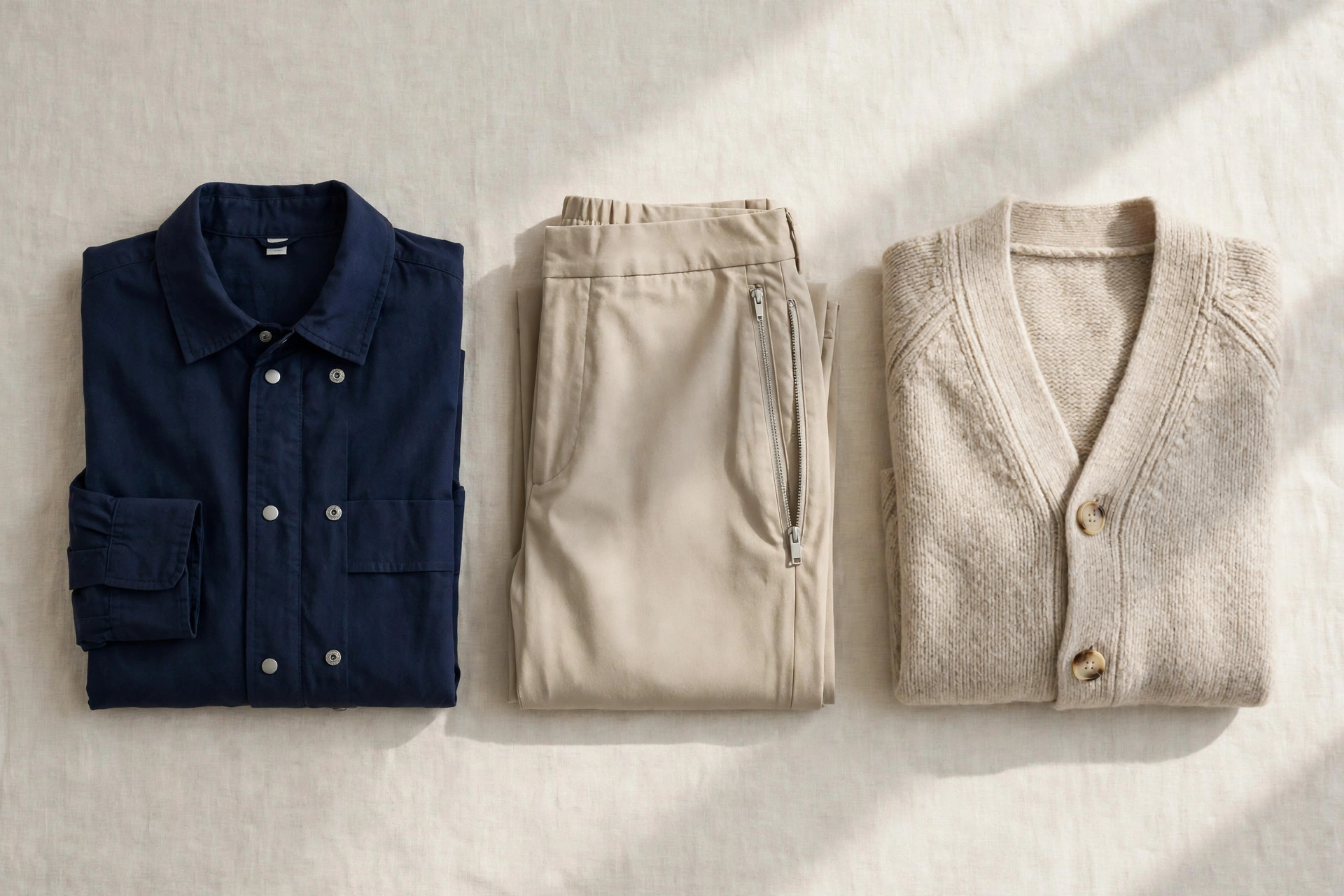
None of these features changes how a garment should look in public. Good adaptive design is discreet: the closures are hidden, the openings sit on seams, and the styling follows normal fashion. If a product photograph makes the feature hard to spot, that is usually a sign the design is doing its job well.
How to Shop the Directory
Use this guide for the thinking, then use the adaptive clothing retail directory for the buying. The directory lists specialist retailers alongside mainstream brands with adaptive ranges, so compare the same garment type in both places. Check the size chart for seated or open-back styles carefully, because their measurements are taken differently from standard sizes. Confirm the closure type in the product details, not just the headline, and check the returns policy before ordering several sizes.
For the plain-language meaning of the term itself, see the adaptive clothing definition. Shoppers helping family members of different ages may also want our children’s adaptive clothes guide and the children’s adaptive clothing directory, since many dressing ideas transfer between age groups even though sizing does not.
Choosing by Situation
For seated dressing throughout the day, go next to the wheelchair clothing guide, which covers seated rise, trouser length while seated, and coats worn sitting down. For older adults and assisted dressing at home, the adaptive clothing for seniors page focuses on easy fasteners, simple care, and garments a helper can manage calmly. Read the feature guide first if you are unsure which closure suits your hands, then return to the directory with a short, specific list.
Dressing around a medical situation is its own case: after an operation, or while living with drains, dressings or a stoma to work around, the useful features shift toward front openings, step-in styles and seams kept away from tender skin. Our post-surgery and medical dressing guide covers that ground garment by garment, including pocketed mastectomy clothing, ostomy-friendly waistbands and compression garments.
The feet have a specialist category of their own: socks and shoes designed for shoppers who need footwear that asks nothing of them — non-binding tops and seamless toes in the socks, extra depth, smooth interiors and strap closures in the shoes. Our diabetic socks and footwear guide covers the category at the garment level, and it pairs naturally with the dressing guides above for anyone building a low-effort wardrobe.
The medical layer keeps growing in the same direction. Dressing after amputation covers seated routines, one-handed fastenings and clothing that fits around a prosthesis; clothing for infusion and port access explains tops that open over the chest or along the arm for appointment days; and dialysis-friendly clothing covers access openings and waistbands chosen for long, regular sessions.
The same thinking now extends to dressing with a named condition, or a temporary one. Dressing with Parkinson’s works through closures that cope with tremor and slow fingers; dementia-friendly dressing is written for caregivers, around familiar styles and calm routines; dressing with arthritis ranks fastenings by the grip they ask for; and dressing after stroke sets out one-handed dressing, affected side first. The tools behind all four are catalogued in dressing aids and tools, while dressing with a cast or injury covers the temporary version of the same problems, and headwear for hair loss explains soft coverings — turbans, scarves and sleep caps — as garments in their own right.
One further wardrobe is chosen by touch rather than by fit: clothing for eczema and sensitive skin, where the fiber, the seam and the label matter as much as the closure. Our eczema-friendly clothing guide gathers that wardrobe — smooth fibers, flat seams, tagless labels and a gentler wash — with a dedicated page for children.
A further branch of the wardrobe is designed around identification and equipment. Dressing when blind or low vision covers dressing by touch: tactile and braille labels, a closet kept in a fixed order, and closures your fingers can confirm. Feeding tube and G-tube clothing explains bodysuits and shirts that open at the abdomen and keep tubing from catching; clothing for insulin pumps and CGMs covers the pockets, pump belts and bands that carry a device all day; and lymphedema-friendly clothing is about the ordinary clothes worn over compression garments: wide cuffs, soft waistbands and shoes with room for volume.
Absorbent underwear belongs in this guide too. Washable underwear with an absorbent panel built into the gusset is ordinary clothing with one engineered layer, sold in men’s and women’s styles at several absorbency levels. Our incontinence underwear buying guide explains the washable and disposable categories and the swim options, and incontinence clothing and travel tips covers the wardrobe around it: dark colors, layers and the spare kit.
Common Questions
What is adaptive clothing for adults?
Adaptive clothing is normal-looking clothing redesigned to make dressing easier, using features such as magnetic or hook-and-loop closures, side openings, seated rises, and open backs. It is chosen for easier dressing and everyday comfort, and it is styled to look like ordinary clothing.
Where can I buy adaptive clothing?
Start with the Apparel Search adaptive clothing retail directory, which lists specialist adaptive retailers and mainstream brands with adaptive ranges. Compare closure type, sizing method, and returns policy between retailers before ordering, especially for seated and open-back styles.
How do I choose the right adaptive feature?
Start with the dressing step you find hardest. Magnetic and hook-and-loop closures help with fastening, side openings help with limited movement, a seated rise helps when dressing and sitting, and tagless, flat-seam garments help when labels and seams irritate the skin.
Adaptive Clothing Guides and Resources
Fit itself is sometimes the barrier. Little people and adults of short stature wear bodies whose proportions differ from the standard pattern — limb and torso lengths that do not scale together — so ordinary and even petite sizing can fail at every point at once. Our little people & short stature clothing guide treats that as the fit subject it is: where the clothes come from, and how tailoring closes the gap, with the measurements worked through in short stature fit & alterations.
- Eczema-Friendly Clothing
- Diabetic Socks & Footwear
- Adaptive Clothing Features
- Adaptive Clothing for Seniors
- Wheelchair Clothing Guide
- Medical & Post-Surgical Dressing
- Dressing After Amputation
- Infusion & Port-Access Clothing
- Dialysis-Friendly Clothing
- Dressing with Parkinson’s
- Dementia-Friendly Dressing
- Dressing with Arthritis
- Dressing After Stroke
- Dressing Aids & Tools
- Dressing with a Cast or Injury
- Headwear for Hair Loss
- Blind & Low-Vision Dressing
- Feeding Tube & G-Tube Clothing
- Insulin Pump & CGM Clothing
- Lymphedema-Friendly Clothing
- Incontinence Underwear
- Incontinence Clothing & Travel Tips
- Little People & Short Stature Clothing
- Short Stature Fit & Alterations
- Short Stature Style & Proportion
- Adaptive Clothing Retail Directory
- Adaptive Clothing Definition
- Sensory-Friendly Clothing
- Children’s Adaptive Clothes Guide
- Children’s Adaptive Clothing Directory
Please note: Apparel Search is a fashion and clothing guide, not a medical authority. Pages in this section describe clothing features and dressing ideas only. We make no claim that any garment or special product will improve, treat, or help with any medical condition, and descriptions of product features reflect how those products are designed and marketed, not a medical endorsement. Please check with your own doctor or care team about what is right for you.