Adaptive Clothing Features That Matter
A plain-language guide to the features that make clothing easier to wear: magnetic closures, hook-and-loop fasteners, side zips, seated rises, open backs, and the tagless, flat-seam details that matter all day.
Shop Adaptive Clothing Now
Shop Adaptive Clothing on Amazon Shop Adaptive Clothing on eBayThe Amazon and eBay links on this page are affiliate links. If you make a purchase through them, Apparel Search may earn a commission.
Closures You Can Manage One-Handed
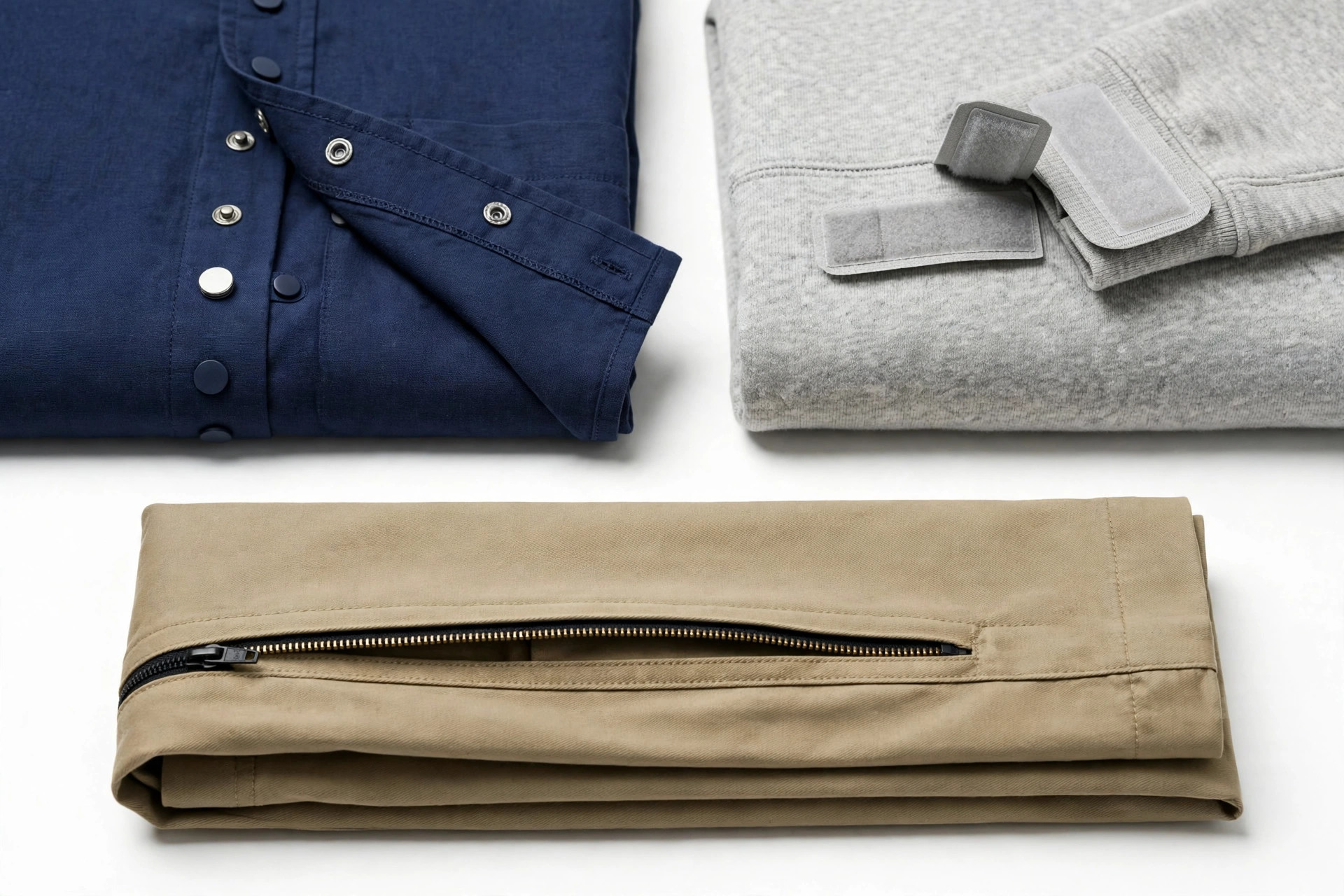
Magnetic closures are the best-known adaptive feature. Small magnets sit behind a decorative button front, align as the two sides meet, and hold with a light press, so a shirt can be closed one-handed and opened with a gentle pull. Check washing instructions, because magnets and tumble drying do not always mix, and note the maker’s guidance if a garment is worn close to a medical device worn on the body.
Hook-and-loop fasteners, often sold under the Velcro name, replace buttons, laces, and small hooks where grip or fingertip control is limited. They adjust across a range rather than at fixed points, which helps when hands vary from day to day. On shoes, straps, and waistbands they are simple and replaceable. Press the two sides together when washing so the hooks do not catch other fabrics or fill with lint.
Openings That Widen the Garment
Side-zip openings let trousers, skirts, and dresses open far wider than a standard fly or waistband. A zip down one or both sides can let a garment be laid flat, stepped into, or put on while seated without pulling it over the feet. Look for zips with a fabric pull tab, a guard behind the teeth, and a top fastening that holds the waist secure once the zip is closed.
Open-back designs overlap generously at the back and fasten at the shoulders or neck. They are made for assisted dressing: the garment is placed from the front without lifting arms overhead or reaching behind. Check that the overlap is deep enough to stay modest when sitting and standing, and that shoulder fasteners are snaps or hook-and-loop rather than ties that can work loose.
Fit Features: Seated Rise and Easy Openings
A seated rise means trousers are cut higher at the back and slightly lower at the front, so the waistband stays in place and the front does not bunch when the wearer is seated. It is the single most useful fit feature for anyone who spends much of the day sitting, and it is explained in use in our wheelchair clothing guide. Elasticated or drawstring waists, wide leg openings, and pull loops inside waistbands are smaller features that make a real difference in a morning routine.
One-handed dressing aids also appear in garment form: long zip pulls, dressing sticks built into gift sets aside, shirts with cuff openings wide enough for a hand to pass through, and trousers with loops that a finger or dressing aid can hook. Judge them by whether they remove a step, not by how clever they look in a listing photograph.
Seams, Labels and Sensory Considerations
Tagless labels, flat or external seams, soft brushed fabrics, and the absence of scratchy trims matter to anyone who finds ordinary clothing irritating against the skin. These are garment details, not treatments: look for smooth seam finishes, printed labels, covered elastic, and fabrics that feel calm rather than clammy. Our sensory-friendly clothing page covers this side of choosing in full.
Put the features together with the main adaptive clothing guide, shop through the adaptive clothing retail directory, and check the adaptive clothing definition for terminology. Families may also find the children’s adaptive clothes guide and children’s adaptive directory useful, and older shoppers should read adaptive clothing for seniors.
Common Questions
Are magnetic closures strong enough for everyday wear?
Yes, for shirts, blouses, and light jackets they hold securely through a normal day and release with a deliberate pull. Follow the maker’s washing guidance, and check product details if the garment will be worn close to a medical device worn on the body.
What is the difference between a seated rise and a regular rise?
A regular rise is cut for standing, while a seated rise is higher at the back and lower at the front so trousers stay comfortable and in place while sitting. The difference is in the pattern, so it cannot be achieved simply by buying a larger standard size.
Do hook-and-loop fasteners wear out?
They gradually lose grip as the hooks collect lint, which is why they should be closed during washing and cleaned occasionally. On many garments the tape can be replaced by a tailor, extending the life of a garment that otherwise still fits well.