Apparel Search Consumer Guides
Dialysis-Friendly Clothing
Tops that open at the arm for access, waistbands that work around a peritoneal catheter, and soft, warm clothing chosen for hours in the chair.
Dialysis runs on a rhythm of several long sessions a week, and clothing is part of the equipment. Each session, the care team needs clear access to one place — usually an arm, sometimes a leg, or the abdomen for peritoneal dialysis — while the rest of you stays warm and comfortable in a reclining chair for hours. Clothes that open where access is needed, and stay out of the way everywhere else, turn a twice- or thrice-weekly routine into a simpler one. This guide covers those garment features: access openings, waistbands, layers and care. It is part of our post-surgery and medical dressing guide.
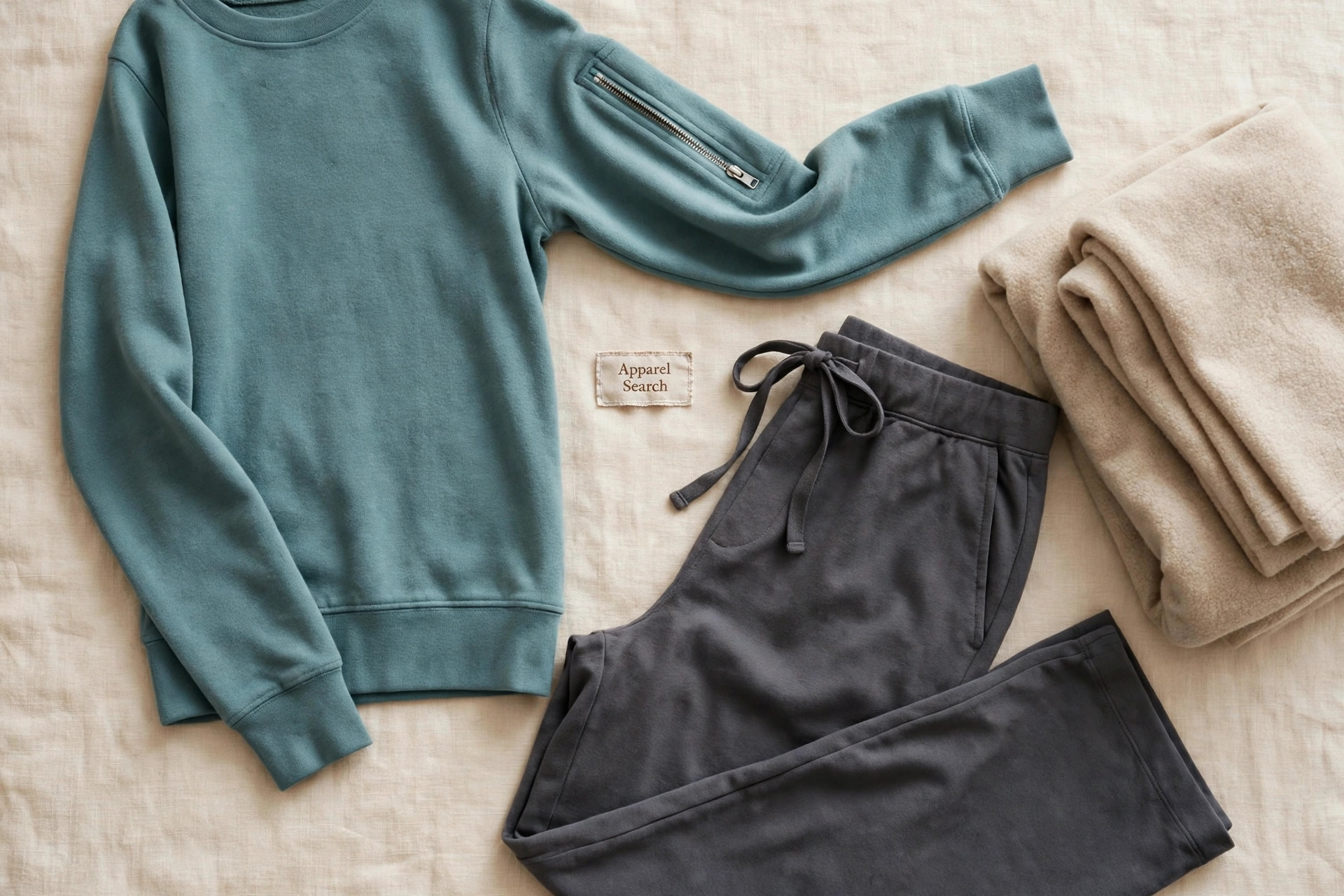
Access Openings for Hemodialysis
For most people on hemodialysis, access is in one arm, and the garment problem is a sleeve problem. A standard sleeve either has to be pushed up and bunched — uncomfortable for hours, and it can press where it gathers — or the top has to come half off. Dialysis tops solve it with a built-in opening: a zip running along the upper arm or over the shoulder, a row of snaps down the sleeve, or a sleeve that opens flat from a shoulder seam. The opening has to genuinely open the sleeve, not merely stretch, and it should sit on the access side — listings for these tops state left or right, so match the listing to your access arm before ordering. In warmer months, short sleeves and wide, loose sleeves do the same job with no hardware at all. Where access is in the leg instead, the equivalent garments are trousers and shorts with side zips or snaps that open the leg, borrowed from the adaptive ranges covered in our adaptive clothing features guide. Construction details to check: a soft facing behind any zip so hardware never rests on skin, flat seams around the opening, and cuffs that are soft and loose rather than elasticated tight anywhere near the access area.
Peritoneal Dialysis: Waistbands, Belts and Catheters
Peritoneal dialysis moves the garment question to the waist. A catheter exits through the abdomen, and where its exit site sits varies from person to person — so the useful waistband is an adjustable one. Drawstring and wide elastic waists can be positioned to ride above or below the site rather than across it, and dresses, tunics and loose tops skip the waistband question entirely. A dedicated category of belts and soft pouches exists to hold the catheter and its tubing neatly against the body under clothing: worn like a wide fabric belt, they keep everything placed and discreet beneath an ordinary top, and they are sized and sold like garments. As with every page in this section, where the exit site is and what may rest near it are your care team's call — the clothing side is offering the adjustability to follow their instructions.
Comfort for Long Sessions
A session lasts several hours, most of them seated or reclined, and dialysis units are kept cool. The wardrobe that works is built like the one in our wheelchair clothing guide — designed around sitting well for a long time:
- Layers that open at the front. A cardigan or zip-front layer over your access top adds warmth without covering the access arm's opening, and comes off one-handed.
- A soft waistband for the recliner. Drawstring or wide elastic waists, and nothing with a stiff front fastening pressing in while you sit.
- Warmth at the edges. Warm socks, and a light throw or lap blanket of your own — many people keep a dedicated one for session days.
- Slip-on shoes. On and off without bending, at the chair and at home.
- Easy-care duplicates. Sessions run several times a week, so dialysis wardrobes are usually built on two or three copies of a proven outfit in easy-wash fabrics, rotated — the same duplicate-buying advice given in our adaptive clothing for seniors guide, where session-day dressing and assisted dressing overlap.
Readers shopping this category often meet its neighbours: the knitted garments in our compression garments guide are stocked by the same specialist makers, and the adaptive clothing retail directory and the senior clothing retail directory list the shops that carry access-opening ranges.
A Garment Guide, Not Medical Advice
This page covers clothing: openings, waistbands, layers and comfort. Anything about your access site, your catheter, or what may rest against either belongs to your dialysis team, and their instructions outrank any product description — including the ones described here.
Shop Dialysis & Access-Opening Clothing on Amazon
Ready to shop? Product links are kept in one place on the Apparel Search shopping guide:
Shop Clothing on AmazonThis link opens the Apparel Search shopping guide for Amazon, where the product links are kept in one place.
Common Questions
What makes a top dialysis-friendly?
An opening that genuinely opens the sleeve on the access side — a zip along the upper arm, snaps down the sleeve, or an opening at the shoulder — with soft facings and flat seams, so the sleeve does not have to be pushed up and bunched for the whole session. Listings state left or right; match it to your access arm.
What should I wear for peritoneal dialysis?
Adjustable waistbands — drawstring or wide elastic — that can sit above or below your catheter’s exit site rather than across it, loose tops and dresses that skip the waistband question, and, if you use one, a soft catheter belt or pouch to hold tubing neatly under clothing.
How do people stay warm during long sessions?
Layers that open at the front over an access top, warm socks, slip-on shoes, and often a personal lap blanket or throw kept for session days. Front openings matter: warmth has to be addable without covering the access opening or standing up mid-session.
How many dialysis outfits do people usually keep?
Because sessions run several times a week, most people settle on a proven outfit and buy it in two or three copies in easy-wash fabrics, rotating them. Checking zips, snaps and facings after washing keeps the access openings working as designed.
Back to the Post-Surgery & Medical Dressing Guide
Front closures, soft seams and step-in styles — plus the mastectomy, ostomy and compression guides.
More to Explore
Search Apparel Search
Please note: Apparel Search is a fashion and clothing guide, not a medical authority. Pages in this section describe clothing features and dressing ideas only. We make no claim that any garment or special product will improve, treat, or help with any medical condition, and descriptions of product features reflect how those products are designed and marketed, not a medical endorsement. Please check with your own doctor or care team about what is right for you.