Apparel Search Consumer Guides
Clothing for Infusion & Port Access
Tops built with zipped and snapped openings over the chest and arms, and the layers that make a long appointment in a reclining chair a comfortable one.
An infusion appointment asks something unusual of a top: it has to open in one specific place — over an implanted port on the upper chest, or along an arm where a line runs — while keeping the rest of you warm, covered and comfortable for hours in a recliner. Ordinary clothes manage it awkwardly, with stretched necklines and sleeves pushed up and held. A small, well-developed category of port-access clothing manages it by design: zips and snaps placed exactly where access is needed, in garments that otherwise look like everyday tops. This guide explains those features at the garment level, and how to dress for the appointment as a whole. It is part of our post-surgery and medical dressing guide.
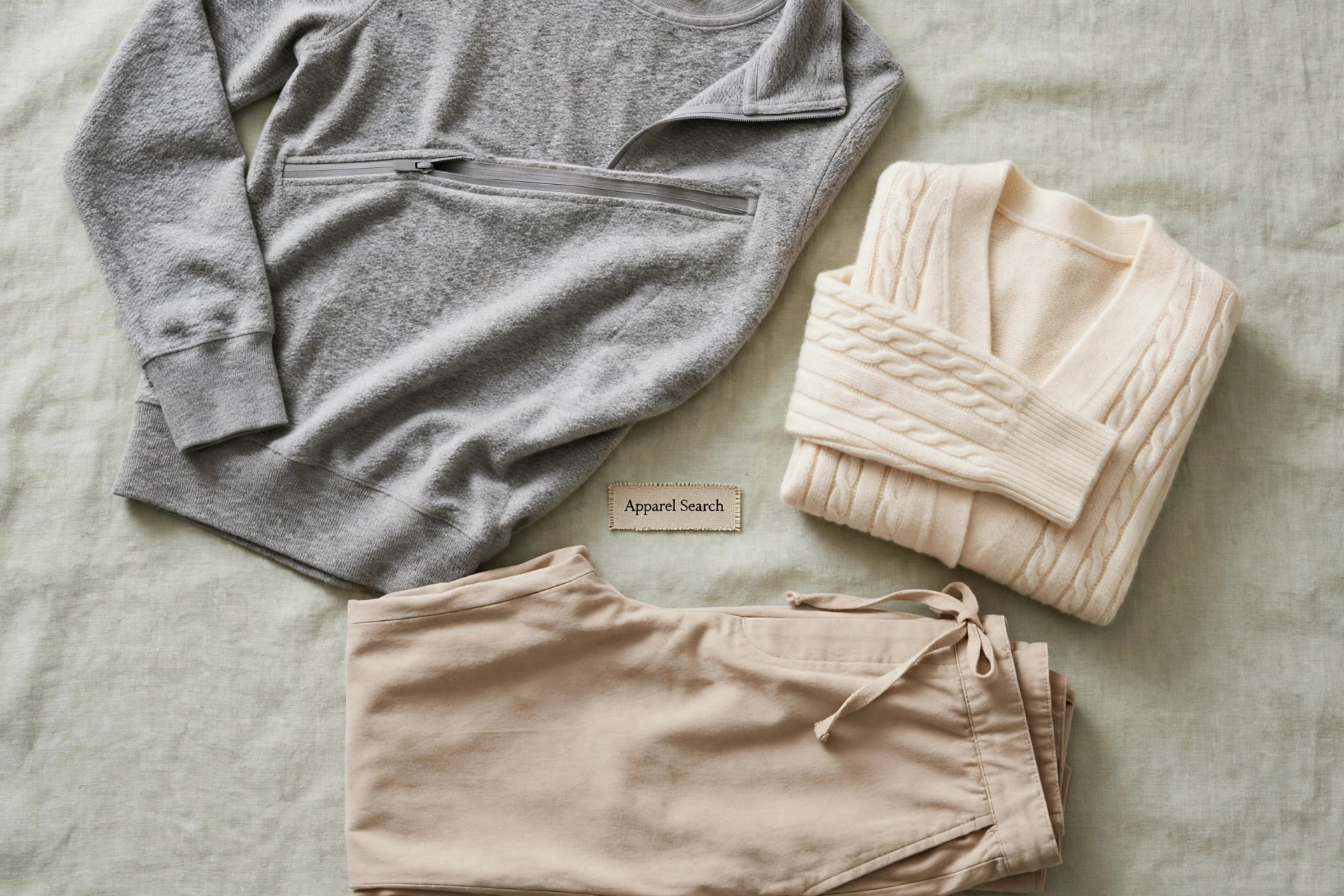
The Port-Access Top: Openings Where They Are Needed
The defining garment of this category is a soft long- or short-sleeved top with a discreet opening over the upper chest, where most ports sit. The openings come in three main constructions. A zip runs across or down from the neckline — often two-way, so it can open from either end and only as far as needed. A snap placket hides a row of press studs under what looks like an ordinary seam or a henley-style button front. And some tops use a double-layer front: an outer panel that lifts or folds aside over an inner layer with its own opening. Listings usually state which side the opening favours, or offer both sides; check that detail against your own port's position before ordering, because a left-sided opening is no use to a right-sided port. Construction details worth checking in photographs: a soft guard or facing behind the zip so no hardware rests against the skin, flat seams around the opening, and enough overlap that the closed top reads as an ordinary top — which, outside the appointment, is exactly what it is.
Arm Access for Lines
Where access is in the arm rather than the chest, the sleeve becomes the working part. Short sleeves and wide three-quarter sleeves are the simple answer. Better are sleeves with their own opening: a zip or a row of snaps running along the upper arm lets the sleeve open flat, and front-opening tops — cardigans, shirts and zip-front layers — let one sleeve come off entirely without anything passing over the head or disturbing a line. Our adaptive clothing features guide explains the full vocabulary of openings and closures these garments borrow from; the same features reappear across this whole section of the site.
Dressing for a Long Session
Infusion sessions are measured in hours, much of them spent seated in one chair, and appointment rooms are famously cool. Dressing well for one is mostly about layers and waistbands.
- The access layer goes on first. Your port-access or easy-sleeve top is the base; everything else must open around it, so outer layers fasten at the front rather than pulling over the head.
- Bring a warm front-opening layer. A cardigan, zip-front fleece or soft shawl you can add or shed one-handed, without standing and without disturbing anything.
- Choose a waistband for a recliner. Drawstring or wide elastic waists, nothing that digs in when seated for hours; the same advice runs through our adaptive clothing guide's seated-dressing coverage.
- Slip-on shoes and warm socks. Feet rest up for much of a session; shoes that need no bending or laces make the whole day simpler.
- Pockets where you can reach them. A top or layer with a pocket keeps a phone and small essentials on you rather than in a bag across the room.
What Ordinary Clothes Already Do Well
Specialist tops earn their place on access days, but the rest of the wardrobe is ordinary. Button-front shirts open exactly where a port-access top does, just less discreetly; deep-neck and wrap tops fold aside; and the design idea itself is older than the category — tops with discreet access openings have been made for years for nursing mothers, and our nursing and postpartum clothing guide explains that overlapping-panel construction in detail. At the clinic, what is provided is usually a gown — the garment defined in our hospital gown definition — and the clothes guides cover the versions sold for home and clinic wear in the women's patient gowns guide and the men's patient gowns guide. Many people prefer their own access top to a gown where the clinic allows it, which is a question for the clinic, not the wardrobe.
The wardrobe overlap runs the other way, too: ports are commonly part of the same stretch of life as the garments in our mastectomy clothing guide, whose front closures and soft construction serve both purposes, and readers dressing for appointments often shop both guides together.
A Garment Guide, Not Medical Advice
This page covers clothing: openings, closures, layers and comfort. Anything about your port, your line, or what may touch either of them belongs to your infusion team, and their instructions outrank any product description — including the ones described here.
Shop Port-Access & Infusion Clothing on Amazon
Ready to shop? Product links are kept in one place on the Apparel Search shopping guide:
Shop Clothing on AmazonThis link opens the Apparel Search shopping guide for Amazon, where the product links are kept in one place.
Common Questions
What is a port-access top?
A soft top with a planned opening — a zip, a snap placket or a lift-aside panel — over the upper chest, positioned so a port can be reached without removing the top or stretching its neckline. Listings state which side the opening favours, or offer both, so check that detail against your own port’s position.
What should I wear to an infusion appointment?
Your access top as the base, a warm front-opening layer over it, a soft drawstring or elastic waistband for hours in a recliner, warm socks and slip-on shoes. Layers should fasten at the front so nothing has to pass over your head or a line.
Can I wear my own clothes instead of a gown?
Many clinics are content for patients to wear their own access top during a session, and some prefer a gown — it is each clinic’s call, so ask yours before relying on a specialist top. Patient gowns made for home and clinic wear are covered in our patient gowns guides.
Are port-access tops only for appointment days?
No. The openings are discreet — a zip that reads as a seam, snaps hidden under a placket — so the tops wear as ordinary tops the rest of the week, which is how most people use them: one garment doing two jobs.
Back to the Post-Surgery & Medical Dressing Guide
Front closures, soft seams and step-in styles — plus the mastectomy, ostomy and compression guides.
More to Explore
Search Apparel Search
Please note: Apparel Search is a fashion and clothing guide, not a medical authority. Pages in this section describe clothing features and dressing ideas only. We make no claim that any garment or special product will improve, treat, or help with any medical condition, and descriptions of product features reflect how those products are designed and marketed, not a medical endorsement. Please check with your own doctor or care team about what is right for you.