Women's Patient Gowns Guide
Patient gowns are designed around care, not fashion: openings where clinicians need them, closures that work from a bed, and — in the best modern designs — far more coverage than the old open-back stereotype.
Shop Women's Patient Gowns Now
Shop Women's Patient Gowns on Amazon Shop Women's Patient Gowns on eBayThe Amazon and eBay links on this page are affiliate links. If you make a purchase through them, Apparel Search may earn a commission.
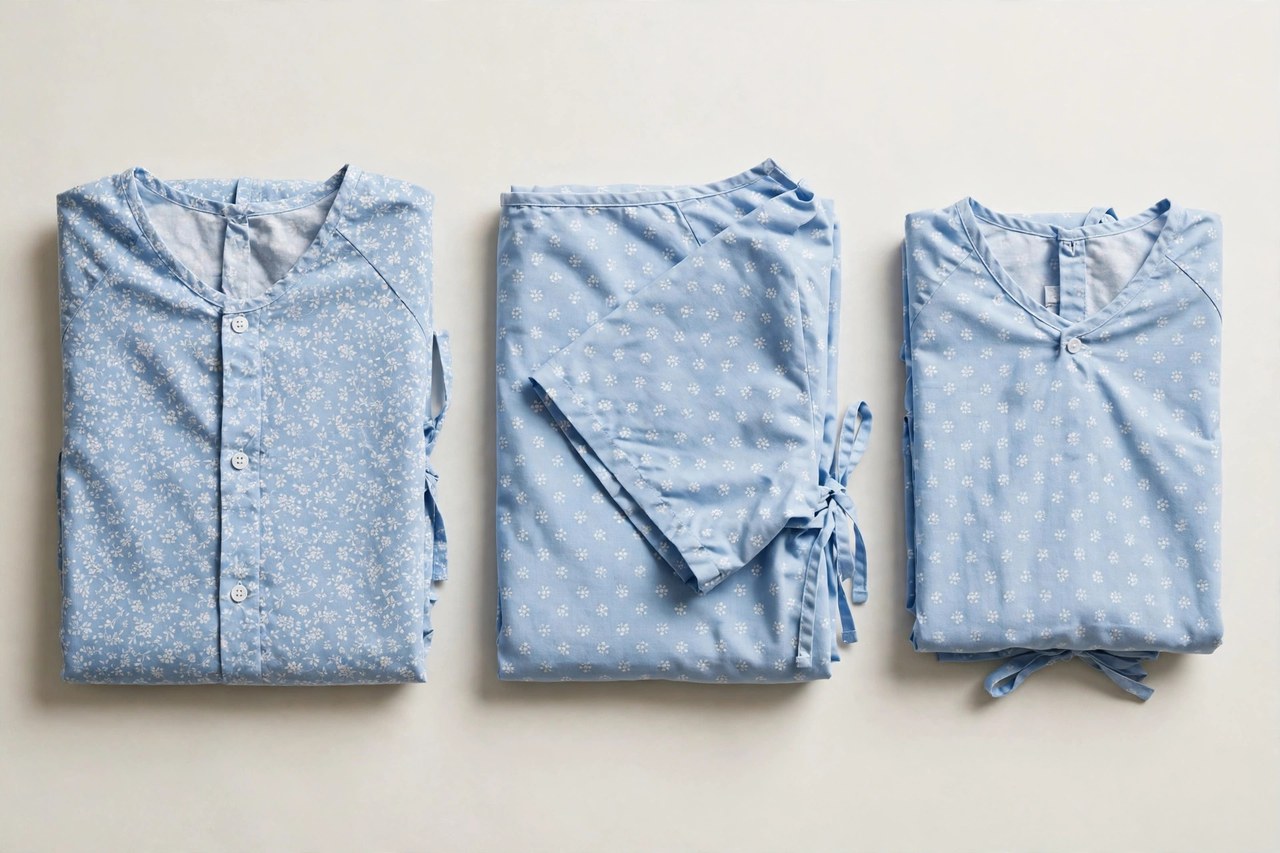
A patient gown (or hospital gown) is a loose, knee-length garment worn by patients in hospitals, clinics and care settings, designed so that medical staff can examine and treat the wearer without fully undressing them. It is one of the most purely functional garments made: every feature — the opening back, the ties, the short wide sleeves — exists because a clinician, a monitor lead or an IV line needs it there. Understanding those reasons makes choosing a gown, whether for a hospital stay or for care at home, much easier.
The category has also changed. The drafty, one-size, open-back gown is still common in hospitals, but modesty-focused redesigns, overlapping backs, snap closures and softer printed fabrics are now widely available for purchase, and many women bring their own gown for planned stays, procedures and recovery at home. This guide explains the standard design, the closure and access options, fabrics and sizing, and how patient gowns are used and laundered in home-care settings.
Design and Closures: Back Openings, Ties and Snaps
The classic hospital gown opens down the back, fastening at the neck and waist with ties. The open back gives immediate access for examinations, monitoring leads, injections and back treatment, and lets the gown be put on or removed around IV lines and immobile limbs. Ties are cheap and infinitely adjustable, but they come undone, tangle in laundering and leave gaps — the source of the gown's reputation. Snap closures, usually metal or plastic snaps along the back or shoulders, stay closed more reliably and are the standard upgrade in modern designs.
Modesty designs address the gap problem directly: overlapping back panels that cross well past center, longer lengths, and wrap-style fronts that tie at the side like a robe. Other access features include shoulder snaps that open the sleeve for blood-pressure cuffs, IV access and breastfeeding, telemetry pockets on the chest for heart-monitor units, and front snap panels for examinations. When buying your own gown, prioritize in this order: coverage you are comfortable in, closures you can manage with limited mobility, and openings matched to the procedure you expect.
Fabrics, Sizing and Comfort
Institutional gowns are usually a cotton-polyester blend chosen for brutal commercial laundering at high temperatures. Gowns sold for personal use offer better options: cotton and cotton flannel for softness and warmth, cotton jersey knit for stretch and a less clinical feel, and lightweight woven prints that read more like a nightdress than equipment. Whatever the fabric, it should be breathable, non-irritating against sensitive or healing skin, and free of rough seams, tags or elastic that presses on incision sites.
Sizing in patient gowns is generous by design, because the garment must fit over bandaging, allow staff to work, and accommodate sitting, standing and lying positions. Standard gowns are often one-size or S/M and L/XL; bariatric sizes extend the range. A correct fit reaches at least the knee, overlaps fully at the back when standing and walking, and has sleeves short and wide enough for cuffs and lines. If you are buying for a planned stay, try the gown on at home, practice its ties or snaps one-handed, and check coverage in a mirror while bending and sitting — the positions hospital life actually involves.
Home-Care and Recovery Use
Outside hospitals, patient gowns serve home-care, hospice, post-surgical recovery, maternity and limited-mobility dressing. After shoulder, abdominal or hip surgery, a front- or shoulder-opening gown can be put on without raising the arms or bending, which may be the difference between dressing independently and needing help. For home nursing, back-opening gowns simplify personal care and changing. Maternity versions adapt the same snap-shoulder design for delivery and nursing access, and are often sold in prettier fabrics intended to be kept as nightwear afterward.
For home use, buy at least two or three gowns so one is always clean, and consider the caregiver's needs as well as the wearer's: closures at the back suit a helper, side ties and front snaps suit self-dressing. Pair the gown with a lightweight robe for walking to the bathroom or receiving visitors, non-slip socks, and front-closing underlayers as recovery progresses.
Laundering and Buying Tips
Patient gowns must wash well and often. Choose fabrics rated for warm or hot washing if infection control matters, remove or secure ties before laundering so they do not knot or tear, and close snaps to protect both the gown and the machine. Cotton-rich gowns soften with washing; prints hide the staining that medical life involves better than white. Inspect closures regularly — a gown whose ties have torn off is a coverage failure waiting to happen, and replacement gowns are inexpensive compared to the discomfort.
To buy, start from the setting: hospitals supply their own, but most allow personal gowns for many stays if you ask; clinics and imaging centers may require their own for access reasons. For home recovery, buy before the procedure, wash the gowns first, and pack one for the hospital if permitted. Look for flat, soft seams, generous overlap, sturdy ties long enough to bow at the side, and honest fabric content. The best patient gown is the one the wearer forgets she is wearing — comfortable, covered and quietly doing its job.
Related Women's Guides
Looking for Women's Clothing Stores?
This guide helps you choose women's patient gowns. To browse where to buy, visit our women's clothing store directory, where you can find retailers that carry them.