Women's Scrubs Guide
Scrubs are the sanitary clothing of patient care — born in the operating room for 'scrubbing in', now the working uniform of hospitals, clinics and veterinary offices.
Shop Women's Scrubs Now
Shop Women's Scrubs on Amazon Shop Women's Scrubs on eBayThe Amazon and eBay links on this page are affiliate links. If you make a purchase through them, Apparel Search may earn a commission.
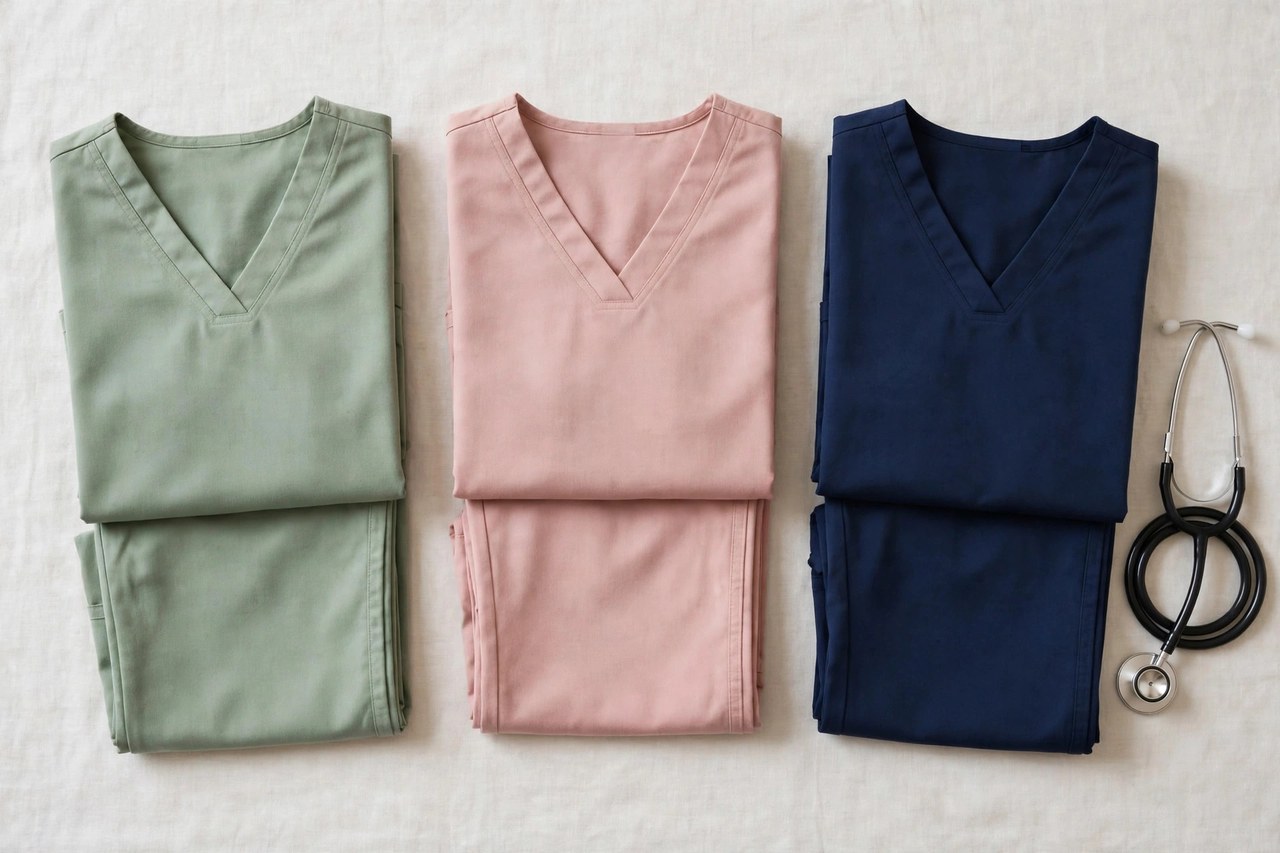
Scrubs are the sanitary clothing worn by surgeons, nurses, physicians and other workers involved in patient care in hospitals. Originally designed for surgeons and other operating room personnel, who would put them on when sterilizing themselves — 'scrubbing in' — before surgery, they are now worn by many hospital personnel. Nearly all patient care personnel at hospitals in the United States wear some form of scrubs on duty, as do staff in doctor, dental and veterinary offices.
Hygiene is the point of the garment. Scrubs are designed to promote a clean environment, can be disposable or must be washed very carefully, and in many operating rooms it is forbidden to wear any exposed clothing, such as a t-shirt, beneath them, because outside clothing is thought to introduce unwanted pathogens. This guide covers the types, colors, women's fits and workplace rules that decide what you may actually wear on shift.
Surgical vs Non-Surgical Scrubs, and Ownership
Women's surgical scrubs are not generally owned by the wearer. Due to concerns about home laundering and sterility, surgical scrubs are usually hospital-owned or hospital-leased through a commercial linen service, and disposable scrub suits were introduced for the same laundering and sterility limitations. Non-surgical scrubs, by contrast, are commonly bought by the wearer from uniform retailers, which is where choice of cut, fabric and color — within your employer's rules — actually lives.
Scrubs worn in surgery are almost always solid light grey, light green, light blue, or a light green-blue shade. Non-surgical scrubs come in a wider variety of colors and patterns, from official issue garments to custom-made pieces, whether by commercial uniform companies or by home sewing using commercially available printed patterns. The color itself often carries information — department, role or seniority — so treat your facility's color chart as part of the uniform, not as a suggestion.
Prints, Styles and Women's Cuts
Custom-made printed scrub tops, featuring cartoon characters and cheerful prints, are common in pediatricians' offices, veterinary offices, dental clinics and children's hospitals, and prints for various holidays appear throughout the year. Some acute care facilities and larger hospitals have relaxed rules on non-regulation scrubs in non-surgical units, and scrubs are no longer just the classic V-neck top: they are now offered in many styles and patterns, including mock-wrap, empire-waist and knit-panel tops.
Scrubs are typically unisex, but you can also find scrubs designed specifically to better fit a woman's body, with shaped waists, shorter rises and petite and tall lengths. Judge fit by movement: raise your arms, bend, and check that the top does not pull across the back and the drawstring or elastic waist stays placed through a simulated shift. Pockets are working equipment — count them, test them with your actual tools, and prefer reinforced corners, because scrub pockets carry more weight, more often, than any other garment's.
Fabrics, Dress Codes and Buying
Classic scrubs are cotton or cotton-polyester; modern performance scrubs add stretch and moisture management, and some carry antimicrobial finishes. Cotton-rich fabrics feel soft and breathe but wrinkle and fade; polyester-rich fabrics hold color, resist fluids better and dry faster, which matters when a set must be washed after every shift. Most wearers own enough sets to rotate through a full work stretch plus laundry delay, so buy for the rotation, not for a single perfect set, and keep every set to the same compliant specification.
Dress codes vary by healthcare office, hospital and location, and general guidelines are not set in stone: consult your employer regarding the appropriate dress code before buying, especially about colors, prints, embroidery, underscrubs and whether surgical areas require facility-laundered sets only. Buy one compliant set first, wear it through real shifts, then complete the rotation in the same style if it performed. A scrub set is judged at hour ten, not in the fitting room, and buying in that order respects the fact.
Laundering and Care
Home-laundered scrubs should be washed after every wear, separately from household laundry where practical, in the hottest water the fabric label allows, and dried thoroughly. Inspect for fluid stains and treat them before washing, check pockets before the set goes in — a pen or badge reel through a hot wash can end a set's service — and retire sets whose fabric has thinned, whose color has faded past your facility's standard, or whose waist closures no longer hold securely through a shift.
Keep work scrubs stored separately from everyday clothing, transport them in a dedicated bag, and follow any stricter facility laundering policy over this general guidance whenever the two differ. Scrubs began as a sterility measure, and their care is still part of patient care, not merely laundry. A clean, intact, correctly colored set signals the same thing the garment was invented to signal in the operating room: that the person wearing it takes the environment, and everyone in it, seriously.
Related Women's Guides
Photos

Looking for Women's Clothing Stores?
This guide helps you choose women's scrubs. To browse where to buy, visit our women's clothing store directory, where you can find retailers that carry them.