Women's Surgical Clothing Guide
Surgical clothing is the full working attire of the operating room and clinic — scrubs, gowns, caps and protective layers chosen for hygiene first and everything else second.
Shop Women's Surgical Clothing Now
Shop Women's Surgical Clothing on Amazon Shop Women's Surgical Clothing on eBayThe Amazon and eBay links on this page are affiliate links. If you make a purchase through them, Apparel Search may earn a commission.
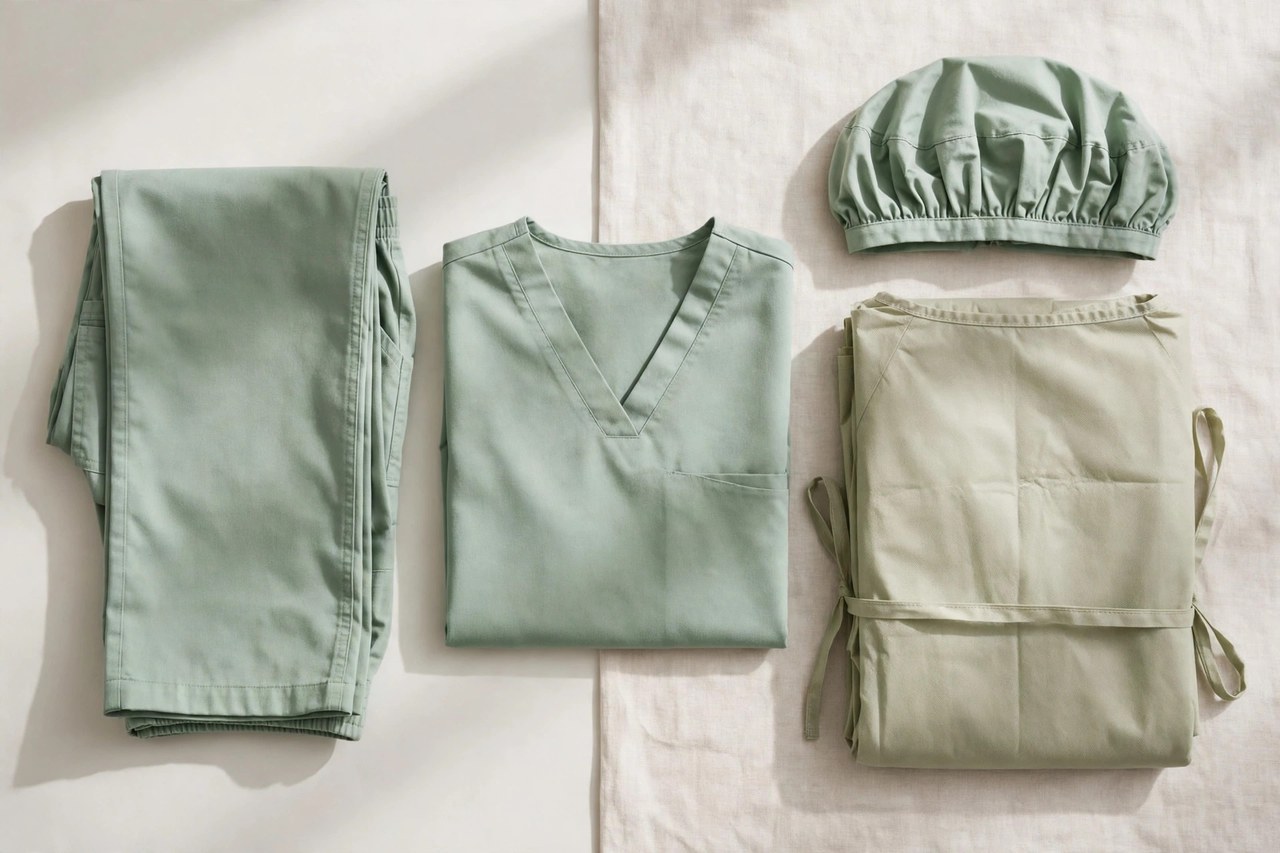
Surgical clothing is the complete attire system worn for surgery and clinical care: scrubs as the base, surgical caps covering the hair, sterile gowns and gloves for the operative field, and protective extras such as masks, eye protection, shoe covers and lead aprons as the task demands. Where the surgical caps page covers one item of headwear, this guide covers the wardrobe as a whole — because in a clinical setting no garment is chosen alone. Each piece interacts with hygiene rules, laundry systems and the pieces worn over or under it.
Unlike almost every other category here, surgical clothing is usually issued, specified or restricted by a facility: colors by role, laundry by the hospital, and strict rules about where each item may be worn. The sections below walk the layers from skin outward, explain the sterile-versus-clean distinction that organizes everything, and cover fit and fabric within the room the rules leave you.
The Layers: Scrubs, Gowns, Caps and Covers
The base layer is the scrub set — a V-neck or crew top with drawstring or elastic-waist trousers — worn by nearly everyone in surgical and procedural areas, changed fresh for each shift and often for each contamination event. Scrubs are working clothes, not sterile garments: their job is to be clean, replaceable and identical enough that a soiled set can be swapped without ceremony. Pockets and badge loops are their small engineering, and many facilities color-code scrubs by department.
Over scrubs, the sterile team adds a sterile surgical gown — disposable nonwoven or reusable woven, fluid-resistant at the front and sleeves — put on with assistance immediately before a procedure, with sterile gloves over the gown cuffs. Caps and masks complete the core set before anyone enters the room, and the periphery adds its own pieces: shoe covers or dedicated theater shoes, protective eyewear, fluid-resistant aprons for high-splash cases, and lead aprons with thyroid collars where imaging is used. Each layer answers a specific route by which contamination or exposure could travel.
Sterile, Clean and Restricted: The Organizing Rules
Three words govern surgical clothing. Sterile items — gowns and gloves — are processed to be free of microorganisms and handled under strict protocol. Clean items — scrubs, caps, masks — are laundered or fresh, but not sterile; they reduce shedding and splashes without claiming a sterile field. Restricted describes the zones themselves: operating suites are restricted areas where full attire is mandatory, and the clothing rules tighten as you move toward the table.
Those rules explain the customs outsiders find curious. Facility-laundered scrubs may not be worn in from the street or home again; caps and masks are changed between cases; jewelry, nail polish and uncovered hair are regulated because each is a shedding or contamination route. Surgical clothing also overlaps with PPE — gowns, gloves, masks and eye protection protect the wearer from blood and fluid exposure while protecting the patient from the team. A garment in this category is always doing both jobs, which is why appearance preferences rank last in every decision it involves.
Fabrics and Laundering
Surgical fabrics are engineered for barrier and endurance. Disposable gowns and drapes use spunbond and meltblown nonwovens that resist fluid strike-through while staying light. Reusable gowns and scrubs use tightly woven polyester or polyester-cotton blends that survive industrial laundering — high temperatures, strong detergents and repeated cycles that would destroy ordinary clothing. Scrub fabrics increasingly add stretch and moisture management, legitimately improving comfort across twelve-hour shifts, but barrier performance and laundry survival still outrank softness in specification.
Laundering is part of the garment's design, not an afterthought. Facility laundry controls temperature and chemistry to a validated standard, which is why many hospitals prohibit home laundering of surgical attire: a domestic wash cannot be verified, and a contaminated set in a family wash is a genuine hazard. Where home laundering of scrubs is permitted, the disciplined routine is a separate hot wash, complete drying, and clean storage, with visibly soiled items handled under facility guidance. When a label promises surgical use, check that it names the standard it meets.
Fit Within the Rules
Your choices inside the system are real, if narrower than fashion. Scrub fit has modernized: alongside the classic unisex boxy set there are women's cuts with a shaped waist, different rises, jogger-style scrub trousers and maternity scrubs, all within the same facility colors. Fit matters clinically, not just aesthetically — sleeves that stay out of the field, trousers that neither drag nor bind through a shift of bending and reaching, and tops that stay tucked or cover when you lean. If your facility issues unisex sets, sizing up or down a component is usually permitted and worth asking about.
Personal layers need the same discipline. Underscrub tees are allowed in many facilities if they are fully covered and laundered like scrubs; head coverings worn for religious or medical reasons are accommodated through facility-approved covers that meet the same containment standard as caps. Footwear is dedicated, closed and fluid-resistant. The through-line of this whole category is that every garment decision is a hygiene decision first. Learn your facility's dress code as carefully as any product specification, and choose the best-fitting compliant option at every layer.
Related Women's Guides
More to Explore on Apparel Search
Women’s Clothes Guide by Letter: A · B · C · D · E · F · G · H · I · J · K · L · M · N · O · P · Q · R · T · U · V · W · X · Y · Z
Looking for Women's Clothing Stores?
This guide helps you choose women's surgical clothing. To browse where to buy, visit our women's clothing store directory, where you can find retailers that carry them.