Women's Clothes Guide K
Every women's clothing topic that starts with K: one great Japanese garment in four forms, a whole wardrobe built from loops of yarn, and two everyday staples.
Shop Women's Clothing Now
Shop Women's Clothing on Amazon Shop Women's Clothing on eBayThe Amazon and eBay links on this page are affiliate links. If you make a purchase through them, Apparel Search may earn a commission.
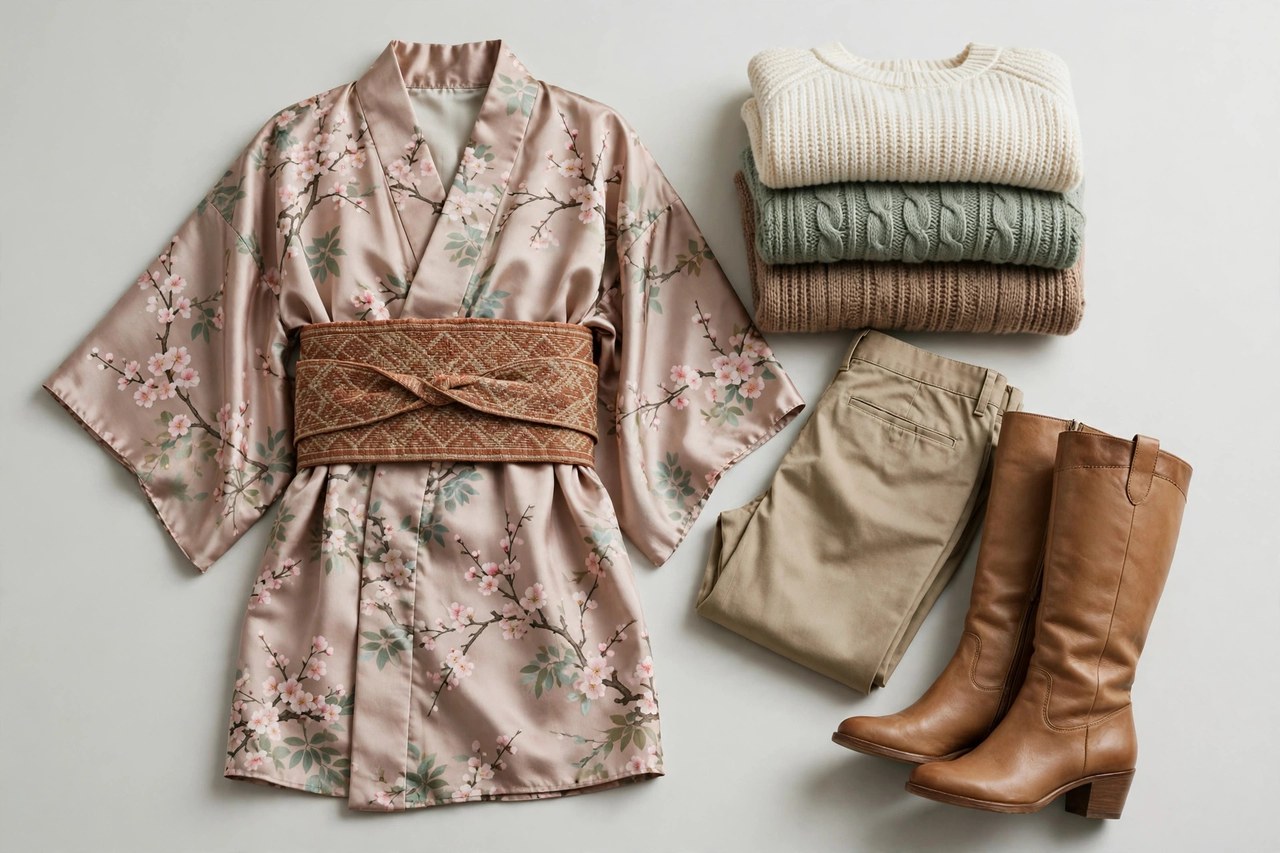
Welcome to the K section of the Women's Clothes Guide. This page lists every women's clothing, footwear and accessories topic in the guide that starts with the letter K — sixteen guides, organized into the groups below. K is an unusually tidy letter: almost everything in it belongs to one of two families, and the two topics that stand alone are among the most useful in the whole wardrobe.
The first family is the kimono: Japan's formal robe, and the Western garments it inspired — the kimono dress, the kimono robe, and the wide-sleeved kimono cardigan. The second and larger family is knitwear: everything built from intermeshed loops of yarn, from the umbrella knitwear guide down to knit hats and handbags. Beyond the families stand khaki pants, the cotton-twill staple, and knee high boots, the tallest everyday boot in the guide. If you know other women's apparel categories beginning with K that should be listed here, we would be glad to hear the suggestion.
Two Families and Two Staples
Start with the kimono group if you are dressing up or winding down. The kimono guide covers the genuine garment — its construction, its obi sash, its ceremonies — while the kimono dress and kimono robe cover the two directions Western fashion took it: out to dinner, and home to the sofa. The kimono-sleeve cardigan is the loosest borrowing of all, a draped layer that keeps only the wide sleeve and the wrap spirit.
The knitwear group is a wardrobe within the wardrobe. Knitwear itself explains how knits are made — stitches, gauges, fibers — and each garment guide beneath it (dresses, pants, shirts, skirts, sweaters, tops, pajamas, hats, handbags) applies that construction to one piece of clothing. And when neither family is what you need, the khakis and the knee high boots are waiting at the foot of the page — which is, not coincidentally, where both of them end up in most outfits too.
Handle With Care: Silk, Wool and Cotton Twill
The K letter also teaches a small lesson in garment care, because its families sit at opposite ends of the delicacy scale. At one end is the kimono: silk, structured, stored flat or hung on its own wide hanger, and cleaned rarely and gently — a garment designed to be kept for decades and handed down. Its Western descendants are less ceremonial but keep the habit: a silk kimono robe wants a padded hanger and a shake rather than a wash after every wear.
Knitwear asks for a different kindness. Knits stretch, so they are folded rather than hung; they pill, so they are turned inside out and rested between wears; and wool knits want cedar or lavender against moths. Khaki pants and leather knee high boots, the two staples, are the forgiving end of the letter — machine-wash cotton twill and brush-and-condition leather — which is part of why both have stayed in the wardrobe while fussier garments around them came and went.
The Kimono Family
Four guides, one ancestor: the traditional Japanese kimono, the dress and robe it inspired in the West, and the cardigan that borrowed its sleeve.
Knitwear & Knit Garments
Everything made of loops: start with the knitwear umbrella guide for construction, gauge and care, then go garment by garment — including the knit hats and handbags in their own corner of the guide.
More Women's K Topics
The two K topics that belong to no family: the cotton-twill trouser staple and the boot that rises to the knee.
Looking for Women's Clothing Stores?
This guide helps you choose women's clothing in the K section. To browse where to buy, visit our women's clothing store directory, where you can find retailers that carry them.