Women's Knee High Boots Guide
Boots that rise to the knee and carry an outfit with them: how the shaft should fit your calf, which heel does what, and why the just-below-the-knee height keeps coming back.
Shop Women's Knee High Boots Now
Shop Women's Knee High Boots on Amazon Shop Women's Knee High Boots on eBayThe Amazon and eBay links on this page are affiliate links. If you make a purchase through them, Apparel Search may earn a commission.
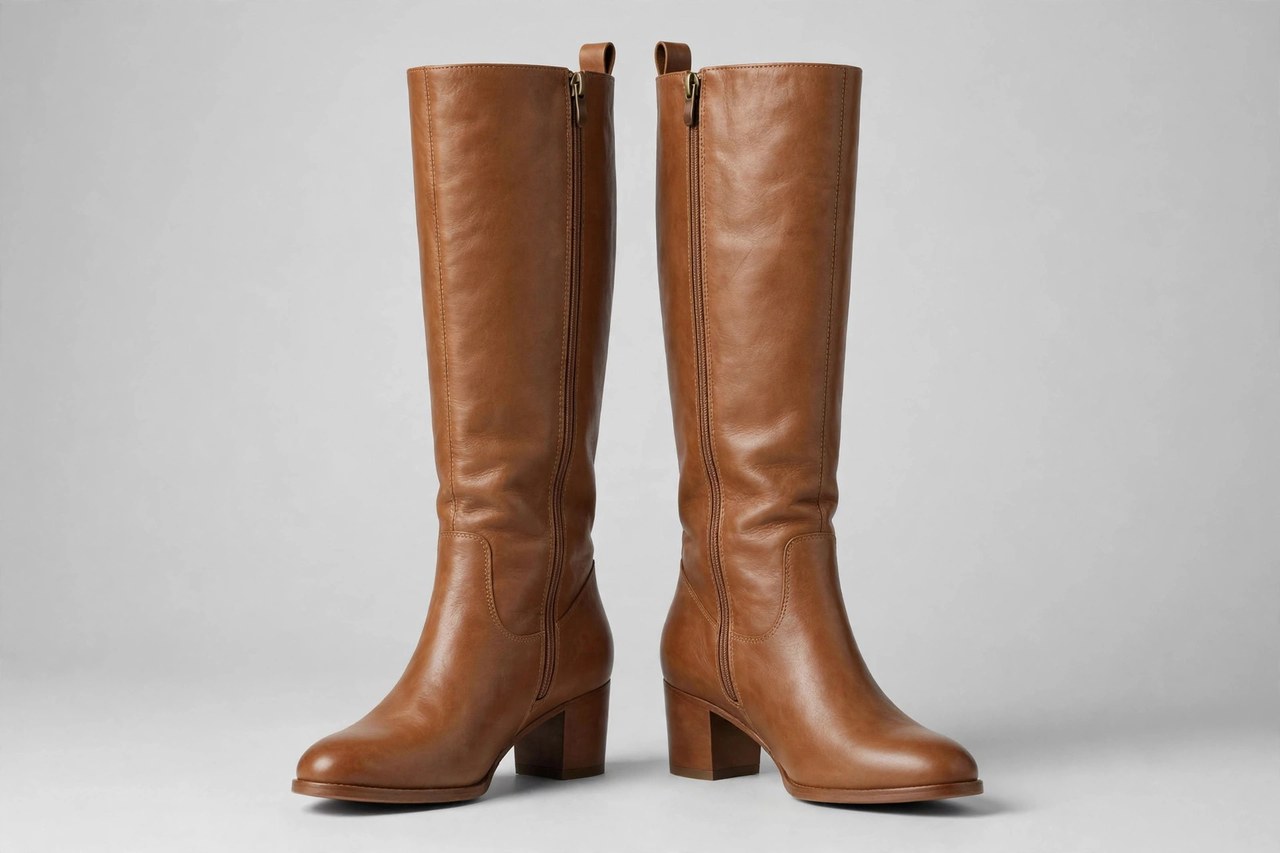
A knee high boot is defined by its shaft: a boot that rises to the knee — or just below it, or just over it. That height is the whole identity. It covers the calf completely, changes the proportions of everything worn with it, and turns footwear into the largest single element of an outfit. The shaft is typically tighter at the ankle than at the top, shaped to follow the calf's curve rather than standing as a straight tube around the leg.
The style has two histories running in parallel. As fashion boots, knee highs have been a women's wardrobe fixture since at least the 1950s, cycling through every heel and toe shape each decade since. As working boots, the same height serves utilitarian uses — riding, where the shaft protects the leg against the saddle and stirrup leather, and fishing and wading, where height is simply waterproofing. Most pairs sold today are fashion boots borrowing the working boot's clean, functional lines.
Measuring Shaft and Calf Fit
Knee highs fit two bodies at once: the foot and the calf. Measure your calf at its widest point, over the tights or jeans you plan to wear inside, and compare it with the boot's shaft circumference — a good fit leaves roughly a finger's width of ease, no more. Too tight and the top digs and the zip strains; too loose and the shaft slouches to the ankle within the hour. Shaft height matters equally: measure from the floor to the back of your knee and match it to the boot's stated height.
Within that height, placement is style. A shaft ending just below the knee is considered particularly stylish — it gives the full long line of the boot without cutting across the kneecap or fighting the bend of the leg when you sit. Over-the-knee shafts extend the line further and pair best with shorter hems. Stretch panels, rear elastic gores and full-length zips are the engineering that makes a close shaft wearable; a pull-on shaft with none of them needs a calf comfortably smaller than its measurement.
Heels and Materials
Heel choice sets the boot's character. Flat riding boots — low, practical heels, plain shafts, equestrian hardware — are the everyday workhorses, walkable for miles and classic with jeans and dresses alike. Block heels add height with stability and suit long days and winter pavements. Stiletto knee highs are evening boots, sharpening everything they touch, while wedge heels split the difference, lifting the leg line inside a single, sturdy, leg-lengthening silhouette.
Materials follow the same practical-to-dressy ladder. Smooth leather is durable, polishable and the most formal of the everyday options; suede is softer in look and line but fears rain; stretch microfiber and elasticated leather backs solve calf-fit problems elegantly and keep shafts upright. Lining decides the season — unlined and fabric-lined boots for autumn and spring, shearling and thermal linings when the boots are doing winter work. Whatever the material, a slim ankle inside the shaft is what keeps the boot shapely. Whatever the heel, walk the shop floor in both boots before deciding; shaft fit reveals itself in motion, not in the mirror.
Styling: Skirts, Dresses and Over Jeans
The classic styling is a gap of leg: boot top below the knee, hem of a skirt or dress above it, with tights or bare legs in the space between. It works with A-line, straight and sweater dresses, and the proportions hold as long as the gap stays deliberate. The modern alternative removes the gap entirely — a midi skirt or dress overlapping the boot top — which reads sleeker and warmer, and suits suede and block-heeled pairs especially well.
Over jeans and trousers, the rule is slim below the knee: skinny and straight jeans tuck cleanly into the shaft, while bootcut and wide legs belong over the boot, not inside it. Khaki pants and knit dresses both take knee highs happily, which is why the guides below sit together. Store the boots standing, with shapers or rolled magazines in the shafts, cleaned and out of direct light — a knee high boot's whole value is in that upright line, and it keeps it only if you store it that way.
Related Women's Guides
Photos

Looking for Women's Clothing Stores?
This guide helps you choose women's knee high boots. To browse where to buy, visit our women's clothing store directory, where you can find retailers that carry them.