Women's Khaki Pants Guide
Dust-colored cotton twill trousers with a military past and a civilian present: the chino-style pant that goes from office to weekend without changing anything but its company.
Shop Women's Khaki Pants Now
Shop Women's Khaki Pants on Amazon Shop Women's Khaki Pants on eBayThe Amazon and eBay links on this page are affiliate links. If you make a purchase through them, Apparel Search may earn a commission.
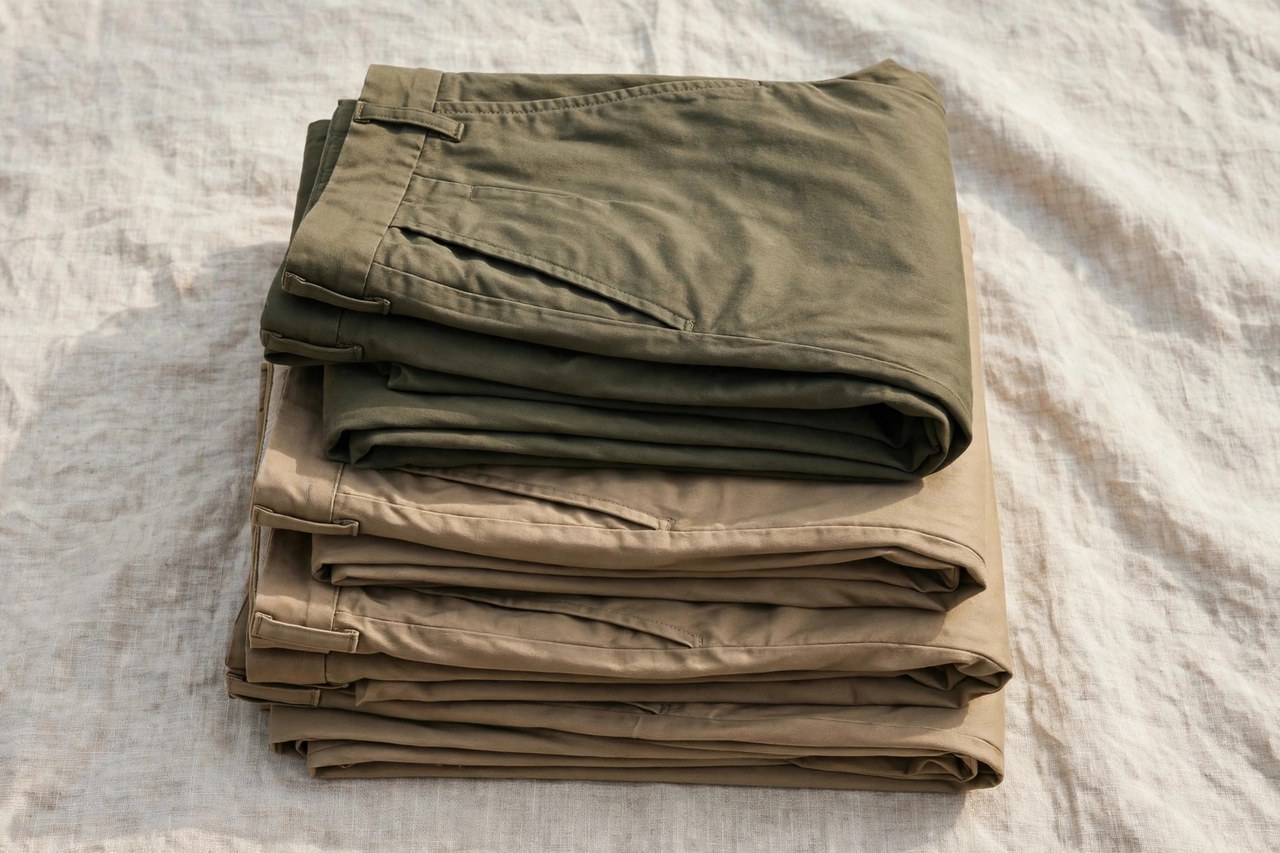
Khaki is a color before it is a pant: a dusty tan somewhere between beige and olive-brown, named for dust itself. The word comes from the Urdu khak, meaning dust, and the cloth earned its name in British India in the mid-19th century, when soldiers in white summer uniforms dyed or mud-toned their trousers to the color of the local earth for camouflage and practicality. The dust-colored uniform spread through the British Army and then the world's militaries — and never really left civilian wardrobes afterward.
The pant that carries the name is usually a chino in construction: plain cotton twill trousers with a flat front or soft pleats, slanted side pockets and a clean, unadorned leg. Khaki pants in the strict sense are chinos in the khaki color, though shops use the words loosely and sell “khakis” in stone, olive, navy and black as well. This guide covers the classic tan pant and its immediate family: the fits, the fabric and the styling range that makes it a staple.
Cotton Twill and Chino Construction
The fabric is cotton twill, woven with the fine diagonal rib that makes twill hard-wearing, resistant to showing dirt and softer with every wash. Classic chino cloth is a firm, smooth-faced twill with a little structure; modern versions add one or two percent elastane for ease through the seat and knee, or use peached and garment-washed finishes that arrive feeling broken-in. Heavier twills hold a crease and read dressier; lighter ones drape and suit summer.
Construction details stay deliberately plain, which is the style's versatility: a zip fly, belt loops, slash front pockets that lie flat, and welt or buttoned back pockets. Nothing about a khaki pant announces itself, so quality shows in the cloth weight, even stitching and a waistband that sits without gaping. Flat fronts suit most wearers and modern styling; a single soft pleat adds room through the hip and a slightly more traditional, tailored character.
Fits: Straight, Slim, Relaxed and Cropped
Straight khakis hold one easy width from thigh to hem and are the timeless default — the fit most likely to be in your wardrobe in ten years. Slim fits taper closer through the leg for a sharper line with blouses and loafers, while relaxed and tapered fits give room at the thigh and narrow at the ankle, the most forgiving shape for long days. Rise follows the same pattern as elsewhere: high-rise lengthens the leg and keeps shirts tucked; mid-rise is the easy middle ground.
Cropped khakis — ankle-length, sometimes with a wider leg or a turned cuff — are the warm-weather and shoe-showing version, pairing naturally with loafers, sneakers and sandals. Length is the detail to fit carefully in every version: full-length khakis should break just once over the shoe, and a clean hem with no pooling keeps the whole pant reading crisp rather than borrowed. When between sizes, fit the waist first; twill relaxes slightly with wear.
Styling and Care
Khakis are the neutral ground of the wardrobe. For the office, treat them as tailored trousers: a tucked blouse or fine knit, a belt, loafers or low heels and a blazer if the day demands one. For the weekend, the same pant takes a t-shirt, denim jacket and sneakers without a protest, and olive or stone versions lean even more casual. Navy, white and Breton stripes are the classic partners; the color's army past also makes it a natural foil for crisp white shirting.
Care is straightforward, with one warning: khaki fades, and fades unevenly if you let it. Wash inside out in cold water with similar colors, keep washes as infrequent as the wear allows, and dry on low or on the line to hold the color. Iron or steam on the cotton setting for a pressed crease, or tumble briefly and hang for the softer, lived-in finish. Faded khakis are not ruined khakis — the color was dust to begin with, and a little wear suits it. Rotate two pairs if you wear khakis daily; twill recovers its shape better with a rest day, and the color of both pairs will age at the same, slower rate.
Related Women's Guides
Photos

More to Explore on Apparel Search
Looking for Women's Clothing Stores?
This guide helps you choose women's khaki pants. To browse where to buy, visit our women's clothing store directory, where you can find retailers that carry them.