Women's Kimono Dress Guide
A Western dress built on kimono geometry — a wrap or faux-wrap front, a defined sash waist and wide, flowing sleeves — for occasions that want ceremony without costume.
Shop Women's Kimono Dresses Now
Shop Women's Kimono Dresses on Amazon Shop Women's Kimono Dresses on eBayThe Amazon and eBay links on this page are affiliate links. If you make a purchase through them, Apparel Search may earn a commission.
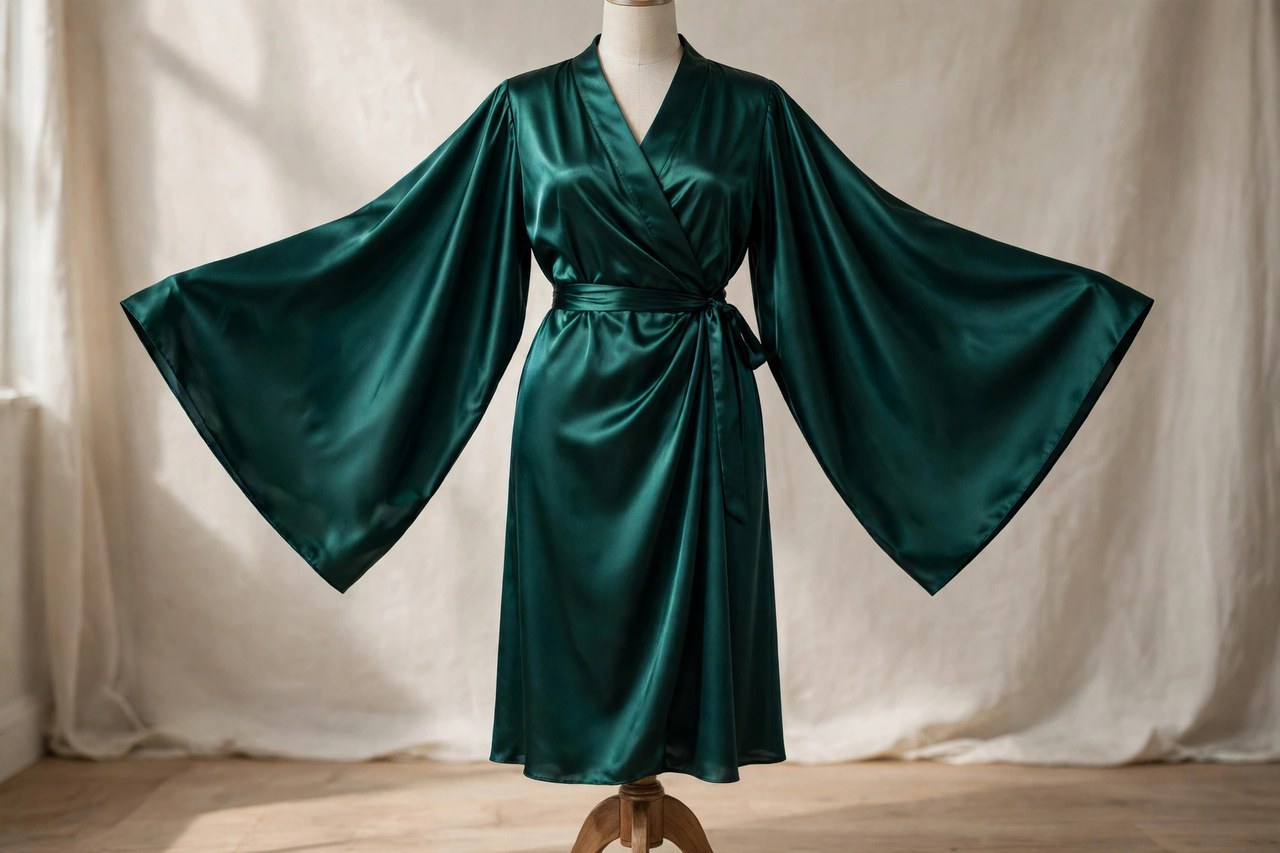
A kimono dress is not a kimono. It is a Western dress — cut to the body, sized like other dresses, and put on like one — that borrows the kimono's most flattering ideas: a wrap silhouette that crosses at the front, a wide sash or belted waist, and broad, flowing kimono sleeves that move when you do. The result reads as a dress first and a reference second, which is exactly why it works for weddings, dinners and parties where a true kimono would be costume.
The borrowing is selective. A true kimono is straight-cut, wrapped left over right, layered over under-robes and secured with cords and a stiff, structured obi tied at the back — a formal system with rules. A kimono dress keeps the crossing front and the drama of the sleeve, then simplifies everything else: the wrap may be fixed and faux, the sash is usually a soft self-belt, and there are no layers, cords or dressing rituals to learn.
What Makes It a Kimono Dress
Three features do most of the work. First, the wrap front: a surplice bodice that crosses diagonally and creates a V neckline, either tying at the side or waist or stitched shut as a faux wrap so nothing can gape. Second, the sleeve: cut wide and loose from the shoulder, sometimes in one piece with the bodice in the kimono manner, falling to the elbow, bracelet length or full length with a graceful flare. Third, the waist treatment: a wide belt, sash or obi-inspired band that restores definition under all that flowing cloth.
Below the waist the dress is free to be anything — a straight sheath, a fit-and-flare skirt, a fluid midi column or a high-low hem. That freedom is the category's strength: the kimono elements live in the bodice and sleeves, so the silhouette underneath can suit the occasion. A short kimono dress with flutter sleeves is a summer day dress; the same wrap bodice over a floor-length skirt in satin is an evening gown.
Fabrics, Prints and Details
Fabric decides the register. Silk-look polyester and satin give the liquid drape the style is known for and catch light along the sleeve; matte crepe reads more tailored and office-appropriate; cotton and linen versions trade sheen for breathability as warm-weather day dresses. Because the cut is simple, prints carry the design: florals, cranes, fans, blossom branches and geometric repeats all nod to Japanese textiles, while solid jewel tones and black rely on silhouette alone.
Details to check when buying: whether the wrap is real or fixed (a real wrap adjusts fit but needs a camisole or a snap at the bust for security), how the belt attaches (a self-tie sash is most versatile; a stitched obi panel is neatest), and sleeve width at the cuff — very wide sleeves are beautiful at the table only if they stay out of the food. A lining in the skirt and a concealed zip on faux-wrap styles both signal a better-made dress.
Occasions and How to Wear It
The kimono dress earns its place at events that sit between casual and formal: wedding guest, christening, gallery evening, smart dinner, holiday party. Its coverage is built in — the wrap bodice and mid-length sleeve feel dressed without feeling exposed — and the sash waist photographs well from every angle. For daytime, choose matte fabrics, smaller prints and knee or midi lengths; for evening, satin, deeper color and a longer hem do the dressing up for you.
Keep accessories quiet and let the dress lead. A simple heel or strappy sandal, one piece of jewelry rather than a set, and a small clutch are enough; competing belts, scarves and statement necklaces fight the neckline. It also differs from a kimono robe in intent: the robe is a cover-up or loungewear layer worn open over something else, while the kimono dress is a complete, structured outfit in itself — the difference between a layer and a look. Choose the version whose wrap stays secure when you sit, reach and dance, and the dress will do the rest — it is one of the few occasion styles that looks deliberate in photographs and still feels easy at midnight.
Related Women's Guides
Photos

Looking for Women's Clothing Stores?
This guide helps you choose women's kimono dresses. To browse where to buy, visit our women's clothing store directory, where you can find retailers that carry them.