Women's Kimono Robe Guide
The wrap robe with wide, flowing sleeves: a morning and loungewear staple in silk, satin, cotton and terry, cut looser and simpler than the ceremonial garment it borrows from.
Shop Women's Kimono Robes Now
Shop Women's Kimono Robes on Amazon Shop Women's Kimono Robes on eBayThe Amazon and eBay links on this page are affiliate links. If you make a purchase through them, Apparel Search may earn a commission.
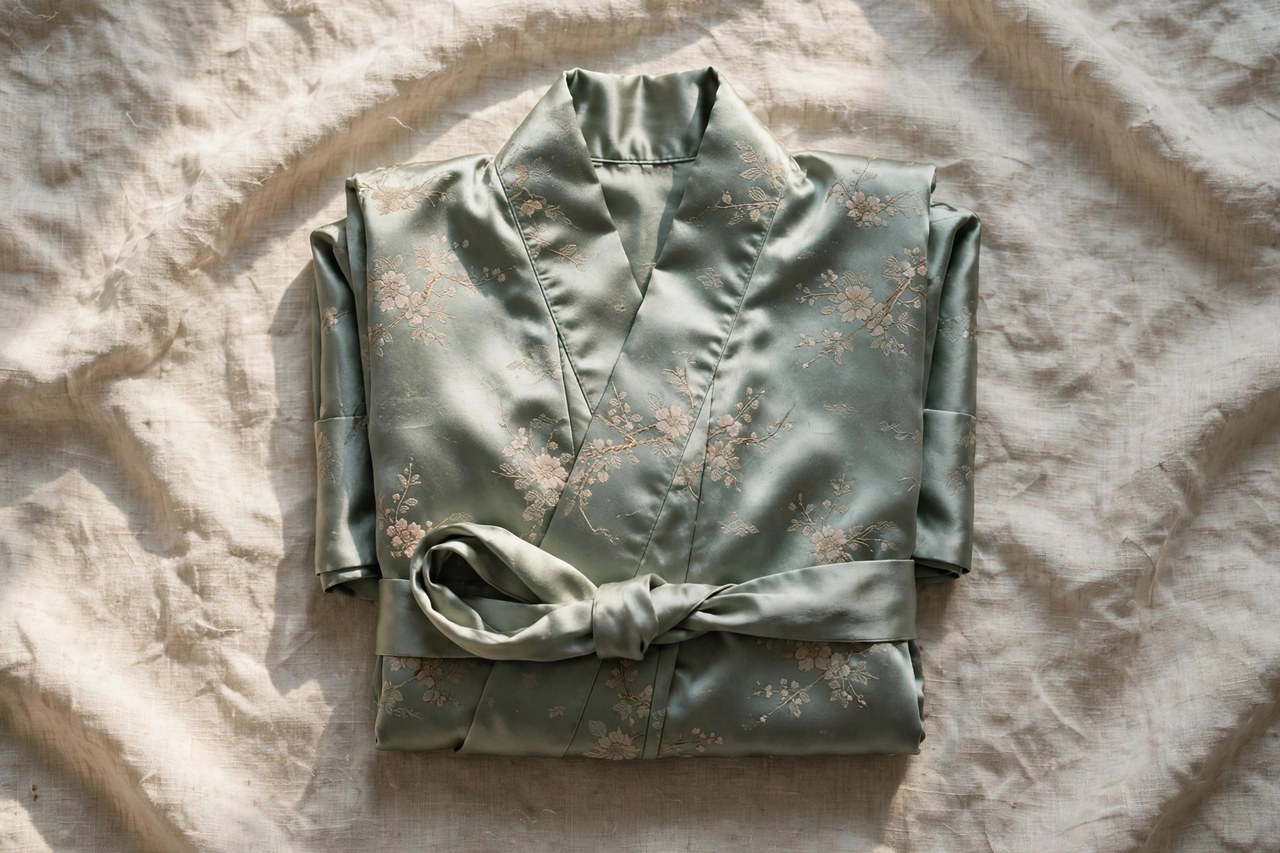
A kimono robe takes the two most comfortable ideas from the kimono — the wrap front and the wide, loose sleeve — and turns them into a robe. It crosses over the body, ties with a soft sash belt, and slips on over nightwear or nothing at all, with none of the layers, cords or formal rules of a true kimono. It is loungewear first: a garment for mornings, evenings, getting ready and winding down.
That simplicity is the point. Where a kimono dress is a complete outfit for going out, the kimono robe is a layer for staying in — though in silk and satin it is a luxurious one, and the better examples double as dressing gowns for travel, bridal parties and hospital bags, anywhere a presentable cover-up matters. Length, fabric and sleeve width are the choices that decide how a particular robe will actually live in your routine.
Fabrics: From Silk to Terry
Silk is the classic robe fabric: light, smooth, temperature-regulating and unmistakably luxurious, at a price that reflects it, and usually dry-clean or hand-wash only. Satin — most often polyester satin at everyday prices — imitates silk's sheen and glide and is far easier to wash. Cotton kimono robes, including waffle weaves, are absorbent, breathable and practical for everyday mornings, while cotton voile makes the lightest summer cover-up of all.
At the functional end sit the terry bathrobe versions: kimono-style collars and wrap fronts cut from looped cotton towelling, made to be worn straight out of the shower. They trade elegance for absorbency and warmth, and their wide sleeves are usually cut narrower for practicality. Between the extremes, silk-cotton blends, modal and brushed knits each balance drape, warmth and washability differently — choose by when you will wear the robe, not by the photograph.
Lengths and Details
Lengths run the full ladder. Short robes end at mid-thigh or the knee, suit warm weather and pair with shorts-and-cami sleep sets; midi robes are the versatile middle; long robes fall to the calf or ankle and give the full, sweeping version of the style, best over long nightdresses and for cooler houses. Sleeve length follows the same logic — three-quarter and bracelet sleeves keep cuffs out of coffee and face cream, while full flowing sleeves are for deliberate leisure.
Small details separate a robe you keep from one you replace. Look for a belt that is stitched at the back or threaded through loops so it cannot be lost in the wash, an inner tie to hold the wrap closed when the sash loosens, pockets deep enough for a phone, and flat, finished seams that will not press into skin during a slow morning. A hanging loop sounds trivial until you have hung a wet silk robe on a hook without one. Try the robe seated as well as standing: a sash that sits comfortably at the natural waist in both positions is the one you will still be tying, unthinkingly, a year from now.
Morning Wear, Lounging and Care
The kimono robe's working day is the edges of yours: over pajamas at breakfast, while hair and makeup happen, for the first hour home in the evening, and as the layer that makes answering the door in sleepwear entirely respectable. Bridal parties favor matching satin versions for photographs; travelers favor packable ones that weigh nothing and shake out smooth. Worn belted and closed, a good robe is also simply a house dress for slow weekends.
Care follows the fabric. Silk and better satin robes last longest washed cold and gentle, or hand-washed, and hung away from direct sun; cotton and terry robes go in the regular wash and improve in softness for years. Store silk robes on padded hangers rather than hooks to protect the shoulders, and keep the sash tied loosely so creases do not set in the fold. Treated kindly, a quality robe easily outlives the nightwear it was bought to cover. If you buy one robe for everything, choose a mid-length cotton or satin style in a color that flatters you without makeup — that is the robe that earns its hook by the bathroom door.
Related Women's Guides
Photos


Looking for Women's Clothing Stores?
This guide helps you choose women's kimono robes. To browse where to buy, visit our women's clothing store directory, where you can find retailers that carry them.