Women's Kebaya Guide
Indonesia and Malaysia's fitted lace blouse, worn with a wrapped batik or songket skirt and a chain of gold brooches.
Shop Kebaya Now
Shop on Amazon Shop on eBayThe Amazon and eBay links on this page are affiliate links. If you make a purchase through them, Apparel Search may earn a commission.
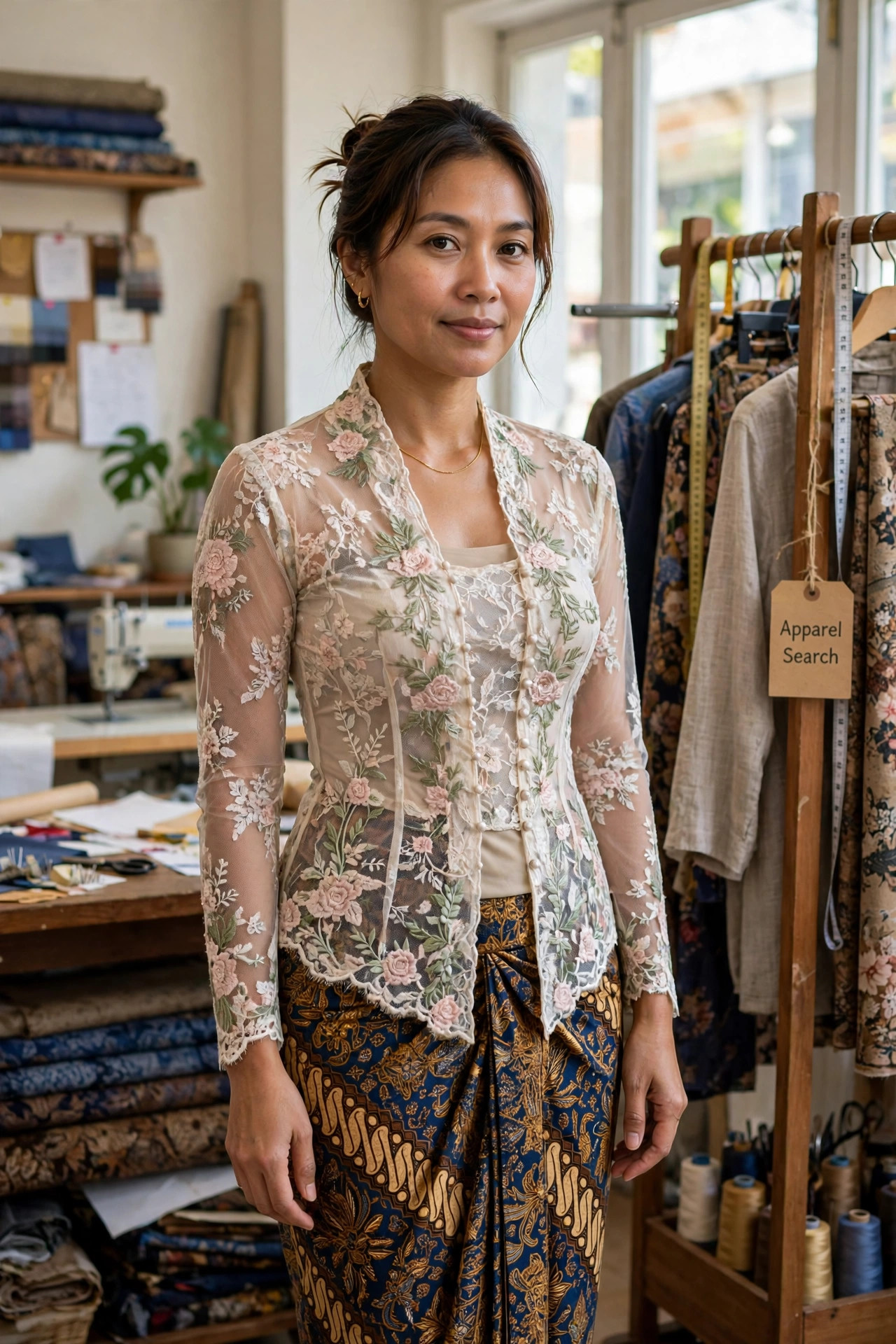
The kebaya is a fitted, open-front blouse worn by women across Indonesia, Malaysia, Brunei and Singapore, and recognised by UNESCO in 2024 as shared cultural heritage of the region. It is worn over a camisole and paired with a long wrapped skirt, so the silhouette is shaped by the contrast between the close, embroidered top and the straight fall of cloth below. This guide covers how the garment is made, its main styles and how women wear and care for it today.
How a Kebaya Is Made
A kebaya is cut close to the body, with long fitted sleeves, a shaped waist and a front opening that fastens with buttons, hooks or a set of linked brooches called a kerongsang. Many styles have no buttons at all and are simply pinned and held by the brooch chain. Fine kebaya are made from semi-sheer lace, brocade or embroidered cotton and voile, often with floral cutwork, called sulam, along the front edges, cuffs and hem. Because the fabric is light, a plain camisole or corset-style undertop is worn beneath for coverage.
Regional Styles and History
The kebaya developed in the Indonesian archipelago from the fifteenth and sixteenth centuries, as local wrapped dress met influences from Portuguese and other traders, and it became established court and everyday dress in Java. The kebaya encim, made by Peranakan Chinese communities, is known for colourful embroidery on fine voile. The plainer, longer kebaya Kartini, named for the Javanese writer Raden Ajeng Kartini, uses darker, more opaque fabrics. Balinese kebaya are often worn with a sash at the waist for temple dress, while Malay kebaya styles vary by state in length and embroidery.
What Is Worn With a Kebaya
The skirt is a length of cloth wrapped and folded at the waist: printed batik kain panjang for Javanese styling, woven songket with metallic thread for Malay weddings and formal wear, or a sewn sarong skirt for convenience. A selendang sash may be draped over one shoulder, hair is traditionally worn in a neat bun, and low heels or beaded slippers complete the outfit. Colours follow the occasion rather than a fixed rule, with white and pastel kebaya common for religious observance and rich jewel tones chosen for celebrations.
Occasions, Choosing and Care
Women wear kebaya for weddings, Eid celebrations, graduations, formal ceremonies and Kartini Day in Indonesia, when schools and offices honour Kartini's legacy. When choosing one, fit matters most: the kebaya should follow the waist without straining across the back, the sleeves should reach the wrist, and the front edges should meet neatly where the brooches fasten. Lace and embroidered kebaya are best hand-washed gently or dry-cleaned, dried away from direct sun and stored flat or lightly padded, so the cutwork keeps its shape and the sheer fabric does not snag.
Common Questions
What is a kebaya worn with?
A long wrapped skirt of batik or songket cloth, a camisole beneath the sheer blouse, and a kerongsang, a chain of linked brooches, fastening the front. A shoulder sash, a neat bun and low heels often complete the outfit.
What is the difference between kebaya encim and kebaya Kartini?
Kebaya encim, from Peranakan Chinese communities, uses fine voile with bright floral embroidery. Kebaya Kartini, named for Raden Ajeng Kartini, is longer and plainer, in darker, more opaque fabric, and reflects Javanese court styling.
How should a kebaya fit?
Close but not tight. It should follow the waist, let the front edges meet neatly at the brooches, and allow the arms to move freely. Most kebaya are tailored or adjusted for the wearer rather than bought purely off the rack.
Traditional & Cultural Dress Guides
Traditional and cultural dress from around the world — every guide in this cluster:
- Women's Kebaya
- Men's Achkan
- Men's Boubou & Agbada
- Men's Arkhalig
- Women's Baju Kurung
- Men's Baju Melayu
- Women's Buibui
- Men's Burnous
- Men's Chokha
- Men's Chullo
- Women's Churidar
- Women's Chut Thai
- Women's Deel
- Men's Djellaba
- Women's Dupatta
- Women's Huipil
- Men's Kanzu
- Women's Kitenge
- Men's Longyi
- Women's Patiala Salwar
- Men's Pheran
- Women's Sampot
- Women's Sinh
- Women's Songket
- Women's Terno
- Women's Hanbok
- Women's Ao Dai
- Women's Dirndl
- Women's Dashiki
- Women's Cheongsam
- Women's Salwar Kameez
- Women's Yukata
- Women's Kaftan
- Women's Abaya
- Men's Lederhosen
- Men's Thawb
- Men's Barong
- Women's Kimono
- Women's Silk Sari
- Women's Sarongs
- Men's Guayabera Shirts
Continue from the fitted kebaya to Malaysia's loose, modest two-piece tunic outfit.
Next: Women's Baju Kurung Guide: Malaysia's graceful tunic and skirt »Looking for Women's Clothing Stores?
This guide helps you understand and choose kebaya styles with confidence. To browse where to buy, visit our womens clothing store directory, where you can find retailers that carry them.