Men's Thawb Guide
The ankle-length robe of the Arabian Peninsula — thawb, thobe or dishdasha by region — in crisp white cotton and quietly varied detail.
Shop Thawb & Thobe Now
Shop on Amazon Shop on eBayThe Amazon and eBay links on this page are affiliate links. If you make a purchase through them, Apparel Search may earn a commission.
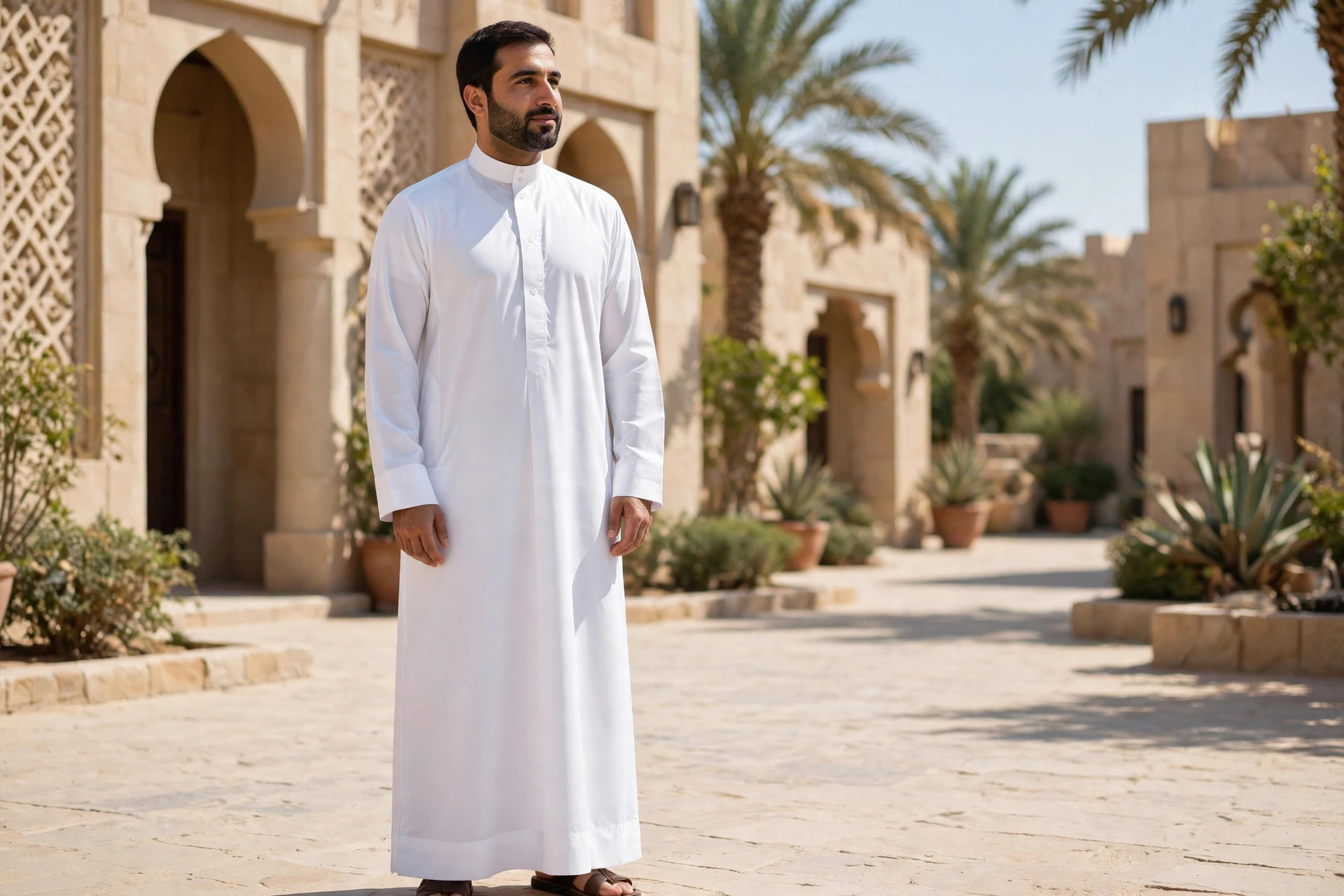
The thawb is the ankle-length robe worn by men across the Arabian Peninsula and the wider Middle East: a long, loose garment, most often in white, with long sleeves and a modest, dignified line. It is everyday dress, work dress, prayer dress and formal dress in one — the same essential garment, refined by fabric and detail, covers a school morning, an office day, Friday prayers and a wedding. Few garments anywhere carry so much of daily life with so little fuss, and its variations reward a closer look.
One Garment, Regional Names
The robe's name changes as you travel. Thawb (also written thobe or thoube) is the name in Saudi Arabia and much of the Levant. In Kuwait and Iraq it is the dishdasha; in Oman, dishdasha as well, often with its own details; in the Emirates it is the kandura or dishdasha; and across North Africa, related robes include the djellaba and gandoura. The names mark real regional tailoring differences — collar shapes, fastenings and embroidery vary by country — so the word a man uses for his robe usually tells you where he is from.
Collars, Cuffs and Details
Regional style lives in the details. Saudi thawb traditionally have a small standing collar with a neat buttoned placket, and shirt-style or cuffed sleeves; some styles add a chest pocket shaped into the placket line. Emirati kandura are collarless with a long tasseled cord, the tarbousha, hanging from the neckline. Kuwaiti dishdasha often feature a soft shirt collar and a longer button placket. Omani styles may carry fine embroidery at the neck. Formal and winter thawb add subtle tone-on-tone embroidery, while cufflinks and a fine watch are the jewellery the garment's clean lines allow.
Fabrics and Colour
White rules the thawb wardrobe for good reasons: it reflects heat, signals cleanliness and formality, and suits prayer and occasion wear alike. Summer thawb are fine cotton and cotton blends, light and breathable; premium fabrics include smooth Japanese and European cottons prized by tailors across the Gulf. In winter, and in cooler regions, thawb come in wool blends and heavier weaves and in colour — sand, grey, olive, brown and navy join white as the season turns. Because the garment is worn daily, most men own several and have them made or adjusted by tailors who know their measurements and preferred cut.
Wearing and Care
A thawb should fall straight from the shoulder to just above the ankle, sleeves to the wrist, collar neat — the effect is calm precision, and tailoring keeps it so. Beneath, men wear a light undershirt and loose white trousers or a wrap; over it, for formality or cold, a bisht — a flowing cloak trimmed with gold — is worn for weddings, Eid and official occasions. Head coverings vary by region: the ghutra and agal in much of the Gulf, the embroidered Omani cap, and others besides. Care is straightforward: white cotton thawb are washed bright and pressed crisp, because in this garment, immaculate presentation is the tradition.
Choosing and Tailoring a Thawb
Because the thawb is worn daily, most men in the Gulf and Peninsula have theirs tailored, and the tailor relationship matters: a good tailor keeps your measurements, knows your preferred collar height, cuff style and length, and can judge a new fabric's behaviour before cutting it. When choosing a ready-made thawb, judge it as you would a shirt, only more so — collar construction should be crisp and symmetrical, the placket flat, sleeve cuffs even, and the cloth fully opaque in daylight, since thin fabric defeats the garment's dignity. Length deserves care: too long trips, too short looks unfinished; the hem should meet the ankle bone. Start a wardrobe with two white summer cotton thawb in rotation, add a heavier winter thawb in white or a seasonal colour, and keep one immaculate thawb reserved for Friday prayers, weddings and formal occasions. Presented cleanly and pressed, the thawb needs nothing else — its whole tradition is that restraint, perfectly executed, is elegance.
Common Questions
Are thawb, thobe and dishdasha the same garment?
Essentially yes — regional names for the men's ankle-length robe of the Arabian Peninsula and Middle East. Thawb/thobe is used in Saudi Arabia and the Levant, dishdasha in Kuwait, Iraq and Oman, and kandura in the Emirates, with tailoring details varying by region.
Why are thawb usually white?
White reflects the desert heat, reads as clean and formal, and suits every setting from daily work to prayer and weddings. Coloured thawb — sand, grey, navy, brown — are common in winter fabrics and cooler regions.
What is worn over a thawb for formal occasions?
A bisht: a flowing, open cloak, often in black, brown or cream with gold trim, worn for weddings, Eid, official ceremonies and receiving honoured guests. It is the formal layer of the outfit.
Traditional & Cultural Dress Guides
Traditional and cultural dress from around the world — every guide in this cluster:
Finish the cluster with the Philippines' embroidered formal shirt in piña cloth.
Next: Men's Barong Tagalog Guide: The Philippines' national formal shirt »Looking for Men's Clothing Stores?
This guide helps you understand and choose thawb styles with confidence. To browse where to buy, visit our mens clothing store directory, where you can find retailers that carry them.