Women's Salwar Kameez Guide
South Asia's three-piece classic: a kameez tunic, easy salwar trousers, and the dupatta that finishes — and transforms — the outfit.
Shop Salwar Kameez Now
Shop on Amazon Shop on eBayThe Amazon and eBay links on this page are affiliate links. If you make a purchase through them, Apparel Search may earn a commission.
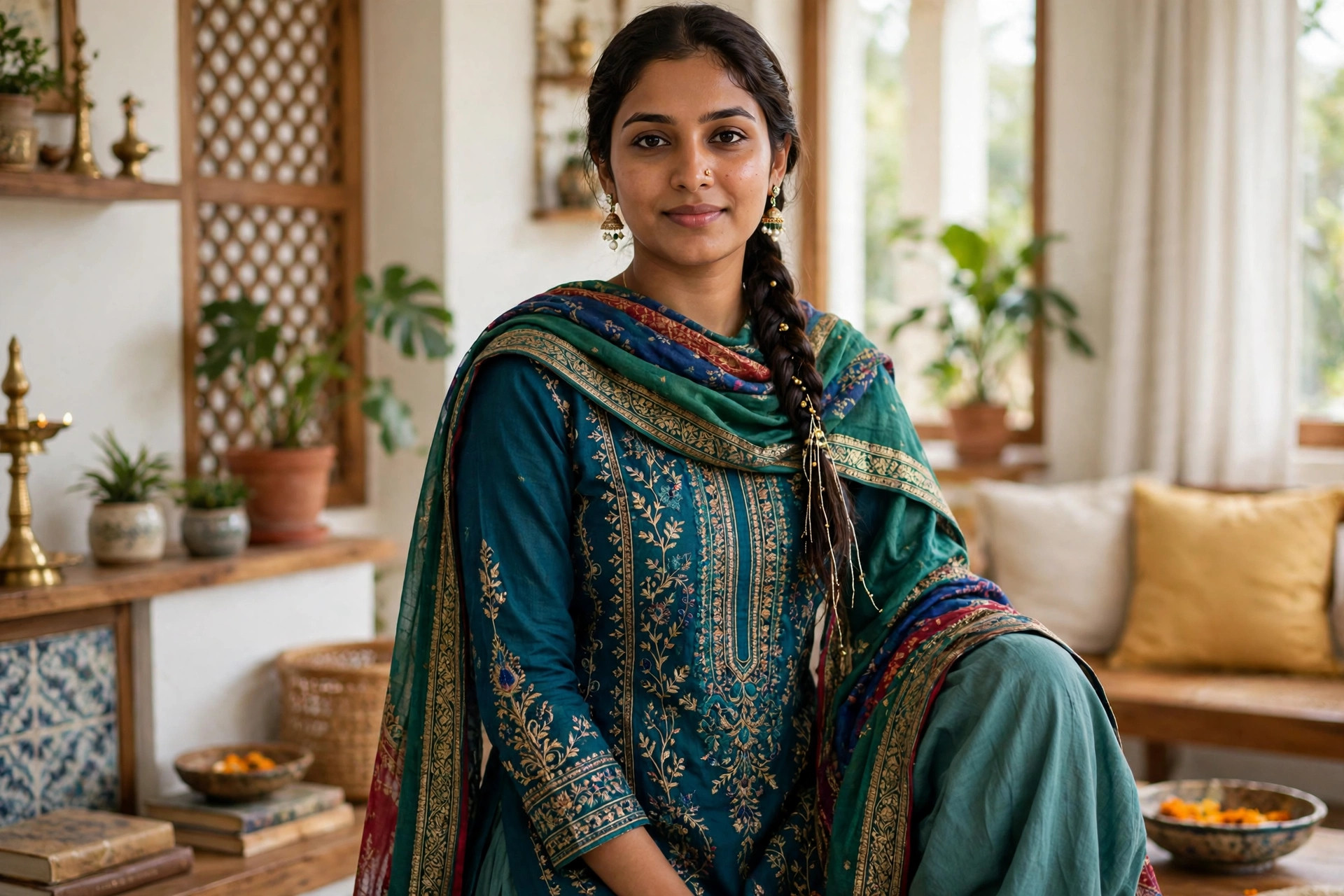
The salwar kameez is the everyday and festive dress of millions of women across South Asia — Pakistan, India, Bangladesh and the wider diaspora. It is a coordinated outfit of three pieces: a tunic, trousers and a scarf, designed together for comfort, modesty and movement in warm climates, and endlessly variable in fabric and decoration. The same basic formula serves a school day, an office, a family dinner and a wedding, simply by changing the cloth and the embroidery — few outfits anywhere cover so much of life so gracefully.
The Three Pieces: Kameez, Salwar and Dupatta
The kameez is the tunic: a straight or gently shaped top, traditionally knee-length or longer, with side slits at the hem for movement, in any sleeve length. Beneath it, the salwar is a loose trouser, wide at the waist and hips and narrowing to a band at the ankle, held by a drawstring or elastic — designed for sitting cross-legged, walking and working in comfort. The dupatta is a long, wide scarf worn draped over the shoulders, across the chest, or over the head for prayer and formal respect; it completes the outfit's line and is often its most decorated piece.
Styles and Regional Variations
Regional and fashion variations multiply the basic pattern. The churidar swaps the loose salwar for slim trousers that gather in soft folds at the ankle. The Punjabi suit pairs a shorter kameez with a fuller salwar. Anarkali styles flare the kameez from the bodice into a long, swirling skirt-like silhouette drawn from Mughal court dress. Palazzo and straight-cut trousers bring the outfit into contemporary fashion, while Angrakha wrap fronts and asymmetrical hems appear in designer collections. Necklines, sleeve shapes and hem lengths follow current style, but the three-piece structure stays constant.
Fabrics and Decoration
Everyday salwar kameez are cotton, lawn and breathable blends — cool, washable and printed in everything from subtle geometrics to bold florals. Festive outfits move to chiffon, georgette, silk and organza with embroidery, sequins, beadwork and block or hand printing. The dupatta often carries the richest work: a heavily embroidered or woven border can lift a plain kameez into occasion wear. Colour is worn with confidence — jewel tones, pastels for summer, and coordinated or deliberately contrasting three-piece colour stories. Matching the dupatta's drape to the outfit is part of the craft of dressing well in this tradition.
Wearing and Care
Drape the dupatta to the occasion: over both shoulders for formality, over one shoulder for ease, across the front for a classic line. Footwear ranges from flat juttis and sandals to heels for parties; jewellery usually concentrates at the ears and wrists to keep the neckline and dupatta clear. Care depends on decoration — plain cotton suits are home-washable and improve with softness, while embroidered, sequinned and silk pieces should be gently hand-washed or professionally cleaned and stored folded, with the dupatta's border protected. A wardrobe of a few well-chosen suits, mixed across pieces, dresses a woman for nearly everything.
Choosing Fabrics by Season and Occasion
A salwar kameez wardrobe is usually built in layers of formality, and fabric is what separates them. For daily wear in warm weather, cotton and lawn are unmatched — breathable, easy to wash and available in prints for every taste, from office-appropriate small geometrics to bright florals for home and family days. For evenings and dinners, chiffon and georgette add float and take embroidery and sequin work gracefully, while raw silk and organza suits are reserved for weddings and Eid, where their structure and sheen photograph beautifully. Winter in northern regions brings velvet kameez and heavier silks, worn with shawls in place of light dupattas. When buying a three-piece suit, judge the dupatta as carefully as the kameez: its border, weight and drape decide whether the outfit reads ordinary or festive, and a beautiful dupatta can be re-paired with plainer suits for years. Tailoring matters too — many wearers buy unstitched three-piece fabric sets and have them sewn to measure, the traditional route to a perfect fit.
Common Questions
What are the three pieces of a salwar kameez?
The kameez (tunic top), the salwar (loose trousers narrowing at the ankle) and the dupatta (a long scarf draped over the shoulders, chest or head). All three are designed and worn together as one outfit.
What is the difference between salwar and churidar trousers?
Salwar are loose through the leg and gather at an ankle band. Churidar are cut slim and longer than the leg, so the extra length stacks in soft folds — churidars — around the ankle. Both are worn under a kameez.
Is salwar kameez everyday or formal dress?
Both. In plain cotton it is daily wear across South Asia; in silk, chiffon and embroidered versions it is wedding and festival dress. Fabric and decoration, not the pattern, set the formality.
Traditional & Cultural Dress Guides
Traditional and cultural dress from around the world — every guide in this cluster:
More to Explore on Apparel Search
Next, Japan's summer cotton kimono and the left-over-right rule for wearing it.
Next: Women's Yukata Guide: Japan's summer kimono »Looking for Women's Clothing Stores?
This guide helps you understand and choose salwar kameez styles with confidence. To browse where to buy, visit our womens clothing store directory, where you can find retailers that carry them.