Women's Abaya Guide
The long, flowing robe at the heart of modest dressing in the Gulf and beyond: graceful coverage, quietly luxurious detail.
Shop Abayas Now
Shop on Amazon Shop on eBayThe Amazon and eBay links on this page are affiliate links. If you make a purchase through them, Apparel Search may earn a commission.
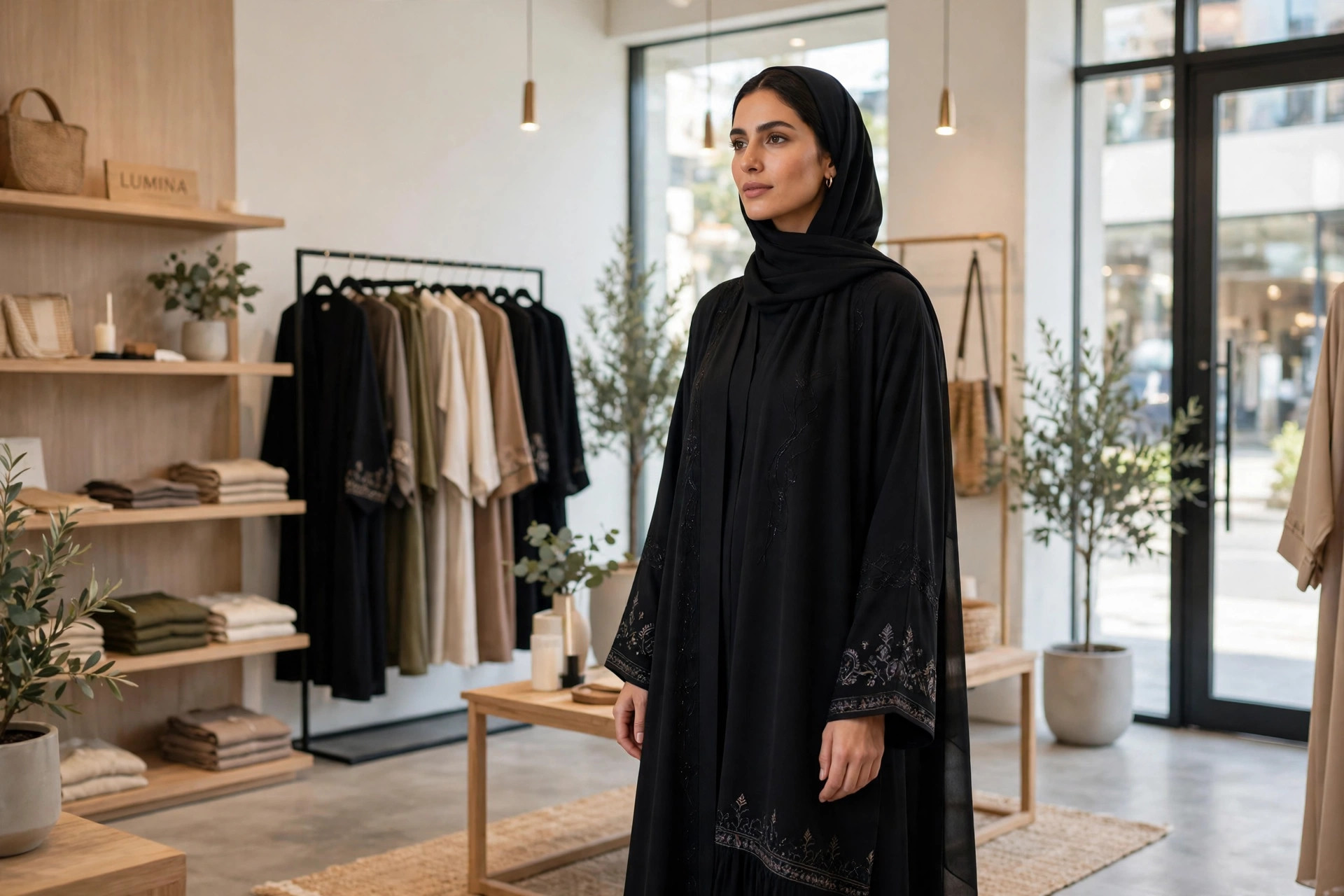
The abaya is a long, loose robe worn by many women across the Arabian Peninsula and the wider Muslim world as an outer garment of modest dress. Typically black — though contemporary abaya come in a wide and growing palette — it is worn over everyday clothes when out in public, combining coverage with a fluid, dignified silhouette. Far from a uniform, the modern abaya is a designed garment with cuts, fabrics and details that change with fashion, and for many wearers it is a considered expression of faith, culture and personal style at once.
Styles: Open, Closed and Shaped
Abaya are cut in several families. Closed abaya slip on as a single flowing piece, sometimes with a subtle A-line or butterfly (bisht) cut whose wide sleeves drape from the shoulder. Open abaya fasten at the front with snaps, ties or a belt and are worn like an elegant long coat over an outfit, often in colours and fabrics chosen to coordinate with what is beneath. Shaped and tailored abaya add gentle waist definition, pleats, or panelled construction for a more structured line, while kimono-sleeve and balloon-sleeve cuts follow current fashion. Detailing — embroidery, lace, beading, contrast piping — concentrates at the sleeves, back and front edges.
Fabrics and Colour
The classic abaya fabric is a matte, fluid crepe — nidha and similar crepes are prized for their weightless drape and opacity — with lighter weaves for summer and lined or heavier versions for cooler weather and travel. Satin-finish and lightly textured fabrics serve formal wear; linen blends appear in summer collections. Black remains the foundation colour in the Gulf for its formality and versatility, but today's abaya wardrobes include charcoal, navy, taupe, olive, blush and soft pastels, especially in open styles. Matching or coordinating the hijab — in the Gulf, the shayla — completes the outfit, and its fabric and drape are chosen with the same care.
Occasions and Everyday Dress
The abaya's range is its strength: a plain crepe abaya is daily dress for work, university and errands; an embroidered or satin abaya carries weddings, Eid celebrations and formal evenings. Designers in the Gulf and internationally now show abaya collections on fashion calendars, and the garment has become a reference point in the wider modest-fashion movement for how coverage and design ambition combine. Many women keep a wardrobe of abaya the way others keep coats — practical pieces for every day, special pieces for occasions, and travel pieces chosen to arrive unwrinkled and ready.
Wearing and Care
An abaya should fall cleanly from the shoulders to near the floor, with sleeves covering the wrist; for open styles, choose the outfit beneath as part of the whole look, since the front frames it. Footwear is fully visible below the hem — clean, elegant shoes matter — and jewellery shows mainly at the hands, so rings and watches carry the detail. Care: most crepe abaya wash gently at home or dry-clean well; embroidered, beaded and satin pieces are better professionally cleaned. Hang abaya on padded hangers in a breathable cover, and store the matching shayla with it so the set stays together.
Building an Abaya Wardrobe
Most women who wear abaya daily build a small, considered wardrobe rather than a large one. A plain black crepe abaya in a clean cut is the foundation — the piece that goes everywhere, from work to errands to the airport. A second, in a colour such as navy, charcoal or taupe, gives daily variety, especially in an open style that coordinates with different outfits beneath. One special abaya — embroidered, satin or designer-detailed — covers weddings, Eid and formal evenings. Beyond those three, choices follow lifestyle: lightweight summer abaya in breathable weaves for hot climates, a travel abaya chosen for crease-resistance, and maternity or nursing-friendly cuts in their season. Quality is easy to judge in person: the fabric should be fully opaque in daylight, drape without clinging, and be finished with clean seams and secure fastenings, since an abaya is worn and washed constantly. Bought this way, an abaya wardrobe is like a coat wardrobe — few pieces, chosen well, worn for years.
Common Questions
What is an abaya?
A long, loose robe worn as a modest outer garment by many women in the Arabian Peninsula and the wider Muslim world, typically over everyday clothes. It combines full coverage with a flowing silhouette and ranges from plain daily styles to embroidered formal designs.
What is the difference between open and closed abaya?
Closed abaya are a single slip-on robe. Open abaya fasten at the front and are worn like a long coat over an outfit, often in coordinating colours. Both are full-length and modest; the choice is style and occasion.
Are abaya always black?
Black is the traditional and still most common colour, especially in the Gulf. Modern abaya also come in navy, charcoal, taupe, olive and pastels — particularly open styles — while keeping the same modest, flowing cut.
Traditional & Cultural Dress Guides
Traditional and cultural dress from around the world — every guide in this cluster:
More to Explore on Apparel Search
Cross to the men's guides with the Alpine leather breeches built to last decades.
Next: Men's Lederhosen Guide: Alpine leather breeches built to last a lifetime »Looking for Women's Clothing Stores?
This guide helps you understand and choose abaya styles with confidence. To browse where to buy, visit our womens clothing store directory, where you can find retailers that carry them.