Apparel Search Consumer Guides
Eid Outfit Guide
Eid al-Fitr and Eid al-Adha are the year's great dressing-up days: new clothes, festive modest dressing, and a full round of prayers, family and food.
Twice a year, the Muslim calendar arrives at its great dressing-up days. Eid al-Fitr closes Ramadan, the month of fasting, with a morning of prayers and a day of feasting and visiting; Eid al-Adha, around two months later during the Hajj pilgrimage season, is the second great festival of the year. Both run on the same wardrobe principle — your best clothes, very often new ones — and both fill the day with prayer gatherings, family rounds and food. This guide covers the dressing for participants and for guests; for the general principles that apply at every festival, start with our cultural and festival outfit guide.
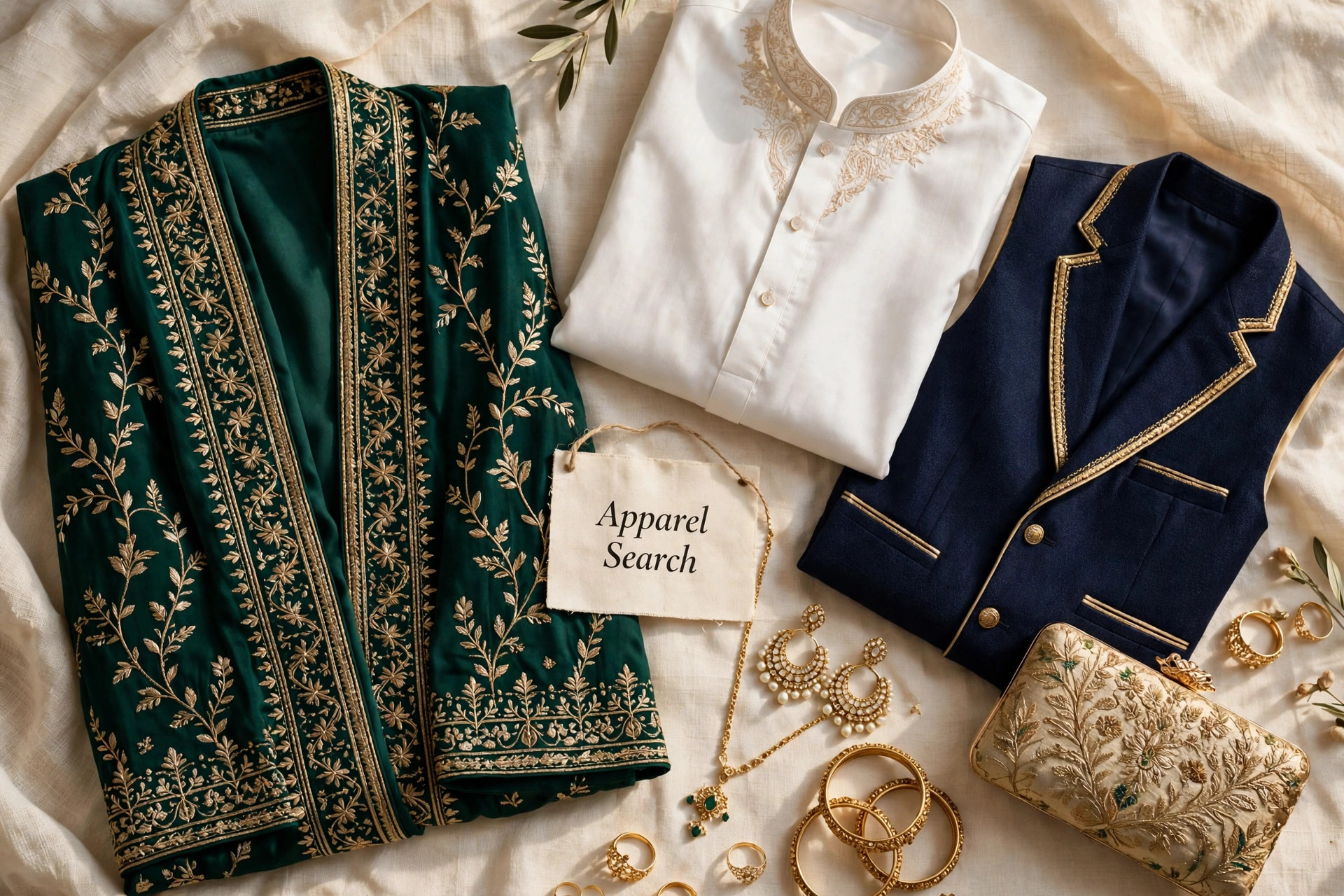
The New-Clothes Tradition
Wearing new clothes for Eid — or the best you own, freshly cleaned and pressed — is one of the day's oldest customs, for children above all: the Eid outfit is bought in advance, kept aside, and put on in the morning like a uniform for celebration. Practically, it means the weeks before Eid are peak season in clothing shops and tailors' workshops across the Muslim world and its diaspora. If you are commissioning or altering, book early; if you are buying, the calm shopping happens during Ramadan, not in its final nights. The night before Eid al-Fitr has its own name — Chaand Raat, the night of the moon — when markets stay open late for last purchases, bangles and henna.
For Women: Festive Modest Dressing
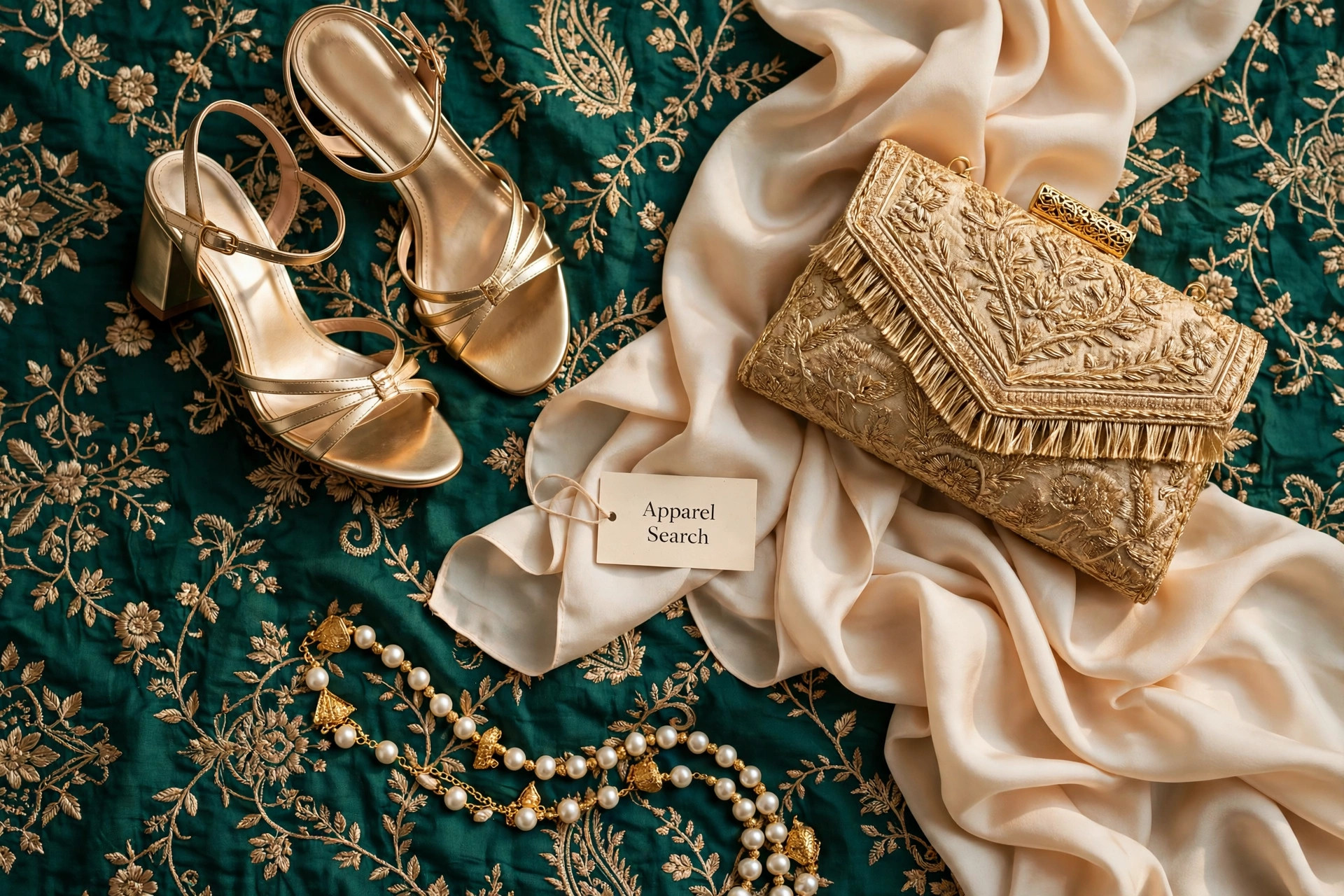
Eid dressing for women is modest dressing turned up to celebration level: full coverage, festive execution. The centrepieces vary by heritage — an abaya with embroidery, beading or a metallic trim; a flowing kaftan, the celebration garment across North Africa and the Middle East; a salwar kameez in silk or chiffon with a worked dupatta, the South Asian standard; or a covered evening gown of the kind our modest formal and evening wear guide covers in depth. Headscarves follow the same festive logic — silk, chiffon and embellished fabrics rather than the everyday rotation — and our hijab definition page explains the garment and its varieties. Jewellery, henna on the hands and new shoes complete the traditional picture: this is the day the whole outfit is new if it can be.
For Men: Kurtas, Thobes and Sharp Tailoring
Men's Eid dress divides by heritage too. The long robe known as a thobe or dishdasha — crisp, white or in soft colours — is the classic across the Arabian Peninsula; the kurta, a long tunic worn over loose trousers, is the South Asian standard, often with an embroidered waistcoat over it for the day; a salwar kameez serves men as well as women in its own cuts. In Western countries a well-kept suit or blazer is just as common at Eid prayers. A prayer cap is worn by some men, by custom and personal practice. Whichever the tradition, the rules rhyme with the women's: clean, pressed, festive, and new where possible — finished with good shoes, since they come off and line up at the door.
Children and the Family Picture
Children are the heart of Eid dressing: new outfits head to toe, money gifts (Eidi) tucked into pockets by elders, and a round of family visits conducted at full celebration polish. Families often coordinate — a shared colour family rather than identical outfits — because the day produces the year's most-kept photographs. Comfort still matters: it is a long day of visiting and eating, and small children in scratchy embroidery will say so.
Guests at an Eid Gathering
Guests are expected to dress up, not down: festive, neat, with the comfortable coverage described in our festival outfit guide — and shoes that slip off at the door of a home. "Eid Mubarak" — blessed Eid — is the greeting that opens every door. If your hosts offer you a kaftan or suggest traditional dress, take it as the honour it is intended to be.
Shop Eid Outfits on Amazon
Festive modest dresses, abayas, kaftans, men's kurtas and children's Eid outfits are all stocked on Amazon.
Shop Clothing on AmazonProduct links are kept in one place on the Apparel Search Amazon shopping guide, so this page can stay a guide rather than a catalogue.
Common Questions
What is the difference between Eid al-Fitr and Eid al-Adha, for dressing?
Very little, in wardrobe terms: both are dress-up festivals where new or best clothes are the custom, mornings often begin with communal prayers, and the day continues with family visits and feasting. Eid al-Fitr ends the Ramadan month of fasting, so it carries an extra note of celebration after a month of restraint; Eid al-Adha falls during the Hajj pilgrimage season. The same festive wardrobe serves both.
What colours do people wear for Eid?
There is no single Eid colour code. White is a classic choice for men's prayer dress in many communities, and women's Eid outfits run the full festive spectrum — jewel tones, pastels, metallics and rich embroidery all appear, varying by family and region. The constant is not the colour but the condition: clean, cared-for and a clear step up from the everyday.
Should a guest dress modestly at an Eid gathering?
Yes — festive clothes with comfortable coverage are the right instinct for a guest, because the day often includes elders, family and possibly a visit connected with prayers. Shoulders and legs covered, nothing sheer or very tight, and shoes that slip off easily for a home visit. If your hosts suggest a kaftan or another traditional garment, accept the suggestion as the compliment it is.
When should I shop for Eid clothes?
Earlier than feels necessary. The new-clothes tradition means everyone is shopping at once, tailors' books fill up during Ramadan, and the last nights before Eid al-Fitr — including Chaand Raat, the night the new moon is sighted — are famously busy in shops and markets. Buying or commissioning during Ramadan rather than after it is the calm route.
Related Guides
Cultural & Festival Outfit Guide
The parent guide: the customs that touch your clothes at every festival — coverage, shoes, head coverings and colour symbolism.